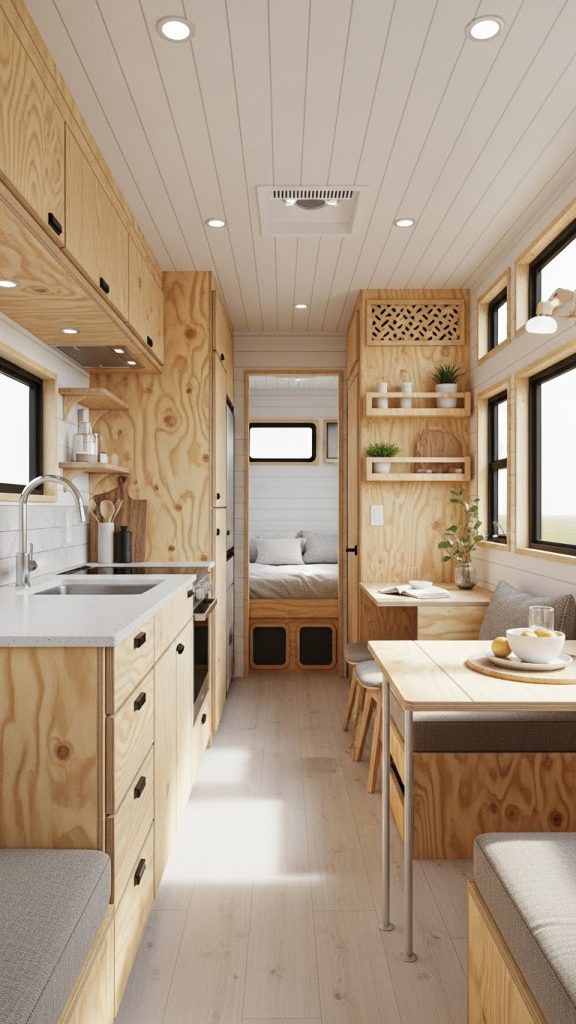
Tiny homes are becoming popular all over the world because they offer a simpler, more affordable, and more intentional way of living. People are choosing tiny homes to reduce costs, lower environmental impact, and enjoy a clutter-free lifestyle. However, designing the interior of a tiny home can be challenging. Every square foot matters, and poor planning can make a small space feel cramped and uncomfortable. Good interior design is essential to make a tiny home feel open, functional, and welcoming.

Tiny home interior design focuses on smart planning, multi-use furniture, thoughtful material selection, and efficient storage solutions. The goal is not just to make the space look good but also to ensure it supports daily life comfortably. From choosing light colors to using vertical space, every design decision has an impact. Materials must be durable yet lightweight, and furniture must often serve more than one purpose.
In this blog post, we will explore ten practical and stylish tiny home interior design ideas. Each idea explains preparation, materials, layout planning, and real-life usability. Whether you are building a tiny home from scratch or redesigning an existing one, these ideas will help you create a beautiful, functional, and comfortable living space without wasting space or money.
1. Open Concept Layout for Better Flow
An open concept layout is one of the most important design principles in tiny homes. Walls take up valuable space and can make a small interior feel closed and dark. By removing unnecessary walls and combining living, dining, and kitchen areas into one open space, the home feels larger and more breathable.
Preparation for an open layout starts during the planning stage. You need to identify essential zones and define them visually instead of physically. Rugs, lighting, or ceiling height changes can separate areas without walls. Structural beams must be carefully placed to maintain safety while keeping the space open.
Common materials used include lightweight wooden beams, plywood panels, and drywall alternatives that reduce weight. Flooring should be consistent throughout the main area to avoid visual breaks. Vinyl plank, engineered wood, or polished concrete are popular choices.
An open layout improves natural light flow, especially when combined with large windows or skylights. It also makes movement easier and allows flexible furniture placement. This design works best for people who enjoy a modern, uncluttered living environment and want their tiny home to feel spacious despite its small size.

2. Multi-Functional Furniture Solutions
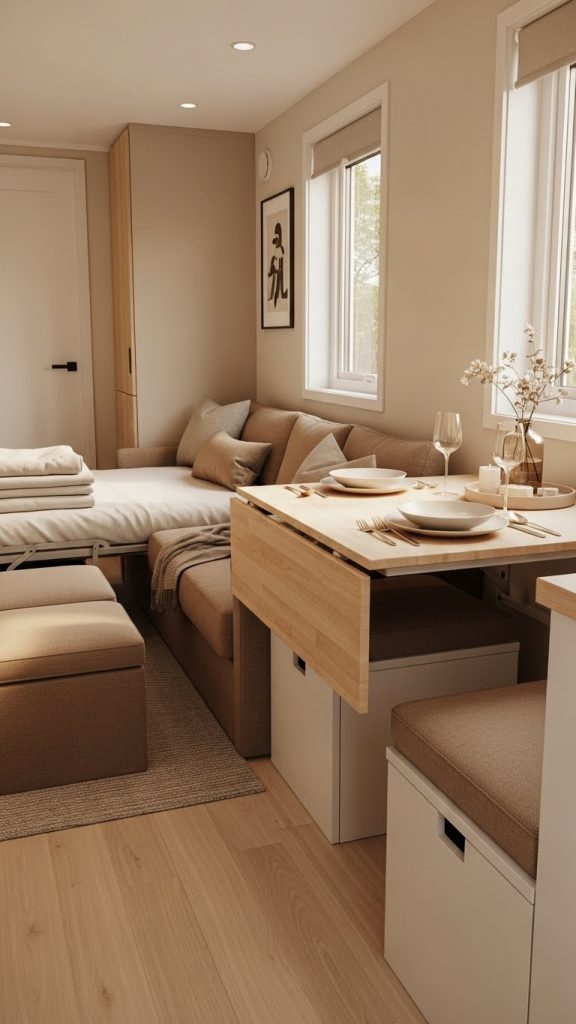
Multi-functional furniture is essential in tiny home interior design. Each piece should serve more than one purpose to save space and increase usability. Examples include sofa beds, fold-out tables, storage ottomans, and benches with hidden compartments.
Before choosing furniture, measure your space carefully and consider how you use it daily. Think about sleeping, eating, working, and relaxing needs. Custom-built furniture is often the best option because it fits perfectly and maximizes every inch.
Materials commonly used include solid wood frames for strength, plywood for lighter weight, and metal hinges for folding mechanisms. Cushions should use high-density foam for durability and comfort. Fabric should be easy to clean and resistant to wear.
Multi-functional furniture reduces clutter and keeps the interior organized. It also makes the space adaptable for different activities throughout the day. For example, a dining table can become a workspace, and a couch can turn into a guest bed. This flexibility is key to comfortable tiny home living.
3. Smart Storage Using Vertical Space
Vertical storage is one of the smartest ways to increase capacity in a tiny home without reducing floor space. Walls, corners, and even ceilings can be used for storage if designed properly.
Preparation involves identifying unused vertical areas such as above doors, near ceilings, and under lofts. Built-in shelving is better than freestanding units because it saves space and looks cleaner. Storage should be placed where it is easy to reach and does not interfere with movement.
Materials for vertical storage include lightweight wood, metal brackets, and modular shelving systems. Floating shelves are popular because they look modern and keep the space open. Hooks and rails made from stainless steel or aluminum are useful for hanging items.
Vertical storage keeps everyday items organized and easy to access. It also allows you to store seasonal or less-used items higher up. When done correctly, vertical storage adds character to the interior while maintaining a tidy and spacious feeling.

4. Light Color Palette to Enhance Space
Using light colors is a simple but powerful interior design strategy for tiny homes. Light shades reflect natural light and make small spaces feel larger, brighter, and more open.
Preparation starts with choosing a base color, usually white, off-white, or light beige. Accent colors can be added through furniture, textiles, or small decor items. Avoid dark colors on large surfaces because they absorb light and make spaces feel smaller.
Materials such as light-toned wood, white-painted plywood, and matte finishes work best. Glossy finishes can also help reflect light but should be used carefully to avoid glare. Curtains and upholstery should be in soft, neutral shades.
A light color palette creates a calm and clean environment. It also provides a timeless look that does not feel outdated. This approach is ideal for people who want a peaceful living space and prefer a minimal yet warm interior style.

5. Compact and Efficient Kitchen Design
The kitchen is one of the most used areas in a tiny home, so efficiency is crucial. A well-designed tiny kitchen includes only essential appliances and smart storage solutions.
Preparation involves deciding what appliances you truly need. Compact refrigerators, two-burner stoves, and combination microwave ovens save space. Layouts such as galley or single-wall kitchens work best in tiny homes.
Materials should be durable and easy to clean. Countertops made from laminate, butcher block, or quartz are popular. Cabinets are often made from lightweight plywood with soft-close hinges. Backsplashes using tile or stainless steel add protection and style.
An efficient tiny kitchen allows smooth workflow and reduces clutter. Pull-out drawers, wall-mounted racks, and magnetic strips help keep tools organized. With good planning, a tiny kitchen can be just as functional as a larger one.

6. Loft Bedroom Design for Space Saving
Loft bedrooms are a common feature in tiny homes because they free up floor space for living areas. A well-designed loft should feel safe, comfortable, and easy to access.
Preparation includes checking ceiling height and local building codes. The ladder or staircase should be secure and easy to climb. Ventilation and lighting are also important to prevent the loft from feeling stuffy.
Materials used for loft construction include solid wood beams, plywood flooring, and metal railings. Mattress selection is important, as low-profile mattresses work best. Wall-mounted reading lights save space and add comfort.
A loft bedroom creates a cozy sleeping area while keeping the main floor open. It works best for individuals or couples who do not mind climbing stairs. Proper design ensures the loft feels like a retreat rather than a cramped space.

7. Built-In Furniture for Custom Fit
Built-in furniture is one of the best investments for a tiny home. Unlike standard furniture, built-ins are designed to fit the exact dimensions of the space, leaving no wasted areas.
Preparation involves detailed measurements and planning. You must decide which pieces should be built-in, such as seating, desks, beds, or storage units. Professional carpentry may be required for best results.
Materials commonly used include plywood, MDF, and solid wood for visible surfaces. Hinges, slides, and hardware should be high quality to ensure durability. Finishes should match the overall interior theme.
Built-in furniture improves organization and gives the interior a clean, cohesive look. It also increases storage capacity without adding bulk. This approach is ideal for long-term tiny home living.

8. Natural Light and Window Placement
Natural light plays a major role in making a tiny home feel spacious and comfortable. Proper window placement can transform the interior atmosphere.
Preparation includes planning window sizes and positions based on sun direction and privacy needs. Large windows, clerestory windows, and skylights are common choices. Ventilation should also be considered.
Materials for windows include double-glazed glass for insulation and lightweight aluminum or vinyl frames. Window treatments should be minimal, such as sheer curtains or blinds.
Natural light reduces the need for artificial lighting and improves mood. It also highlights interior materials and colors. A well-lit tiny home feels healthier, more open, and more inviting.

9. Minimalist Decor to Avoid Clutter
Minimalism is a natural fit for tiny homes. Too many decorations can quickly make a small space feel messy and overwhelming.
Preparation involves selecting only meaningful and functional decor items. Each item should have a purpose or emotional value. Storage solutions should be in place to hide everyday clutter.
Materials for decor should be natural and lightweight, such as wood, fabric, and ceramic. Wall art should be limited to a few pieces. Plants can add life without taking much space.
Minimalist decor makes cleaning easier and keeps the home organized. It also creates a calm and balanced environment. This design style supports the simple lifestyle that tiny homes promote.

10. Durable and Lightweight Materials
Choosing the right materials is critical for tiny home interiors, especially for mobile tiny homes. Materials must be strong, lightweight, and long-lasting.
Preparation includes understanding weight limits and climate conditions. Moisture resistance and insulation are important factors. Materials should be easy to maintain and repair.
Common materials include plywood instead of solid hardwood, vinyl flooring instead of tile, and aluminum fixtures instead of steel. Natural wood is often used for warmth but in controlled amounts.
Durable and lightweight materials improve safety, energy efficiency, and comfort. They also reduce long-term maintenance costs. Making smart material choices ensures your tiny home remains functional and beautiful for years.