The staircase wall leading to a basement is often one of the most ignored areas in a home. Many homeowners focus on decorating living rooms, bedrooms, and kitchens, while the basement staircase remains plain and unfinished. However, this space offers a great opportunity to add character, warmth, and style to your home. Because the basement staircase is usually a transition area, decorating it thoughtfully can improve the overall flow of your interior design and make the journey downstairs feel more welcoming and safe.
Decorating a basement staircase wall is not only about beauty. It also involves planning for lighting, durability, moisture control, and safety. Basement areas can be darker and more humid than other parts of the house, so the materials and finishes you choose must be practical as well as attractive. With the right preparation, tools, and ideas, you can turn this often-overlooked wall into a design feature that adds value to your home.
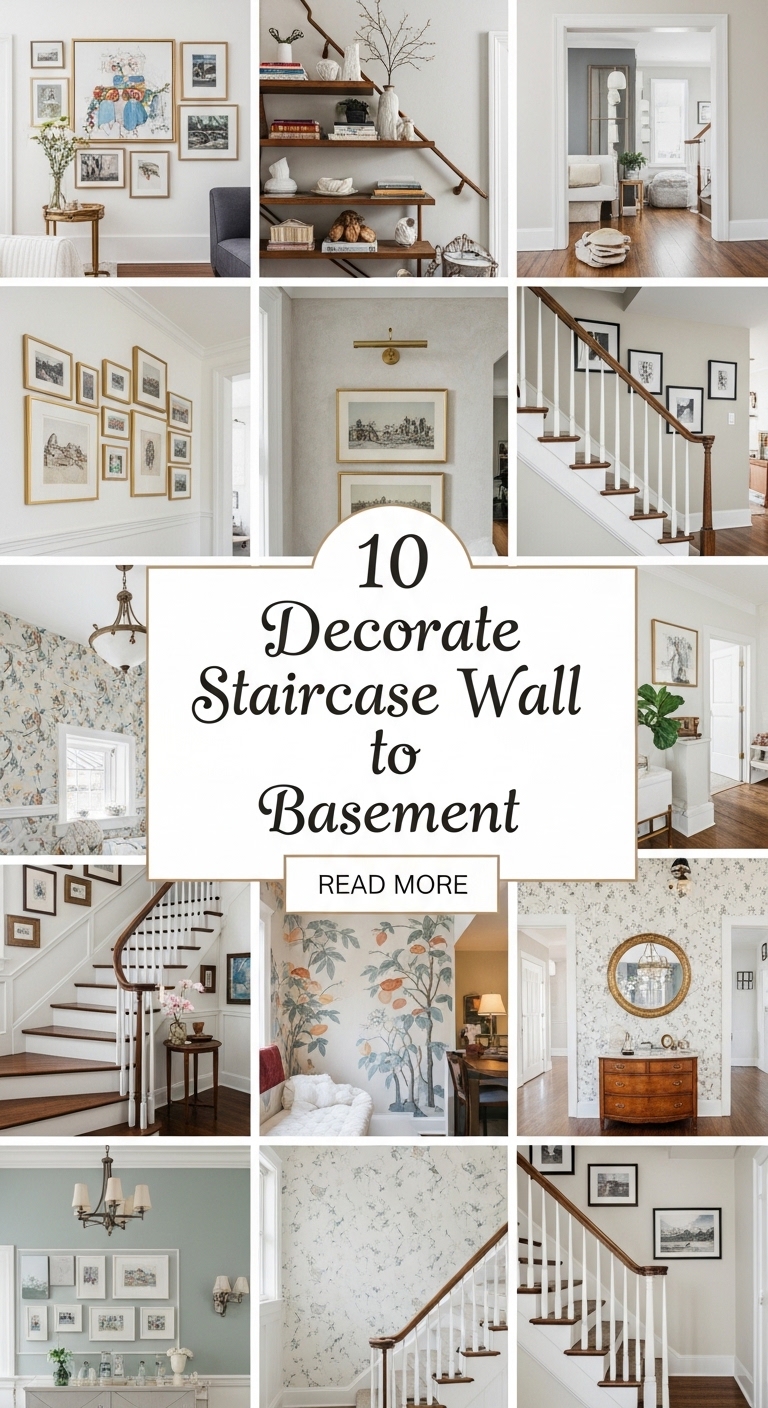
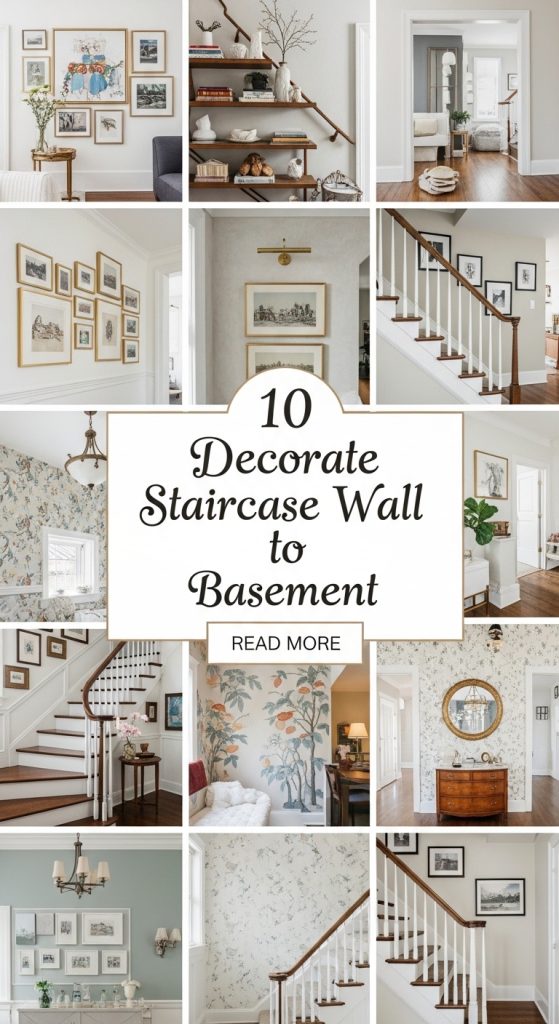
In this detailed guide, you will find ten clear and practical ideas for decorating a staircase wall to the basement. Each idea explains preparation steps, materials needed, how to use them, and important tips to ensure long-lasting results. Whether your style is modern, rustic, minimal, or family-friendly, these ideas will help you transform your basement stairway into a visually pleasing and functional space.
1. Gallery Wall with Family Photos
A gallery wall is one of the easiest and most personal ways to decorate a basement staircase wall. It adds warmth and tells a story as you walk down the stairs. Family photos, travel memories, or even black-and-white portraits work well in this space.
Preparation starts with cleaning the wall and checking for moisture. Basement stair walls should be dry before hanging frames. Measure the wall length and plan the layout on the floor first to avoid mistakes. Use a level and measuring tape to ensure straight alignment.
Materials needed include photo frames, wall anchors, nails or screws, a measuring tape, a pencil, and a spirit level. Choose frames made from wood, metal, or plastic depending on your style. For basements, frames with glass or acrylic covers are better because they protect photos from humidity.
When installing, start from the top of the staircase and move downward. Keep consistent spacing between frames for a clean look. Avoid overcrowding the wall, as staircases already feel narrow. This idea works well with warm wall colors and soft lighting to highlight the images.
2. Painted Accent Wall
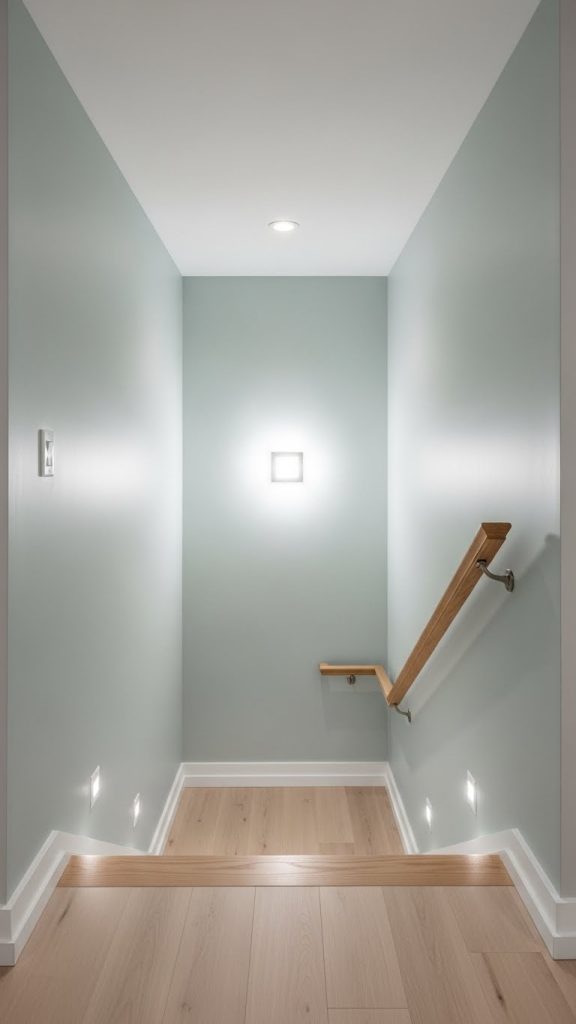
A painted accent wall is a simple and affordable way to bring life to a basement staircase. Color can completely change how the space feels, making it brighter and more inviting.
Before painting, inspect the wall for cracks, damp spots, or peeling paint. Repair any damage and apply a moisture-resistant primer. This step is very important for basement areas. Light sanding helps the new paint stick better.
Materials required include primer, interior wall paint, paint rollers, brushes, painter’s tape, drop cloths, and a ladder. Choose lighter shades like beige, soft gray, or pale blue to make the staircase feel open. Darker colors can be used if the staircase has good lighting.
Apply primer first and let it dry fully. Then paint at least two coats for even coverage. Use painter’s tape to protect edges and railings. An accent wall works well on one side of the staircase to avoid overwhelming the space. This method is budget-friendly and easy to refresh later.
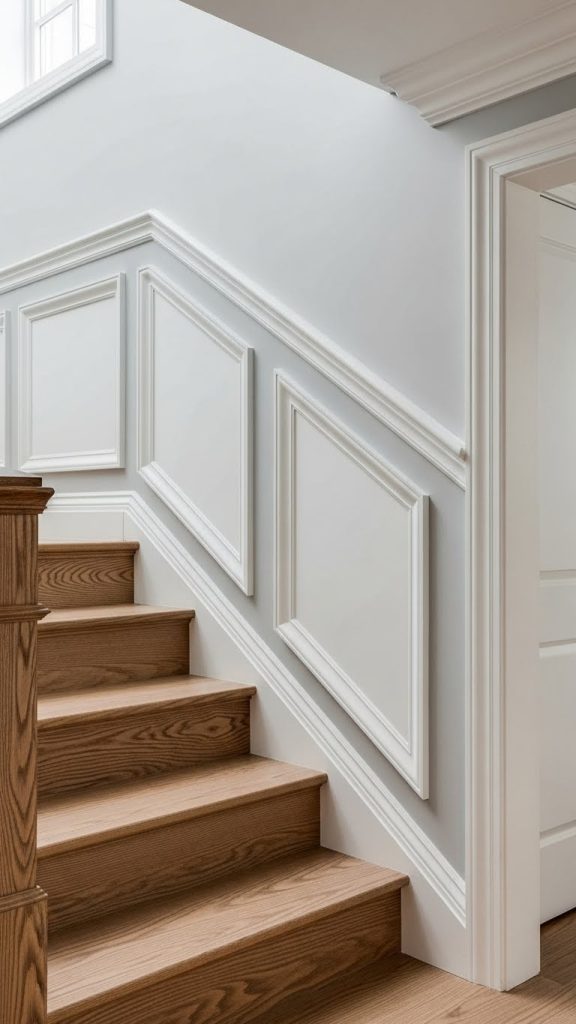
3. Wall Paneling or Wainscoting
Wall paneling or wainscoting adds structure and elegance to a basement staircase wall. It also protects the wall from scuffs and marks, which are common in stair areas.
Preparation involves measuring the wall height and deciding how high the paneling will go. Make sure the wall is smooth and dry. Mark guidelines using a level to ensure straight installation.
Materials include MDF or wood panels, construction adhesive, finishing nails, a nail gun or hammer, caulk, and paint. Moisture-resistant MDF is recommended for basement staircases.
Install panels starting from the bottom and move upward. Secure them with adhesive and nails. Fill gaps with caulk and sand smooth before painting. Neutral colors work best, but you can also paint the paneling a darker shade than the upper wall for contrast.
This idea adds a classic touch and works well in traditional or modern homes. It also increases durability in high-traffic areas.
4. Staircase Wall Lighting
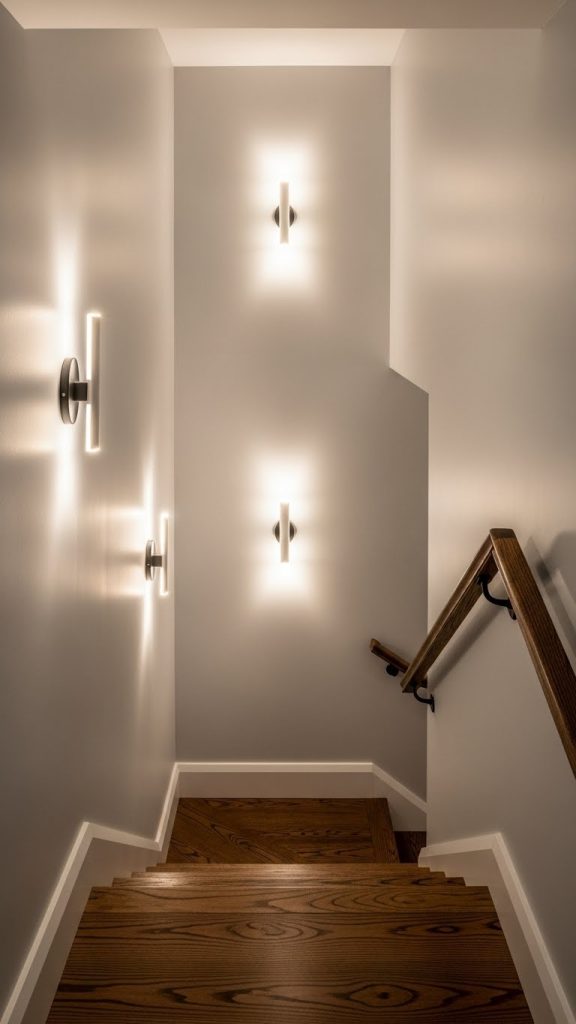
Lighting plays a major role in decorating a basement staircase wall. Proper lighting improves safety and highlights design features.
Start by checking existing electrical connections. If new wiring is required, consult a professional electrician. Plan where the lights will be placed, usually evenly spaced along the wall.
Materials may include wall sconces, LED strip lights, recessed lights, wiring accessories, and switches. Choose warm light for a cozy feel or neutral light for a modern look.
Install lights at a height that does not cause glare. Wall sconces should be placed above eye level, while LED strips can be installed along the handrail or wall edges. Lighting can also highlight artwork or textures on the wall.
This idea enhances both function and style. A well-lit staircase feels safer and more inviting, especially in basements where natural light is limited.
5. Wallpaper or Wall Murals
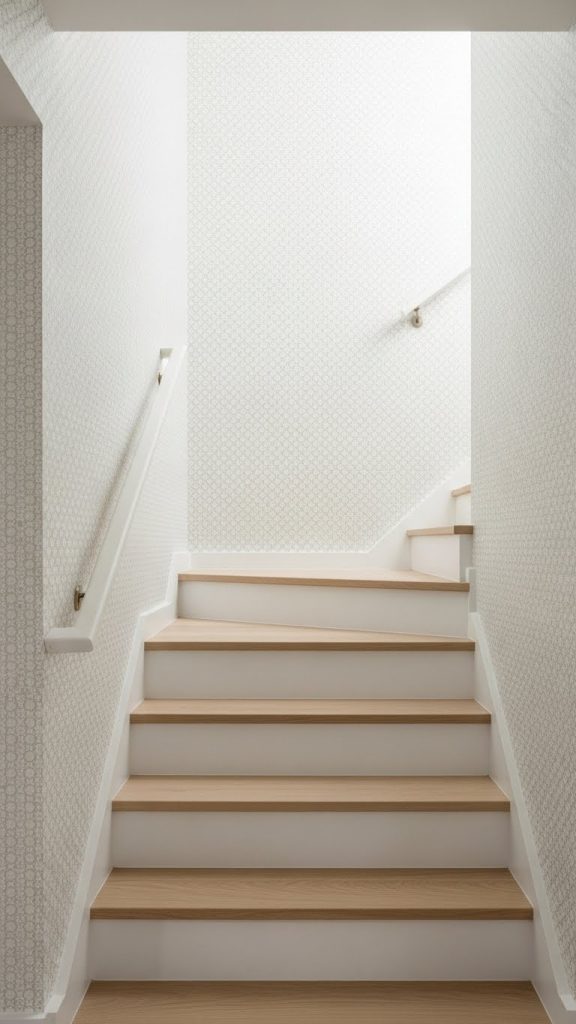
Wallpaper or wall murals can add pattern and personality to a basement staircase wall. This option works well if you want a bold design without major construction.
Preparation includes cleaning the wall and applying a primer suitable for wallpaper. Ensure the wall is dry and smooth to prevent peeling later.
Materials required are wallpaper or mural sheets, wallpaper paste, a smoothing tool, a utility knife, and a measuring tape. Choose moisture-resistant wallpaper for basement areas.
Measure carefully and cut wallpaper strips to size. Apply paste evenly and smooth out air bubbles during installation. Patterns with vertical lines can make the staircase appear taller.
This approach allows for creative expression, from nature scenes to geometric designs. It is best to use wallpaper on one wall to avoid overwhelming the space.
6. Floating Shelves with Decor Items
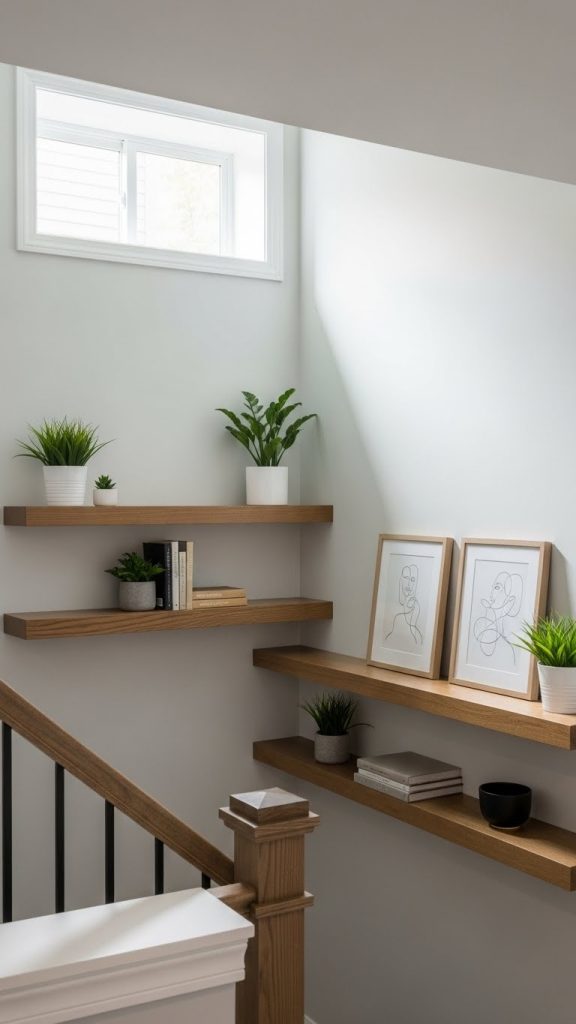
Floating shelves provide both decoration and storage for a basement staircase wall. They are practical and visually appealing.
Preparation includes locating wall studs and marking shelf positions. Ensure shelves do not stick out too far to maintain safety on stairs.
Materials include floating shelves, wall brackets, screws, anchors, a drill, and a level. Choose sturdy materials that can handle weight.
Install shelves securely into studs or use heavy-duty anchors. Decorate them with small plants, books, framed prints, or decorative objects. Avoid heavy items that could fall.
This idea works well in modern and minimal homes. It adds interest without taking up floor space.
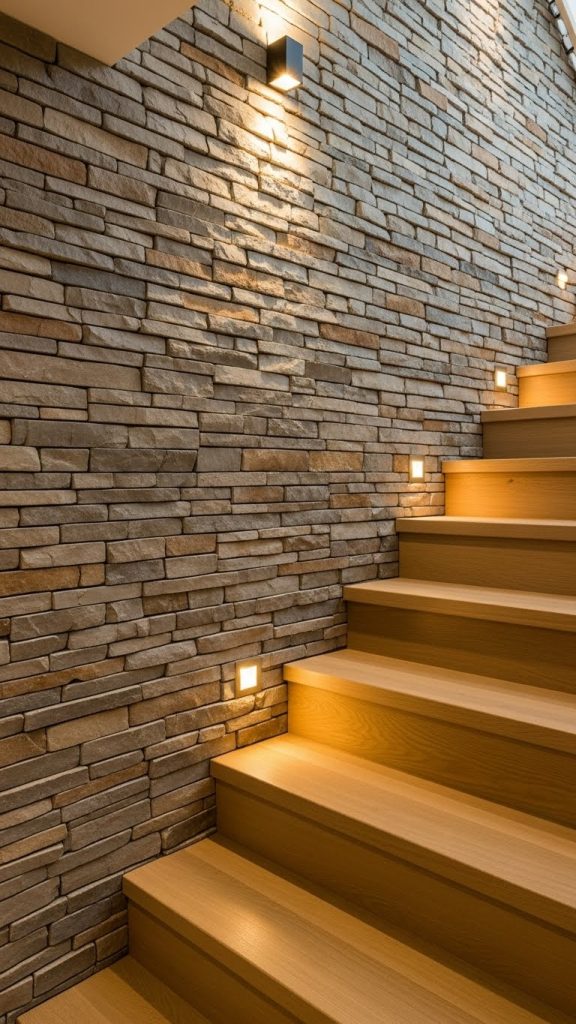
7. Textured Wall Finishes
Textured finishes add depth and interest to a basement staircase wall. Options include plaster, stone veneer, or brick panels.
Preparation involves cleaning the wall and applying a bonding primer. Check for moisture and address any issues before installation.
Materials depend on the texture chosen. For stone or brick panels, you will need adhesive, panels, spacers, and cutting tools. For plaster, you need plaster mix, trowels, and protective gear.
Install textures carefully, starting from the bottom. Allow proper drying time. Neutral tones work best to keep the staircase from feeling heavy.
Textured walls create a strong visual impact and are durable for high-traffic areas.
8. Handrail Design Enhancement
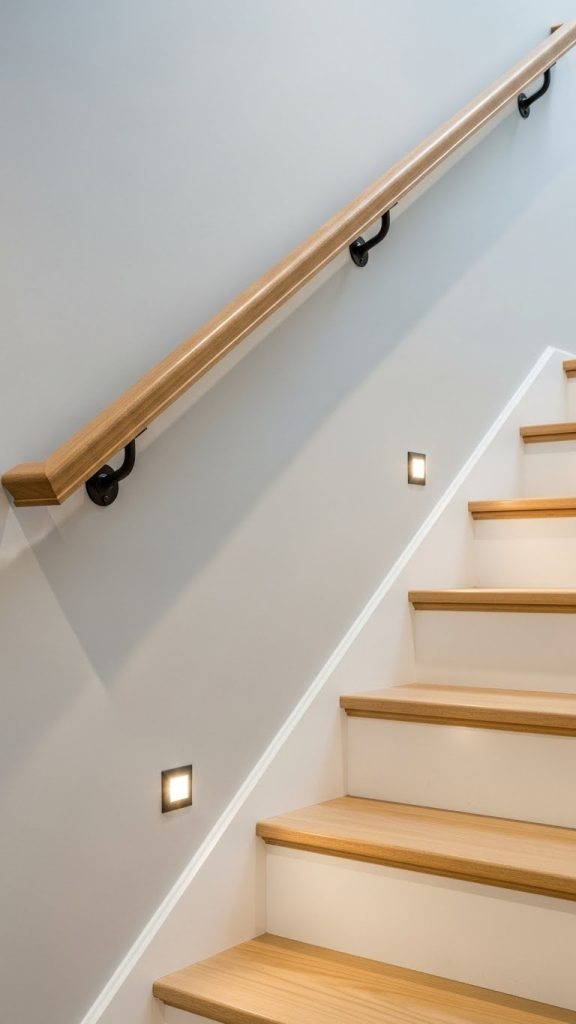
The handrail area is an important part of the staircase wall. Enhancing it can improve both safety and appearance.
Preparation includes checking the stability of the existing handrail. Repair or replace damaged parts.
Materials include a new handrail, brackets, screws, wood stain or paint, and a drill. Choose materials that match your home style.
Install the handrail securely and finish it with paint or stain. You can also add a contrasting wall color behind the handrail to highlight it.
This idea is subtle but effective, especially in narrow basement staircases.
9. Built-In Storage or Cabinets
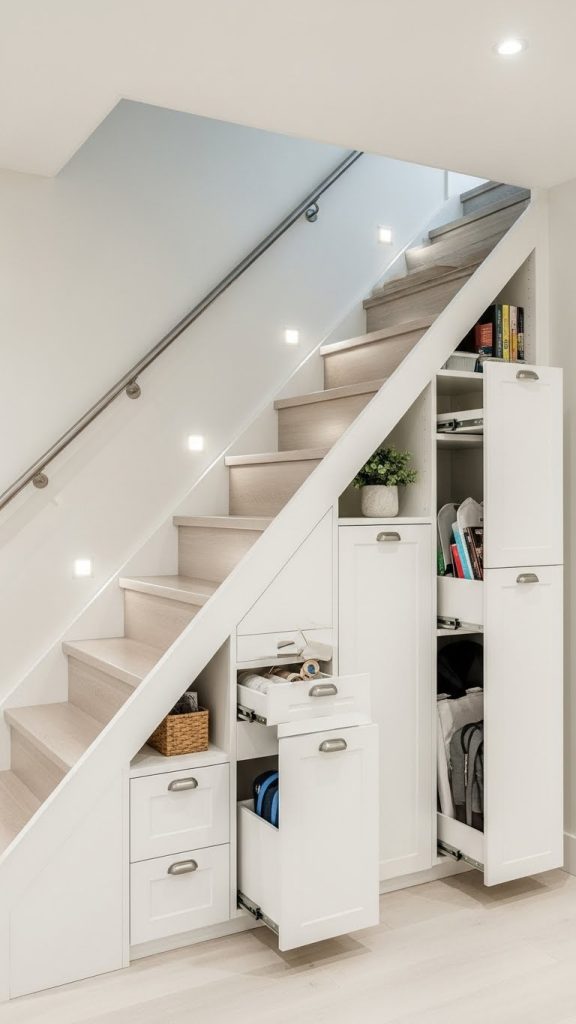
Built-in storage along the basement staircase wall is ideal for maximizing space.
Preparation includes measuring available wall space and planning cabinet depth. Ensure storage does not interfere with stair movement.
Materials include plywood or MDF, screws, hinges, handles, and paint. Moisture-resistant materials are important.
Install cabinets securely and finish them neatly. Use them to store shoes, tools, or seasonal items.
This option combines decoration with functionality and works well in small homes.
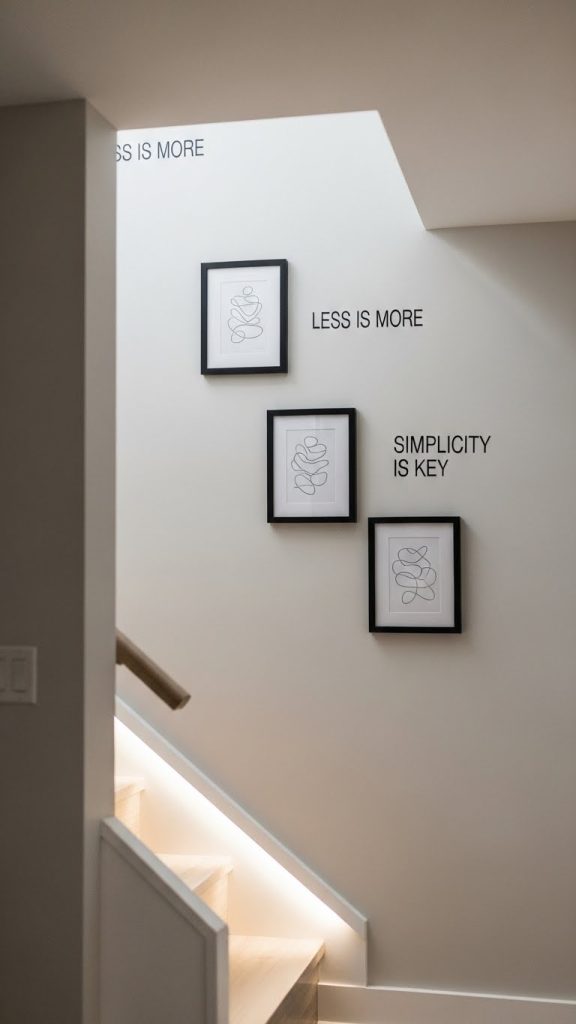
10. Minimal Art and Wall Quotes
Minimal art and wall quotes add style without cluttering the staircase wall.
Preparation includes choosing simple designs and planning placement.
Materials include framed prints, wall decals, or vinyl lettering. Use strong adhesive or proper hanging tools.
Install items evenly and keep spacing consistent. Choose inspirational quotes or abstract art for a clean look.
This idea is low-cost and easy to update over time, making it perfect for changing styles.