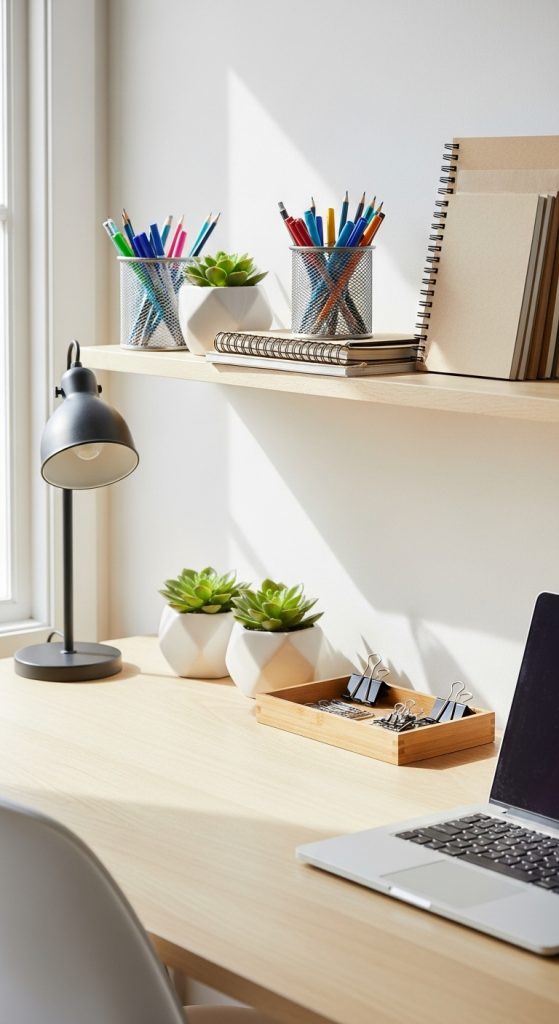
Narrow shelves are perfect for adding storage and display options in small or tight spaces without overwhelming the room. Their slim profile allows them to fit in hallways, bathrooms, bedrooms, and living rooms while providing both functionality and style. In this guide, we explore ten creative narrow shelf ideas, complete with materials, preparation tips, and practical considerations. Each idea is designed to help you make the most of limited space while enhancing your room’s aesthetic.

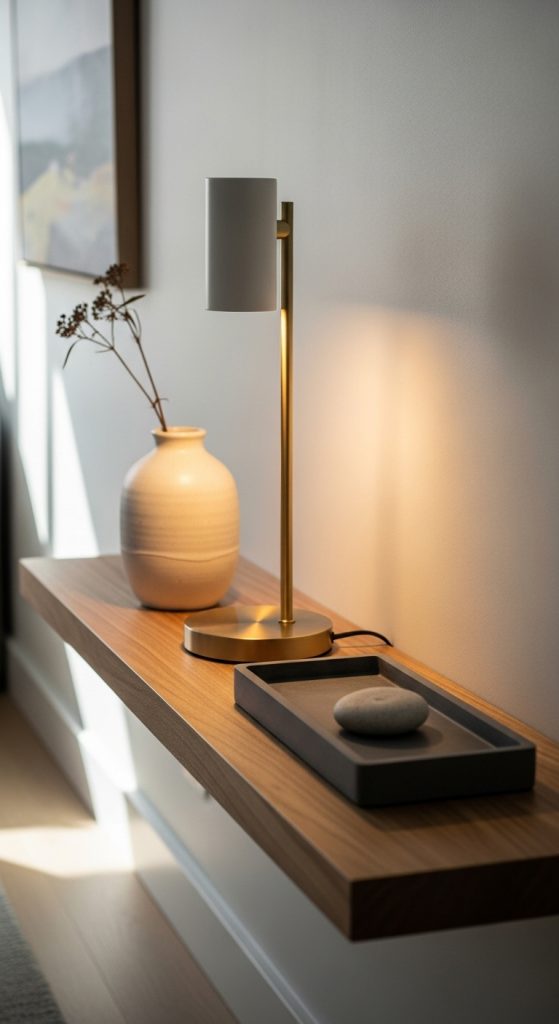
1. Floating Minimalist Shelf
Floating shelves are ideal for a sleek and modern look. These shelves appear to “float” without visible brackets, providing a minimalist aesthetic while maximizing wall space. They are perfect for displaying small decorative items, books, or framed photos.
Preparation and Materials:
- Narrow wooden board or MDF shelf
- Invisible wall brackets or floating shelf hardware
- Drill and screws
- Level and measuring tape
Begin by measuring the wall area and marking positions for the brackets. Ensure the shelf is level and properly anchored to the wall studs for stability. Opt for neutral-colored wood or painted finishes to maintain a minimalist vibe. Decorate with a few curated items, balancing height and visual weight to avoid clutter. Floating shelves work best in modern or contemporary interiors and can be installed in multiples for a layered display effect. Regular dusting and weight monitoring are essential to preserve both appearance and structural integrity.
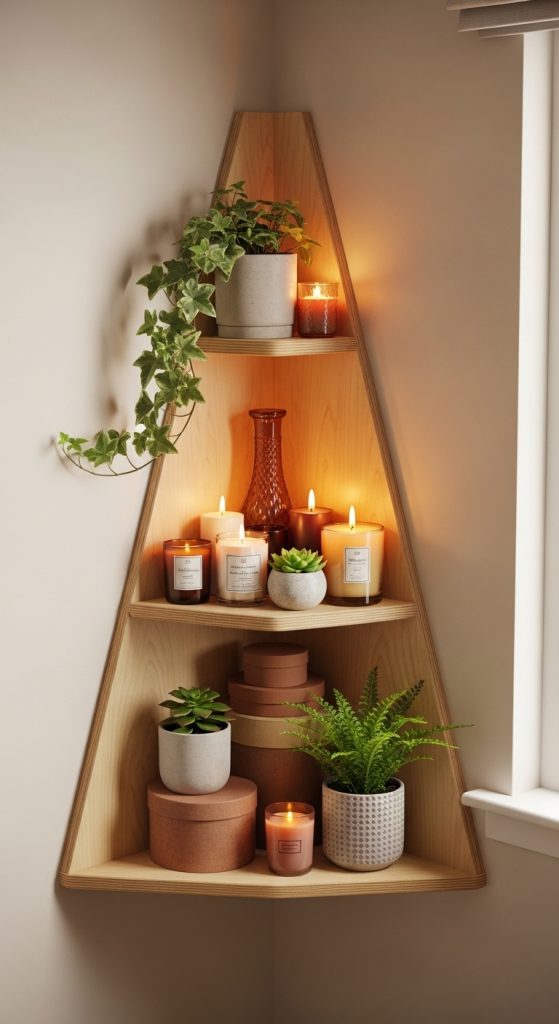
2. Corner Shelf Solution
Corners often go unused, but a narrow corner shelf can transform these spaces into functional storage or display zones. Corner shelves can fit into any room, from kitchens to bedrooms, and add architectural interest.
Preparation and Materials:
- Narrow triangular or L-shaped shelf
- Wall anchors or brackets
- Screws, drill, level
- Decorative items or small storage boxes
Choose a corner that receives adequate light or complements the room layout. Install brackets securely, ensuring the shelf is level and can hold intended items. Use the shelf to display small plants, candles, or kitchen spices depending on the room. Corner shelves maximize space without impeding traffic flow. Opt for materials that match or complement the surrounding decor, such as natural wood, metal, or painted finishes. Layer items thoughtfully, keeping heavier objects close to the wall and lighter decorative pieces toward the edge.
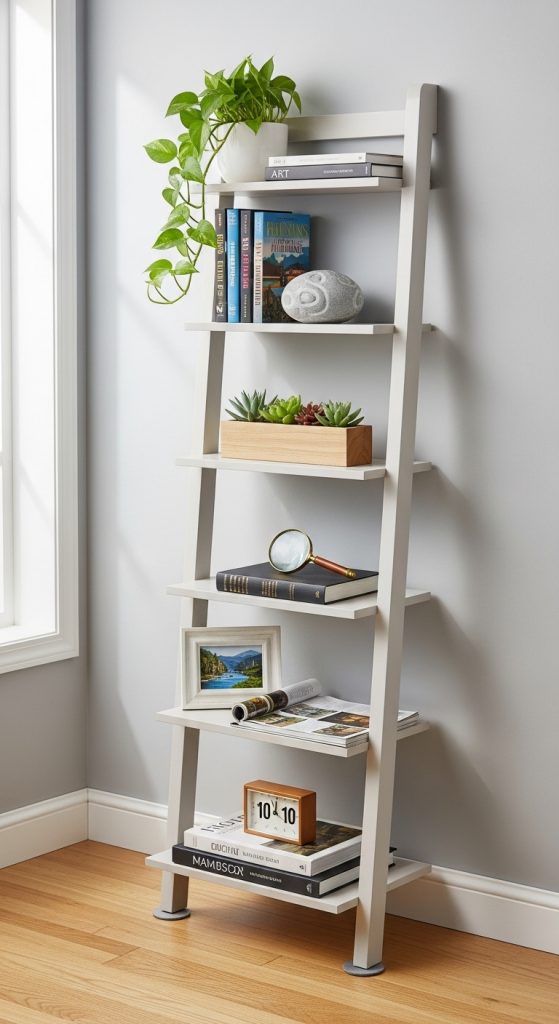
3. Ladder-style Leaning Shelf
A ladder-style leaning shelf leans against the wall and provides multiple tiers for storage or display. Its narrow footprint makes it ideal for hallways, entryways, or tight living areas.
Preparation and Materials:
- Narrow ladder-style shelving unit
- Sandpaper and paint or stain (optional)
- Decorative items for styling
- Anti-slip pads for floor protection
Assemble the shelf according to instructions, sanding and painting if desired. Position the shelf against a wall at a slight angle, ensuring stability. Decorate with books, small plants, and decorative objects, placing heavier items on lower shelves for safety. This style combines practicality with casual elegance, making it a versatile addition to many interiors. Use it in small spaces to create vertical storage without occupying much floor area. Its leaning design also makes it easy to move and reposition as needed.
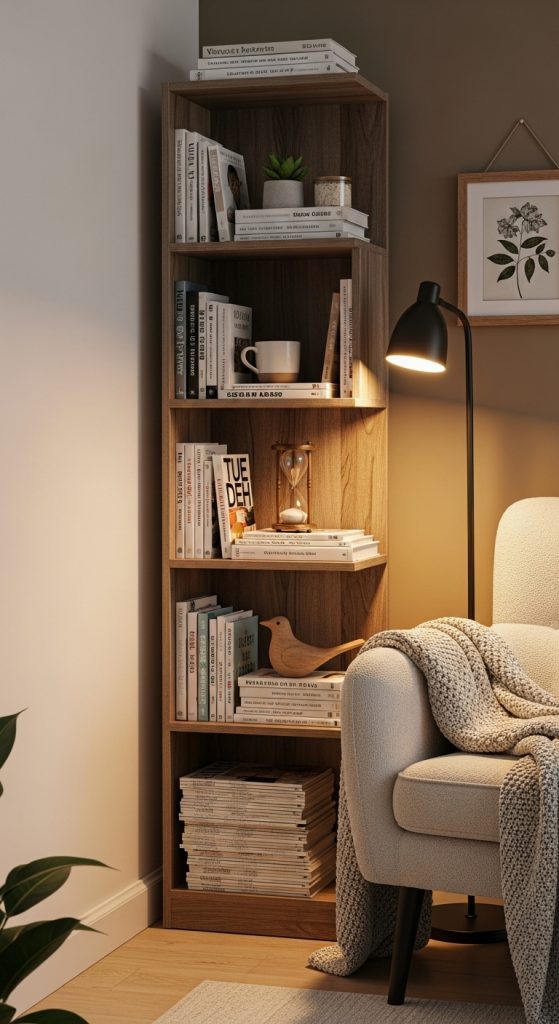
4. Narrow Bookshelf Nook
A slim bookshelf can be installed in narrow spaces to create a reading nook or storage solution for books and magazines. It adds character without taking up much room.
Preparation and Materials:
- Narrow wooden or metal bookshelf
- Screws or brackets for wall attachment
- Measuring tape and level
- Books, magazines, or decorative accents
Place the shelf near natural light or a cozy corner to create a functional reading area. Arrange books vertically and horizontally for visual interest. Small decorative items like photo frames or candles can be incorporated between books. Use bookends to keep items upright, especially on open shelving. Narrow bookshelves are perfect for hallways, beside desks, or between furniture, maximizing space efficiency. Regularly organizing the shelf ensures easy access to books and maintains a tidy appearance.
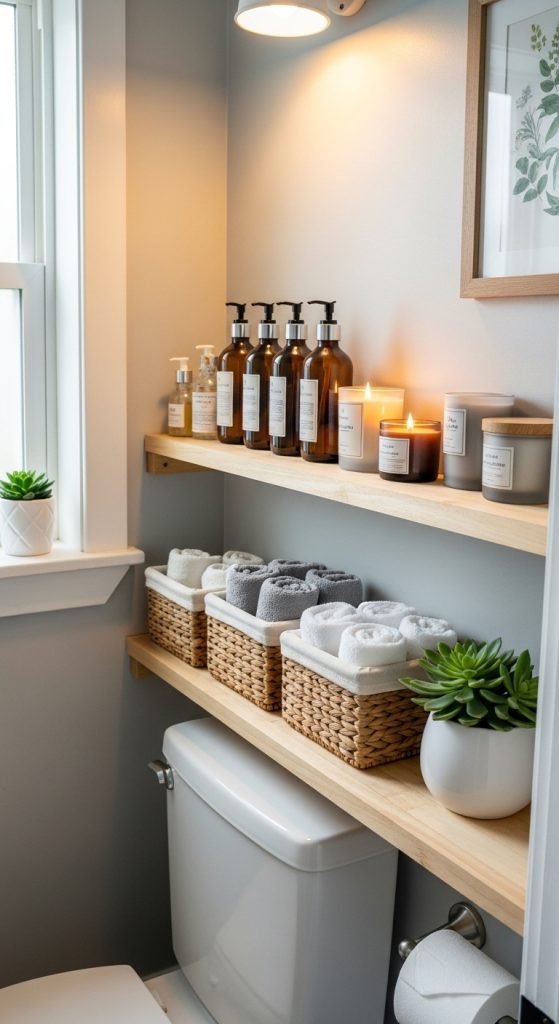
5. Bathroom Slim Shelf
A narrow shelf in the bathroom can organize toiletries, towels, and decorative items without occupying floor space. Wall-mounted options are especially practical in small bathrooms.
Preparation and Materials:
- Moisture-resistant wooden or metal shelf
- Screws, anchors, drill, level
- Small baskets or trays for organization
Install the shelf at a height that is convenient for daily use. Use trays or baskets to group toiletries and prevent clutter. Incorporate decorative touches such as scented candles, small plants, or artwork to enhance the space aesthetically. Ensure materials are suitable for humid environments to avoid damage. Narrow shelves are particularly effective above toilets, beside mirrors, or near sinks. Keep the arrangement minimal to maintain a clean, organized bathroom.
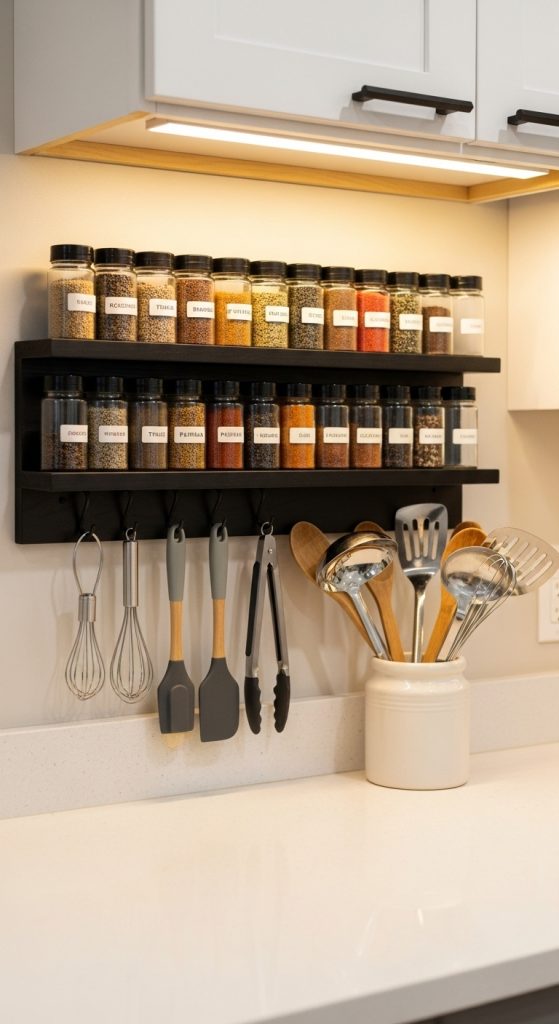
6. Kitchen Spice Organizer
A narrow shelf in the kitchen can be dedicated to spices, jars, or small kitchen tools. It keeps items within easy reach while adding a decorative touch to the wall.
Preparation and Materials:
- Narrow wooden or metal shelf
- Screws, anchors, drill, level
- Small jars, spice containers, or utensil holders
Install the shelf near the cooking area for convenience. Group items by type, color, or size to create a visually appealing display. Label jars for functionality and aesthetic uniformity. Wooden shelves can be stained or painted to match cabinetry, while metal shelves can create a modern or industrial look. Use narrow shelves vertically for multiple tiers of storage without taking up counter space. Regularly clean the shelf to maintain hygiene and appearance.
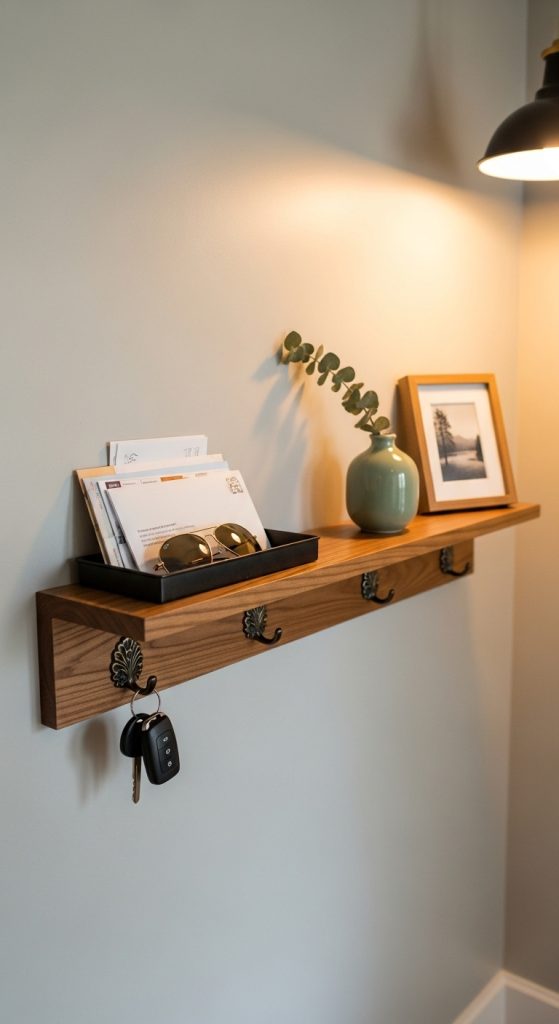
7. Entryway Display Shelf
A narrow shelf in the entryway can serve as a landing spot for keys, sunglasses, and mail while doubling as a decorative display.
Preparation and Materials:
- Slim wooden or metal wall shelf
- Hooks for keys or accessories (optional)
- Small tray, bowl, or decorative accents
Install the shelf at a convenient height for easy access. Use trays or small containers to organize everyday essentials. Add decorative items like vases, candles, or framed prints to create an inviting entryway. Choose materials and finishes that complement the room’s style, such as rustic wood for farmhouse charm or metal for modern decor. Narrow shelves in entryways prevent clutter while keeping essentials within reach, balancing functionality with aesthetic appeal.
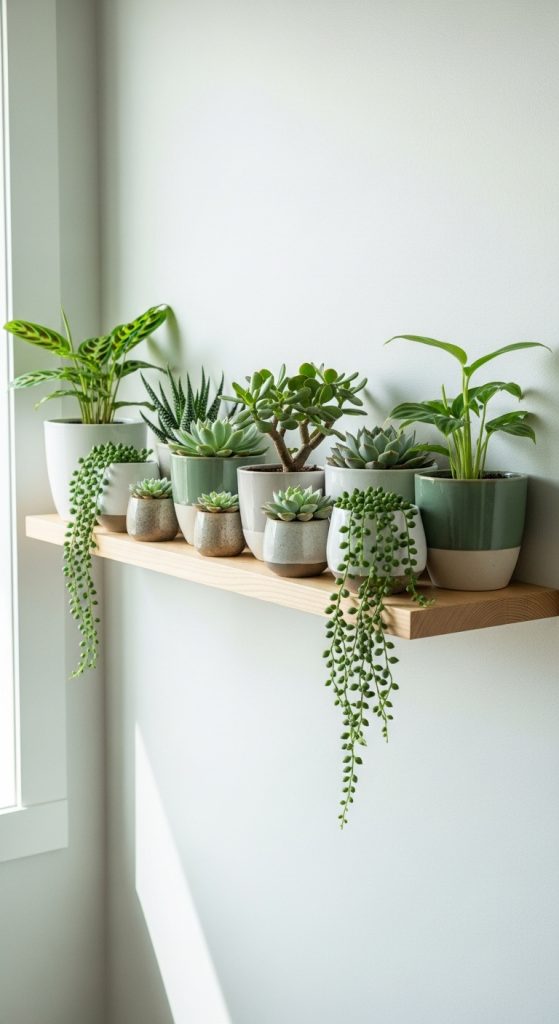
8. Floating Plant Shelf
A narrow floating shelf can transform a wall into a vertical garden, holding small indoor plants or succulents. This brings greenery into the home without occupying floor space.
Preparation and Materials:
- Narrow floating shelf or brackets with board
- Screws, anchors, drill, level
- Small potted plants, ceramic or terracotta pots
Install the shelf near natural light sources for plant health. Arrange plants by height and texture for visual interest. Use pots that match the room’s color scheme or style. Floating plant shelves are perfect for living rooms, kitchens, or bathrooms. Grouping multiple shelves vertically creates a cascading greenery effect. Regular watering and plant maintenance keep the display healthy and vibrant.
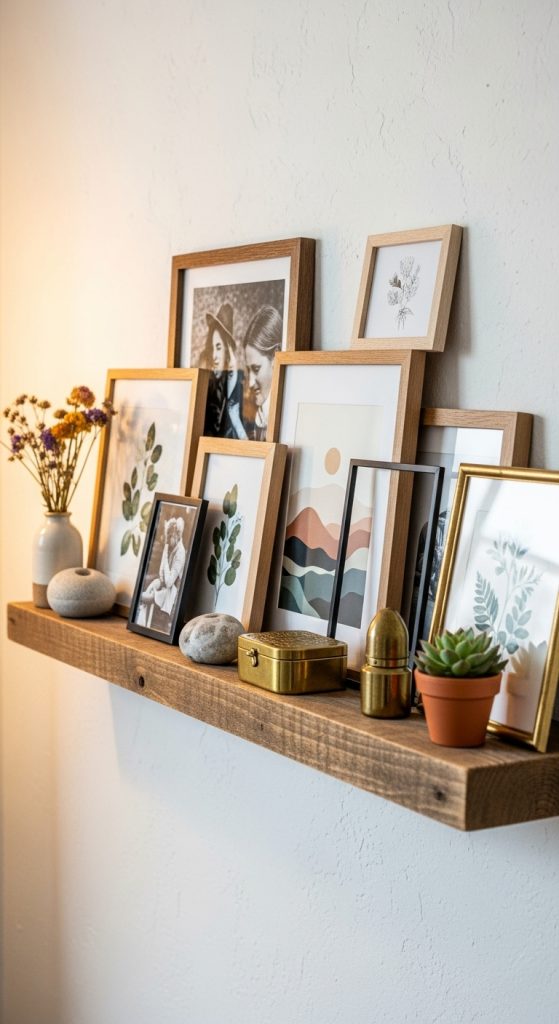
9. Art and Photo Display Shelf
A narrow shelf can act as a gallery ledge for artwork, framed photos, or decorative objects. It provides a versatile way to personalize your space without committing to wall nails for each item.
Preparation and Materials:
- Narrow wooden or metal shelf
- Screws, anchors, drill, level
- Frames, small sculptures, or decorative objects
Install the shelf at eye level for maximum visibility. Layer frames and objects, mixing heights and textures to create a curated look. Rotate artwork or photos periodically for seasonal updates or fresh inspiration. Narrow display shelves are ideal for living rooms, bedrooms, or hallways. They offer flexibility for styling while keeping walls minimally impacted.
10. Office Organizer Shelf
In a home office, a narrow shelf can hold stationery, notebooks, or decorative office items. It maximizes vertical storage and keeps your workspace organized.
Preparation and Materials:
- Slim wall-mounted or freestanding shelf
- Screws, anchors, drill, level
- Desk organizers, pen holders, small plants
Install the shelf above the desk or on a nearby wall within easy reach. Organize items by category or frequency of use. Include decorative accents to make the workspace inviting, such as small plants or motivational prints. Narrow shelves in offices save desk space and enhance productivity while maintaining an aesthetic appeal. Regular decluttering ensures the shelf remains practical and visually pleasing.