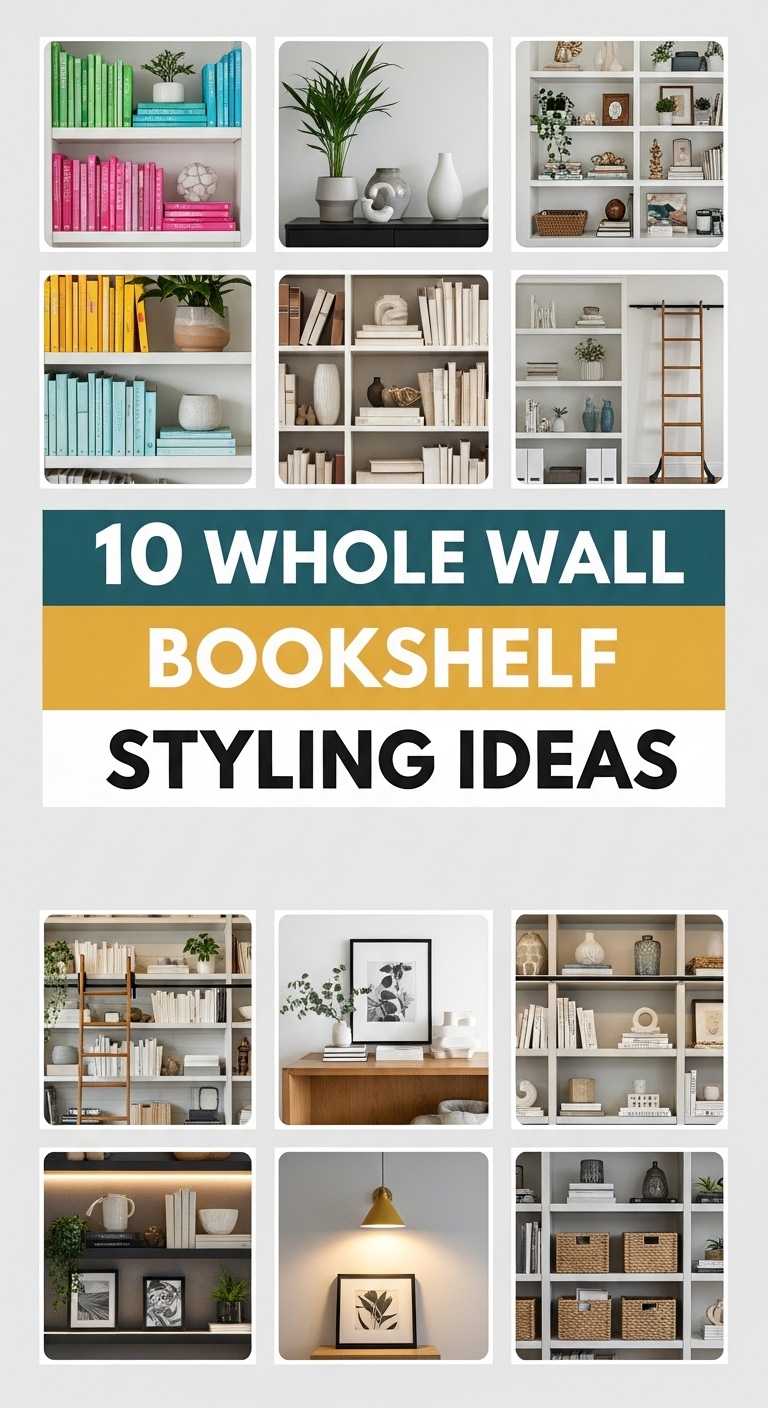
A whole wall bookshelf is more than just a place to store books. It is a statement piece, a functional design element, and a way to showcase personality in your home. These large bookshelves transform an entire wall into a stylish and organized area, providing space for books, decorative items, and personal collections. Whether you have a living room, home office, or bedroom, a whole wall bookshelf can become the centerpiece of your interior design.
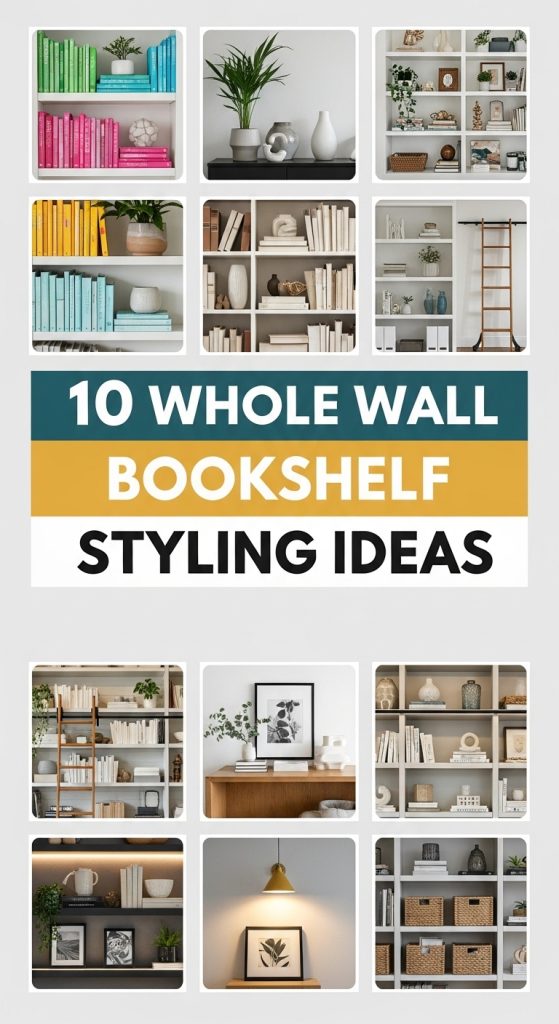
Styling a large bookshelf, however, requires careful planning. Simply filling the shelves with books can make the space look cluttered or chaotic. The key is to mix books with decorative elements, balance colors, and create visual interest by varying the height and size of items. Additionally, choosing the right materials, finishes, and storage methods will help maintain a cohesive and attractive look.
In this blog, we will explore ten creative ways to style a whole wall bookshelf. Each idea includes practical tips, preparation materials, and guidance on how to combine aesthetics with functionality. Whether your style is modern, rustic, or eclectic, these ideas will inspire you to turn your bookshelf into a beautiful and organized wall feature.
1. Minimalist Monochrome Styling
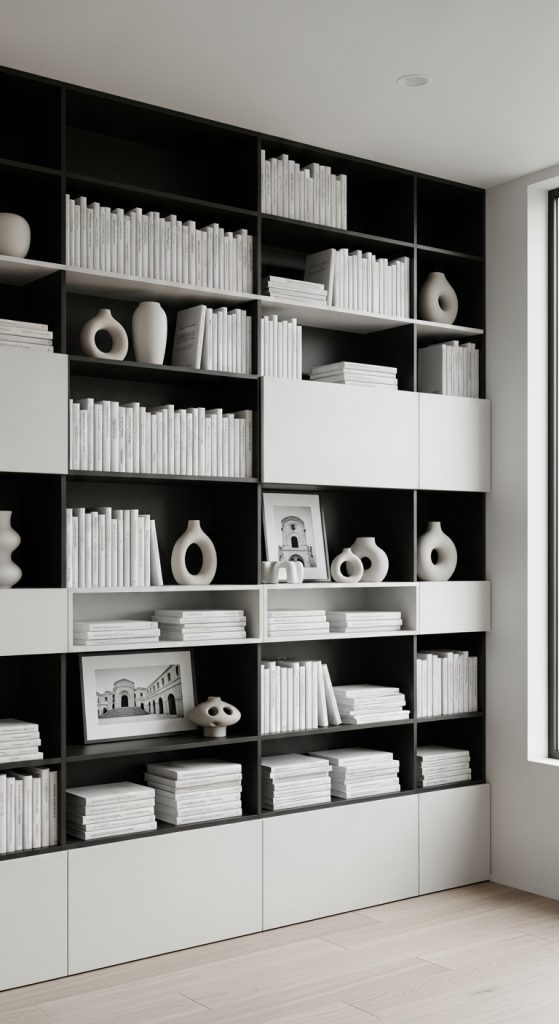
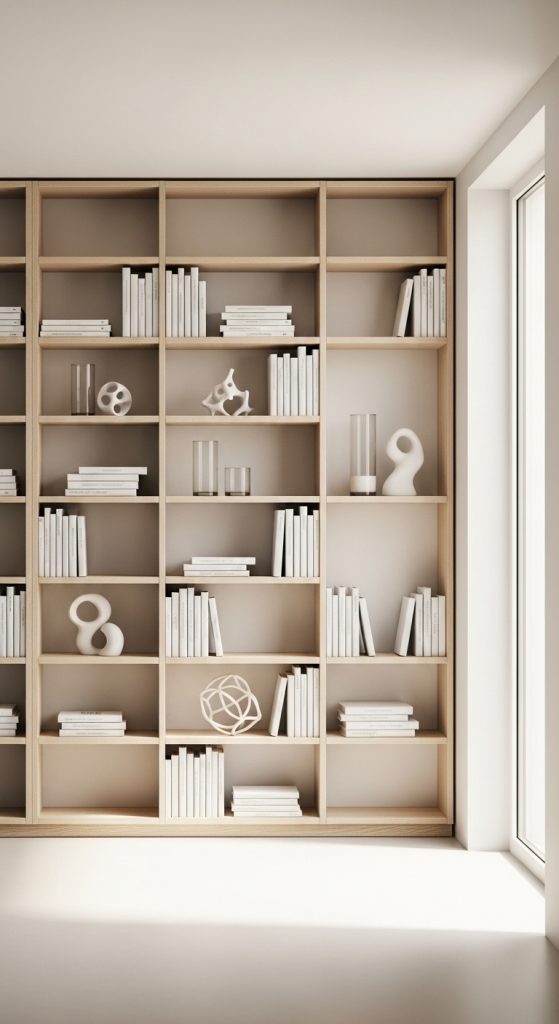
For a clean and sophisticated look, a minimalist monochrome style works perfectly. Start by selecting a color palette of two to three neutral tones, such as white, beige, and grey. Arrange books with spines facing out in matching shades, or turn some books sideways to create uniform blocks of color.
Add a few decorative objects in similar tones, such as ceramic vases, simple sculptures, or framed black-and-white photographs. Keep the spacing between items consistent to maintain a tidy appearance. Using storage boxes or baskets in matching colors for smaller items can reduce clutter and maintain symmetry.
Preparation materials include a tape measure to plan spacing, a small level for shelf alignment, and decorative accessories in your chosen palette. Minimalist styling emphasizes simplicity and calm, making the bookshelf a serene focal point rather than an overwhelming display.
2. Eclectic and Colorful Mix
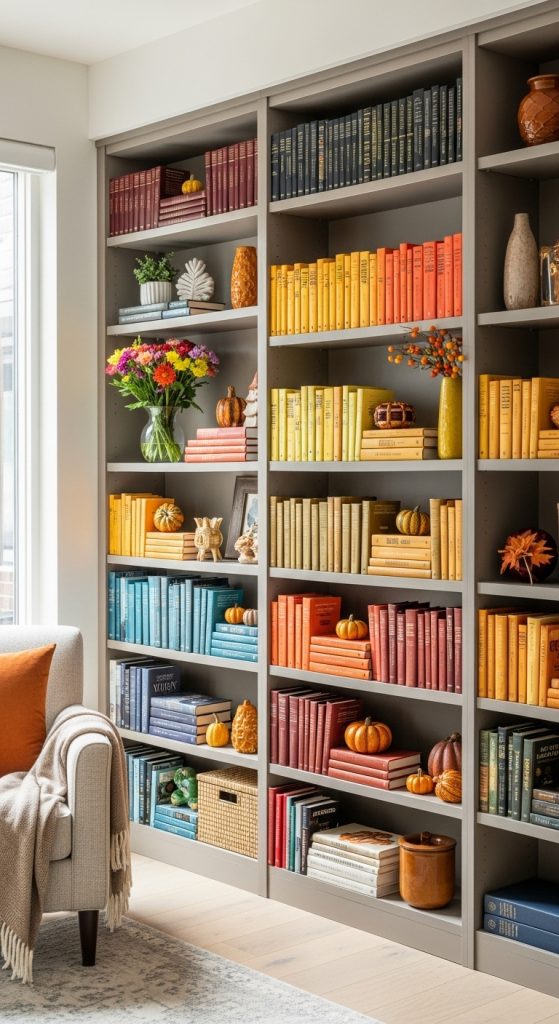
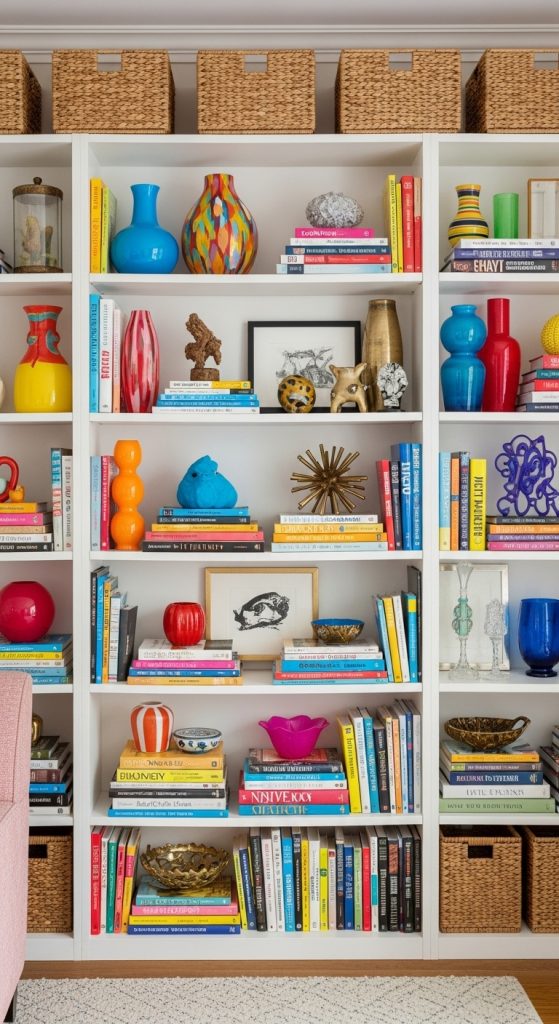
An eclectic style brings energy and personality to a whole wall bookshelf. Mix books of different colors and sizes, stacking some vertically and some horizontally. Add decorative pieces such as colorful vases, unique sculptures, travel souvenirs, and framed art pieces.
The key is to avoid perfect symmetry. Instead, create visual interest by clustering items in small groups and leaving some empty space for breathing room. Layering textures, such as woven baskets, metallic objects, or glass accents, adds depth.
Preparation includes sorting books by size and theme, collecting decorative items, and planning shelf clusters for a balanced yet playful display. Eclectic styling allows you to showcase your personality while maintaining a visually appealing bookshelf.
3. Integrated Lighting Design
Lighting can elevate a whole wall bookshelf, highlighting its contents and adding warmth to the room. LED strip lights, small spotlights, or battery-powered puck lights can be installed under each shelf or behind the back panel to create a subtle glow.
Combine lighting with books and décor by highlighting decorative objects or framed photos. Use lighting to create a hierarchy of focus, drawing attention to key areas while keeping other sections simple.
Preparation involves measuring the shelf dimensions, choosing appropriate lighting options, and ensuring electrical safety if using wired lights. Properly integrated lighting enhances both aesthetics and functionality, making the bookshelf a visually engaging feature day and night.

4. Natural Materials and Greenery
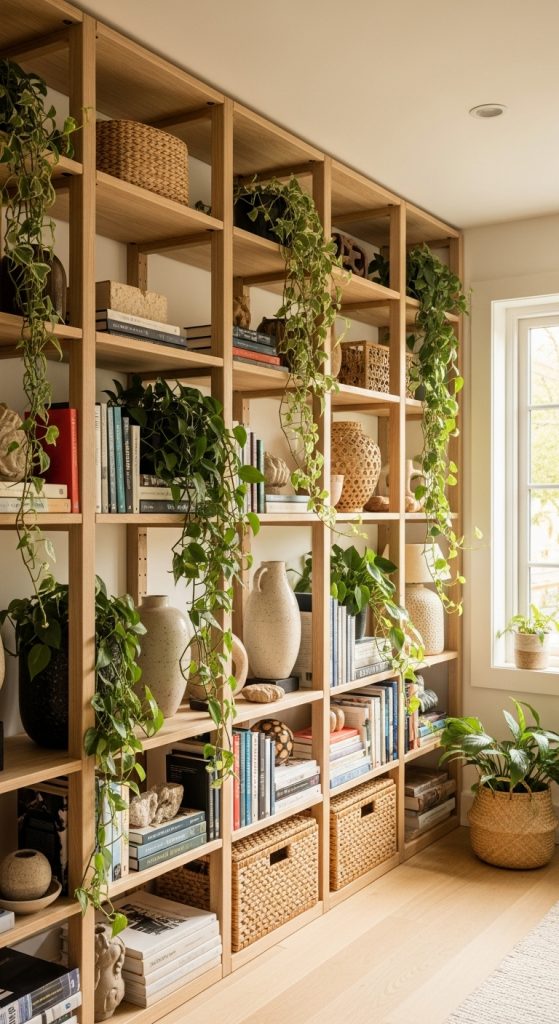
Incorporating natural materials and plants brings life and texture to a whole wall bookshelf. Wooden shelves, rattan baskets, and stone or ceramic objects complement books while creating a warm and organic atmosphere.
Add potted plants or trailing greenery like pothos or ivy to soften the rigid lines of the shelves. Alternating between books and plants in a balanced way creates visual flow. Consider small planters for lower shelves and larger ones for upper sections.
Preparation includes selecting plants that thrive indoors, ensuring proper drainage, and choosing durable decorative objects. This styling idea connects your bookshelf to nature, making it inviting and lively without overwhelming the space.
5. Library-Inspired Traditional Look
A traditional library-inspired style gives a whole wall bookshelf a classic and timeless appeal. Use dark wood shelves, leather-bound books, and brass or antique decorative objects. Consider incorporating a rolling ladder for added elegance and accessibility.
Arrange books by size or genre, mixing vertical and horizontal stacks. Add framed vintage artwork or family portraits to personalize the space. Rich textures like velvet or leather accent pieces enhance the luxurious feel.
Preparation includes sourcing traditional-style furniture, planning book organization, and selecting complementary decorative pieces. This approach transforms a large wall bookshelf into a sophisticated library corner that radiates elegance and history.

6. Open and Airy Styling
Creating an open and airy bookshelf reduces visual clutter and emphasizes space. Avoid overloading shelves with books. Instead, leave intentional gaps and mix in lightweight decorative objects such as glass vases, minimal sculptures, and small framed prints.
Use horizontal stacking for a few books and keep the rest vertical, leaving enough space to showcase decorative items. Lighter-colored shelves or back panels enhance the sense of openness.
Preparation involves measuring spacing, choosing lightweight materials, and selectively placing items to balance the visual flow. Open styling works well in smaller rooms or apartments, ensuring the large bookshelf doesn’t dominate the space.
7. Thematic Styling
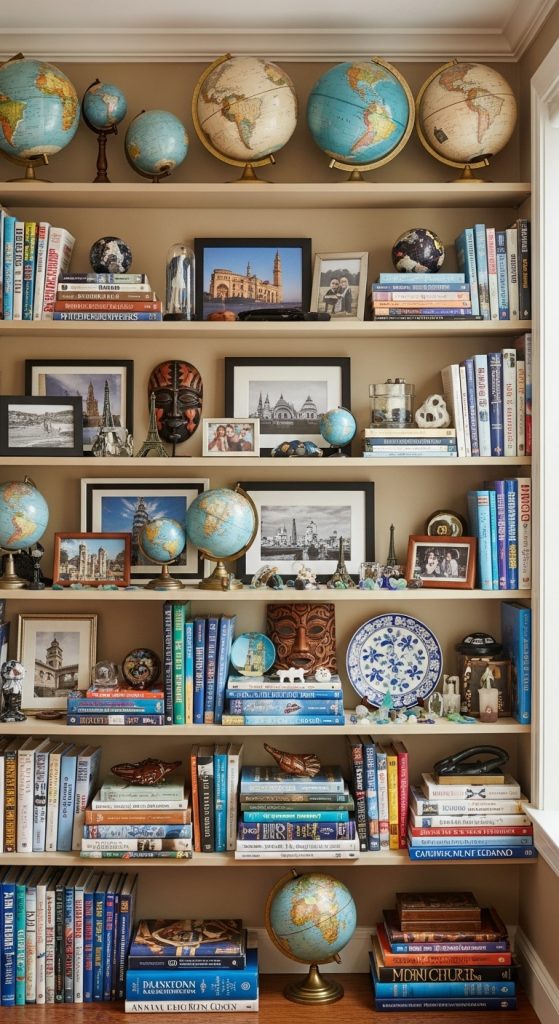
Thematic styling allows you to organize your bookshelf around a concept, such as travel, art, or hobbies. Collect books, photographs, souvenirs, and objects related to the chosen theme. Group them together to create small vignettes on each shelf.
This method adds coherence and storytelling to your display. Varying item height and texture within the theme prevents monotony, while color accents help tie the concept together.
Preparation requires selecting a theme, sourcing related items, and planning shelf layout. Thematic styling makes your bookshelf more personal and engaging, allowing visitors to explore your interests visually.
8. Mixed Media and Art Display
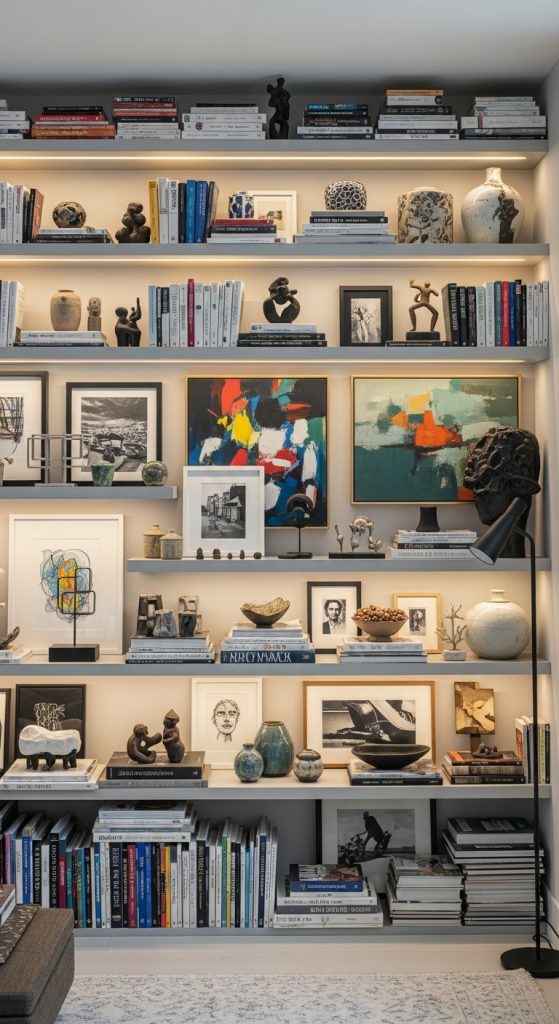
A whole wall bookshelf can double as an art display by integrating framed paintings, photographs, or sculptures with books. Place books in small stacks or alongside decorative boxes to maintain stability while leaving room for art pieces.
Use shelves at varying heights to create a gallery-like effect. Rotate artwork seasonally or when adding new books to refresh the display.
Preparation involves measuring spaces for art pieces, selecting frames, and ensuring balance between books and art. This approach combines function with visual storytelling, turning your bookshelf into a multi-purpose gallery wall.
9. Functional Storage Integration
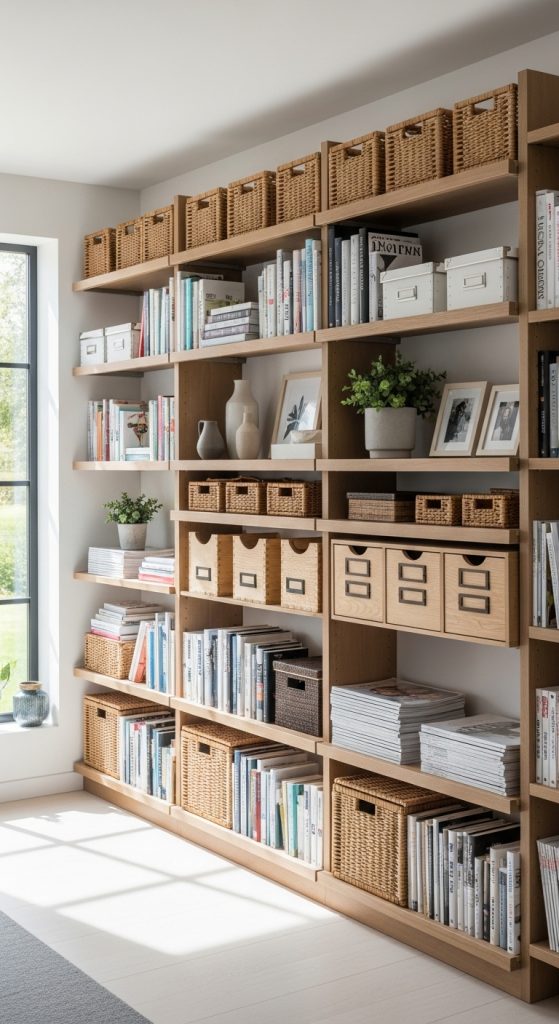
Large bookshelves can combine decorative styling with practical storage. Use baskets, bins, or drawers for items like magazines, office supplies, or toys. Stack books in organized clusters while leaving space for functional storage.
Label storage bins or boxes for a clean look. Consider sliding doors or cabinet sections for items you want hidden, maintaining the visual appeal of the rest of the shelves.
Preparation includes measuring storage containers, organizing items by type, and ensuring easy accessibility. This method balances aesthetics with practical usability, making the bookshelf efficient and stylish.
10. Seasonal Rotation Styling
Seasonal rotation keeps your whole wall bookshelf fresh and dynamic. Change decorative items, book covers, or accent colors to match seasons, holidays, or personal milestones. Use seasonal elements like fresh flowers, themed ornaments, or seasonal books.
Rotate arrangements gradually to avoid clutter. Keep a consistent base style while adding seasonal accents for visual interest.
Preparation involves storing off-season items, selecting interchangeable décor, and planning shelf rotation. This styling idea allows your bookshelf to evolve, creating an ever-changing focal point in your home.