Mid-century design has stood the test of time due to its clean lines, functional form, and understated elegance. One of the most versatile pieces in a mid-century modern home is the wall unit. These units serve as both storage and display solutions, combining practicality with aesthetic appeal. A well-styled wall unit can become the centerpiece of your living room, dining area, or even home office. The challenge, however, lies in styling it without overwhelming the space or compromising its functionality.
Whether you own a vintage mid-century wall unit or a modern reproduction, there are numerous ways to incorporate personality, color, and texture into its design. From showcasing art and books to displaying ceramics and plants, styling your wall unit can reflect your taste while keeping the mid-century ethos of simplicity and elegance intact. This guide will provide ten practical and creative styling ideas that transform your wall unit into a functional yet visually appealing feature in your home. Each idea includes suggestions for materials, decor items, and placement strategies to help you achieve a balanced look.
1. Minimalist Display with Functional Storage
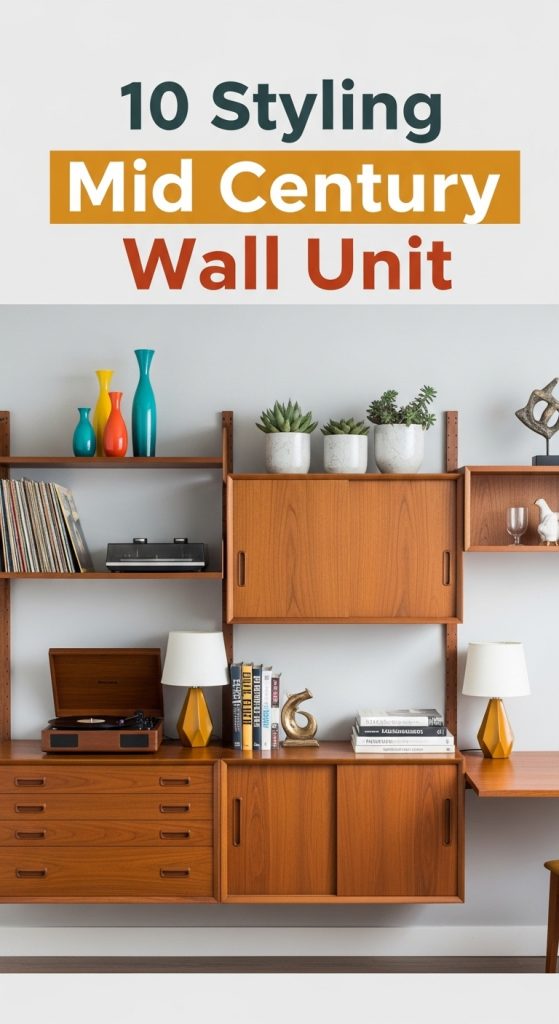
A minimalist approach highlights the clean lines and natural wood finishes characteristic of mid-century design. Begin by decluttering your wall unit, leaving only essential items that are both functional and visually appealing. Store everyday items such as books, magazines, or tableware behind closed cabinets to maintain a tidy appearance. Open shelves can feature a limited number of decorative objects, such as a sculptural vase or a small collection of ceramics.
Materials that work well in this style include light-toned woods, matte metal accents, and glass. Keep color palettes neutral to avoid visual chaos—think soft beiges, muted greens, or classic white. The balance between open and closed storage is essential; too many objects can overwhelm the design, while too few may look sparse. Lighting can enhance the minimalist display, with a simple LED strip or table lamp highlighting key pieces. This approach emphasizes functionality and simplicity, keeping your mid-century wall unit stylish without excessive ornamentation.

2. Mix of Vintage and Modern Accessories
Styling your mid-century wall unit with a combination of vintage and modern pieces creates a timeless look. Start by incorporating classic mid-century items, such as a retro clock, wooden bowls, or geometric sculpture. Complement these with contemporary accessories like a sleek lamp, abstract art print, or modern vases. This contrast creates visual interest while maintaining a cohesive theme.
Placement is key: balance vintage and modern objects across the shelves to avoid overcrowding one side. Consider materials like brass, glass, or ceramic for a sophisticated touch. For color schemes, use warm wood tones as a base, then layer with accent colors found in both eras. Mixing eras allows your wall unit to feel lived-in and curated, rather than staged. This approach celebrates both the history and contemporary relevance of mid-century design, making your space feel authentic and dynamic.

3. Gallery Wall Above the Unit
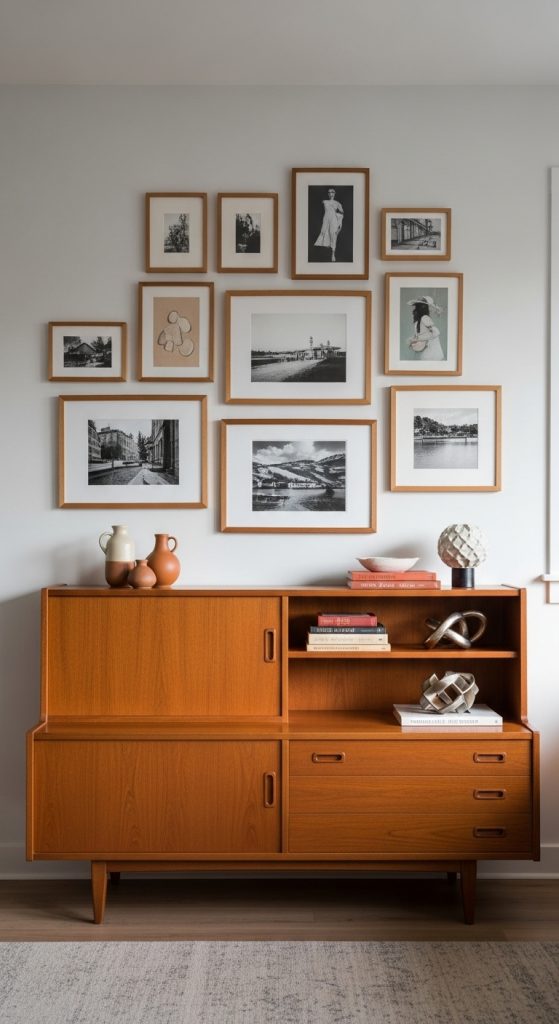
Adding a gallery wall above your mid-century wall unit draws the eye upward and creates a visually striking focal point. Use a mix of framed prints, photographs, and artwork, keeping frames simple to complement the clean lines of the furniture. Choose a cohesive color palette for the artworks, or alternate between black-and-white pieces and muted color prints for balance.
Maintain symmetry by centering the gallery above the unit, leaving equal spacing between frames. Smaller decorative items can be displayed on the unit itself, such as a vase or small sculpture, creating a connection between the shelves and the wall. This approach emphasizes the vertical space and adds personality to your room without compromising the minimalist charm of mid-century design. A gallery wall is particularly effective in living rooms or home offices, enhancing the visual interest of your wall unit.
4. Integrating Greenery and Plants
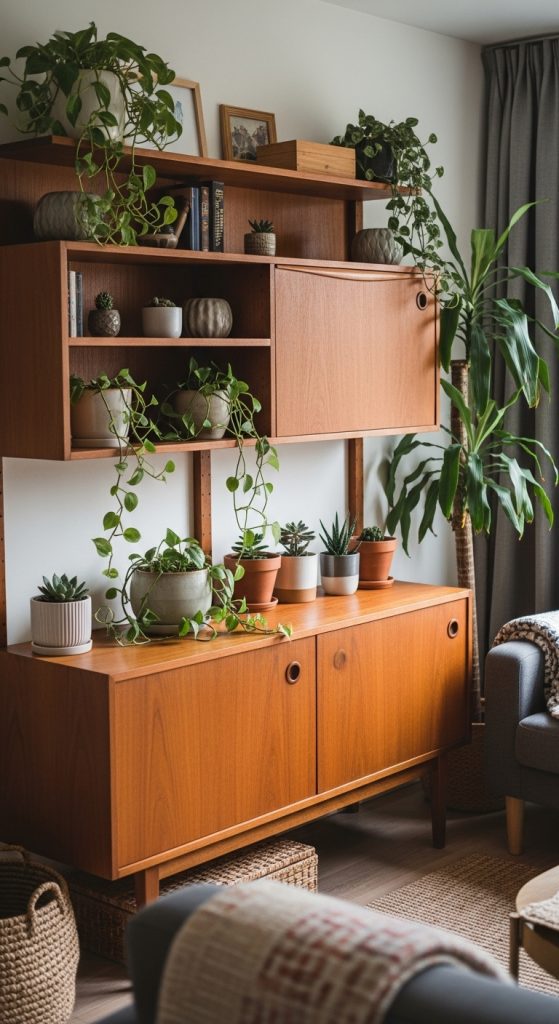
Incorporating plants into your mid-century wall unit adds life and color to the space. Small potted plants, trailing vines, or succulents can be placed on open shelves to soften the sharp lines of the unit. Consider varying heights and textures to create depth. Hanging planters from above or adding tall plants beside the unit can also enhance the natural aesthetic.
Use ceramic, terracotta, or woven baskets as planters to complement mid-century materials. Balance is important—avoid overloading the unit with greenery, which can look chaotic. A few carefully placed plants draw attention to the unit and create a harmonious connection with other natural elements in the room. In addition to aesthetic appeal, plants improve air quality and bring a sense of calm, making your wall unit both stylish and functional.
5. Statement Art Pieces
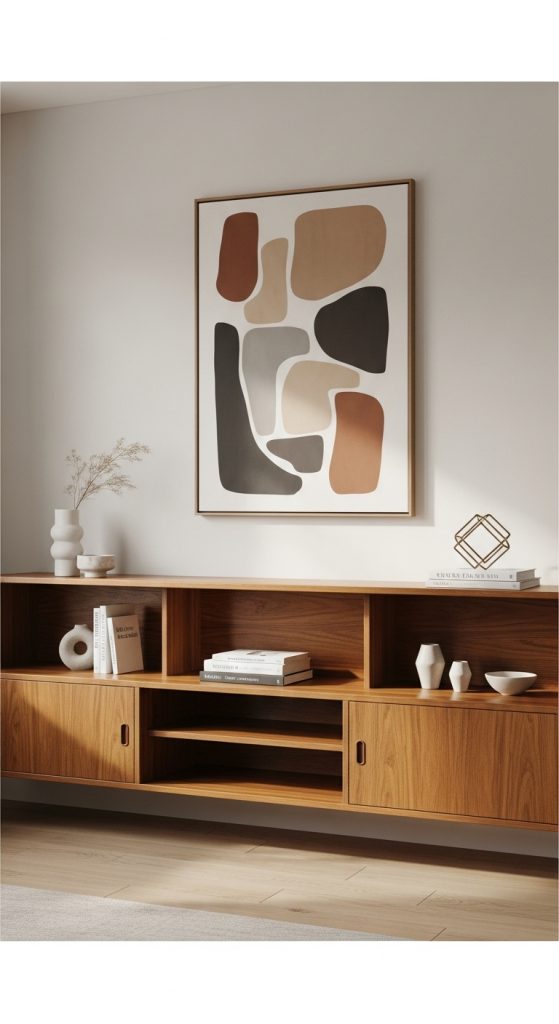
A single large art piece can make your mid-century wall unit stand out without cluttering the space. Choose a piece that reflects your personal style, whether abstract, geometric, or nature-inspired. Place it either above or in front of the unit, leaning against the wall for a casual look, or mount it to create a bold statement.
Materials such as wood, metal, and canvas pair well with mid-century units. Ensure the artwork complements the unit’s wood tones and the overall room palette. Minimal accessories on the shelves prevent competition with the statement piece, letting it remain the focal point. This approach works well in open-plan living areas, where a striking visual anchor can unify the space. Statement art simplifies styling decisions while adding personality and sophistication to your wall unit.
6. Incorporating Textiles
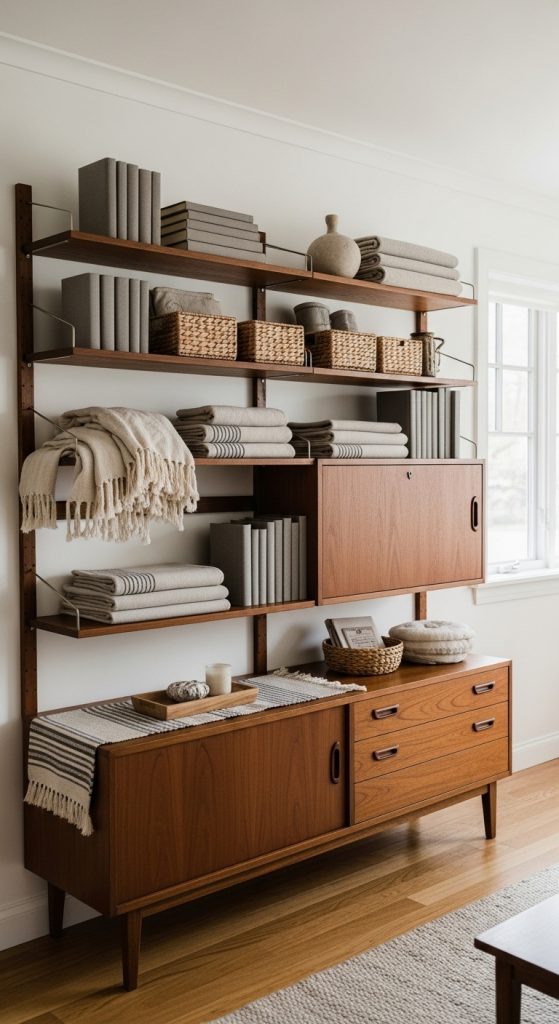
Textiles can add warmth and texture to a mid-century wall unit. Consider displaying folded throws, small woven baskets, or even fabric-wrapped books on the shelves. A small runner or placemat across the surface of the unit adds a subtle layer of texture without overpowering the design.
Natural fibers like linen, cotton, or wool work best, aligning with the mid-century aesthetic of simplicity and organic materials. Stick to neutral or earthy tones for a cohesive look, and introduce patterns sparingly for visual interest. Textiles soften the hard edges of wooden units and create a cozy, inviting atmosphere. This styling method works particularly well in living rooms, bedrooms, or family spaces where warmth and comfort are key.
7. Curated Book Collection
Books are a natural fit for mid-century wall units, but styling them correctly is crucial. Organize books by color, size, or theme to create visual harmony. Horizontal stacks can be paired with small decorative objects, while vertical arrangements keep the unit functional for easy access.
Incorporate bookends in metal, wood, or stone for a mid-century touch. Avoid overcrowding shelves—leave some open space to maintain an airy feel. Mixing books with small plants, ceramics, or framed photos creates a curated, personalized look. This approach not only highlights your literary interests but also enhances the visual appeal of the unit, balancing functionality and style.

8. Lighting Enhancements
Adding lighting to your wall unit can dramatically improve its appearance and functionality. LED strip lights, small table lamps, or under-shelf lighting highlight key objects and create ambiance. Warm lighting complements mid-century wood tones and emphasizes the unit’s design features.
Consider placement carefully: lights can highlight artwork, plants, or decorative objects, while also providing practical illumination for reading or display purposes. Materials like brass, glass, or matte metal for lamps enhance the mid-century aesthetic. Strategic lighting transforms your wall unit into a dynamic focal point, elevating both style and usability in the room.

9. Seasonal and Rotating Decor
Keeping your wall unit dynamic through seasonal or rotating decor ensures it never feels static. Swap objects like vases, candles, or small sculptures according to season or mood. This practice allows you to refresh your space without a major redesign.
Materials such as glass, ceramic, and wood provide versatility across seasons. Colors can be switched subtly, for example, adding warmer tones in winter and lighter hues in summer. Rotating decor encourages creativity and personal expression while preserving the mid-century principle of simplicity. This approach keeps the wall unit engaging, relevant, and aligned with your evolving style preferences.
10. Personal Memorabilia and Collections
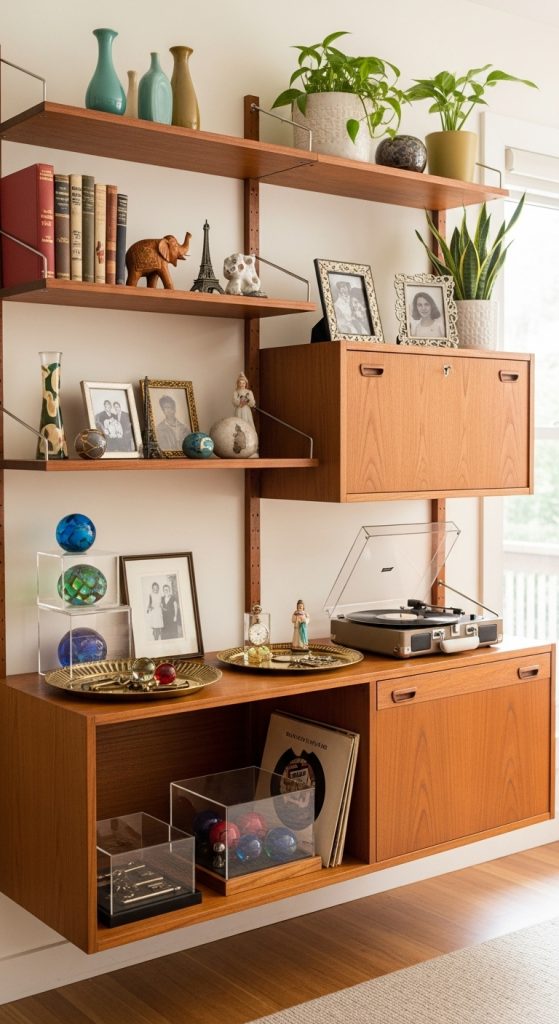
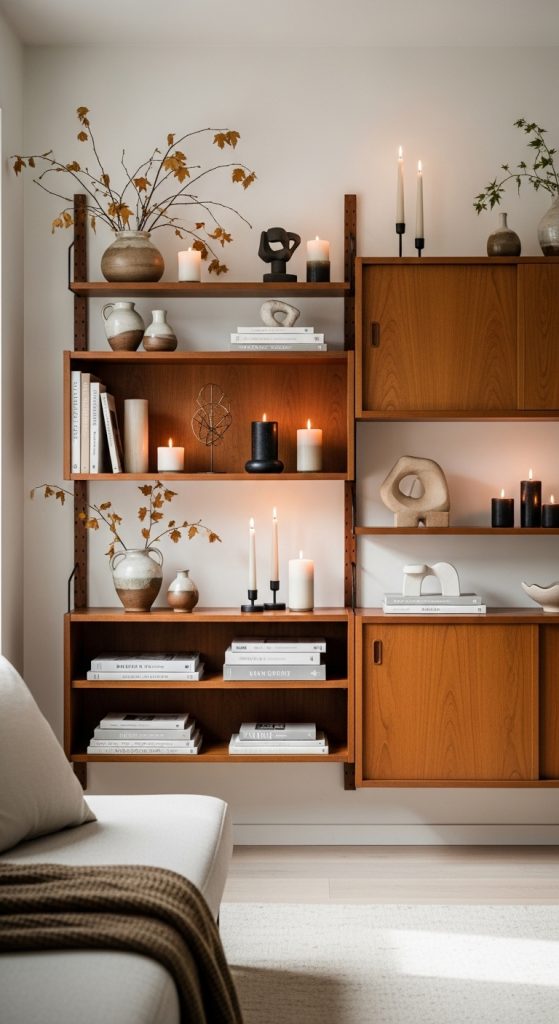
Incorporating personal items such as travel souvenirs, family photos, or collectible objects adds a unique touch to your wall unit. Display these items selectively to avoid clutter, creating a balance between personal expression and mid-century minimalism.
Use small trays, frames, or display boxes to organize objects, and consider grouping similar items for a cohesive look. Materials like wood, metal, and glass maintain the mid-century aesthetic. Personal memorabilia makes your wall unit a reflection of your personality, turning it into more than just furniture. This approach fosters a sense of nostalgia and connection, enhancing both the visual appeal and emotional resonance of your space.