Creating bouquets from air-dry clay is a fun, creative, and long-lasting alternative to fresh flowers. Unlike real blooms that wilt over time, clay flowers can preserve their beauty indefinitely, allowing you to craft unique arrangements for home décor, gifts, or special occasions. Air-dry clay is soft, pliable, and easy to work with, making it suitable for beginners and advanced crafters alike. With a few basic tools and materials, you can shape petals, leaves, and stems into beautiful, lifelike flowers or stylized abstract designs.
The appeal of clay bouquets lies in their versatility. You can customize colors, shapes, and sizes to suit any theme or season. Additionally, air-dry clay does not require baking, simplifying the process while still yielding durable results. Whether you want delicate roses, bold sunflowers, or whimsical wildflowers, this guide provides ten distinct bouquet ideas, complete with preparation tips, material lists, and step-by-step instructions. By following these ideas, you can create stunning arrangements that showcase your personal style and creativity.
1. Classic Rose Bouquet
Roses are timeless and elegant, making them a perfect starting point for your air-dry clay creations. To prepare, gather red, pink, or white air-dry clay, a clay modeling tool, scissors, floral wire, and green clay for leaves. Start by rolling small balls of clay and flattening them into thin petal shapes. Each rose typically has around 15–20 petals, so make enough before assembly.
Shape the petals by gently curling the edges outward with your fingers or a modeling tool. Take a piece of floral wire as the stem and attach the petals one by one, beginning with a tight bud in the center and gradually adding petals around it. Finish by forming leaves from green clay and attaching them near the base of the rose. Arrange multiple roses in a bouquet shape, securing stems with floral tape or string. This bouquet is ideal for weddings, anniversaries, or as a decorative centerpiece, and you can adjust colors to match any décor theme.

2. Sunflower Delight
Sunflowers bring warmth and brightness to any space. To create an air-dry clay sunflower, you will need yellow, brown, and green clay, a ball tool, and floral wire. Begin by making the center using brown clay, shaping it into a textured circular disk to mimic sunflower seeds. Use a ball tool or toothpick to create small indentations for added realism.
Next, form long, narrow yellow petals. Attach each petal around the central disk, slightly overlapping to give a natural look. For the stem, insert a piece of floral wire and cover it with green clay. Add several green leaves along the stem, shaping veins with a sculpting tool or toothpick. Assemble multiple sunflowers into a bouquet, keeping taller flowers in the center and shorter ones around them. This vibrant bouquet works well in kitchens, living rooms, or as a cheerful gift, and air-dry clay allows you to create large blooms without worrying about wilting.

3. Lavender Sprigs
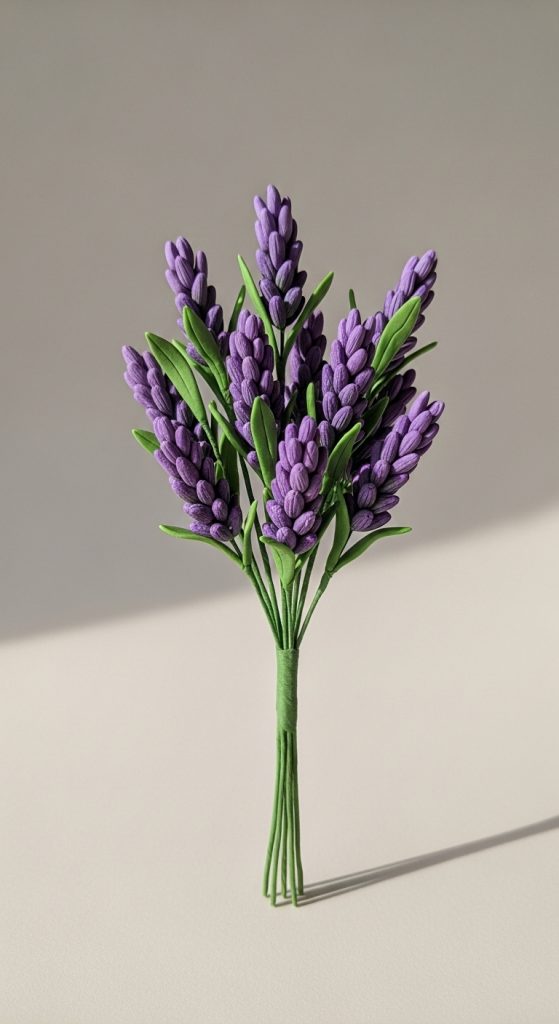
Lavender bouquets are elegant and soothing. For this, gather purple, green, and white clay, along with floral wire and a fine sculpting tool. Start by rolling tiny purple balls for lavender buds. Thread them onto short pieces of floral wire, arranging them in clusters to resemble natural sprigs.
Create slender green stems and tiny leaves from green clay. Attach the buds along the stem in a spiral pattern, leaving small gaps to mimic real lavender. Make multiple sprigs and bind them together at the base with floral tape or string to form a cohesive bouquet. Lavender clay bouquets are perfect for bedroom décor or aromatherapy-inspired designs. You can also mix these sprigs with other clay flowers for a mixed seasonal bouquet, adding dimension and texture.
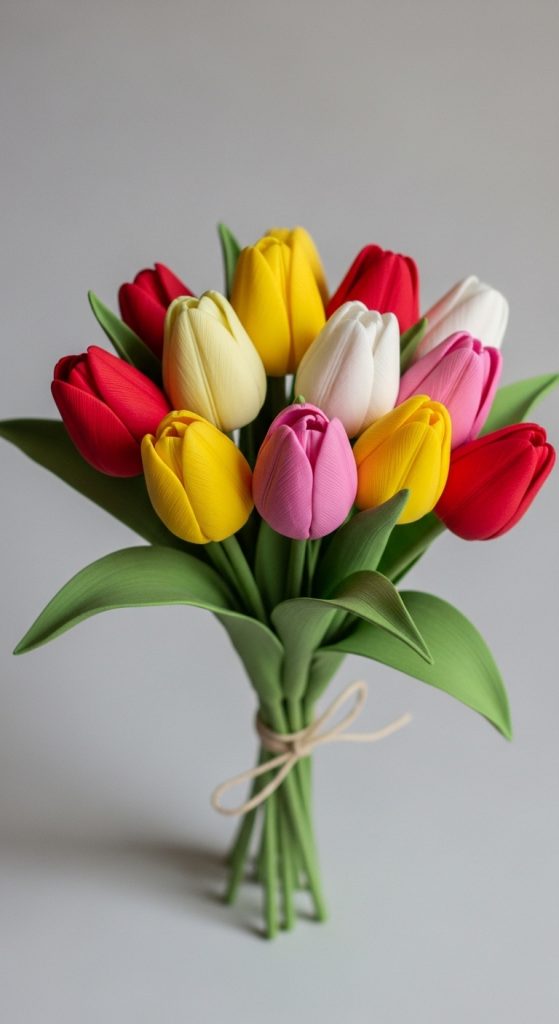
4. Tulip Arrangement
Tulips are simple yet charming flowers, ideal for beginners. Materials include red, pink, yellow, or white clay, green clay, floral wire, and a smooth modeling tool. Shape the petals into elongated ovals and gently pinch the base to form a natural tulip shape. Each tulip typically requires three to six petals.
Attach petals to a floral wire stem, ensuring they form a closed bud. Roll thin green clay strips for leaves and attach them near the base of the tulip. Arrange several tulips together in a small bouquet, varying heights for a dynamic look. Tulip clay bouquets are perfect for spring-themed decorations or gifts. The air-dry clay medium allows easy blending of colors, so you can create subtle gradients on the petals for a realistic effect.
5. Peony Bouquet
Peonies are lush, full flowers that look beautiful in any arrangement. You will need pastel clay colors, floral wire, and sculpting tools. Begin by rolling balls of clay and flattening them into round petals with gently ruffled edges. A typical peony may require 20–30 petals depending on size.
Start assembling from the center, attaching petals in layers around the floral wire stem. Keep adding petals until the bloom reaches your desired fullness. Add a few green clay leaves to complete the flower. Combine multiple peonies into a rounded bouquet for a classic and elegant look. Air-dry clay peonies are ideal for table centerpieces or wedding décor, and their soft colors make them versatile for various themes.

6. Daffodil Cluster
Daffodils are bright, cheerful flowers that require yellow and white clay, floral wire, and a small round tool for shaping petals. Form the trumpet-shaped center first using yellow clay, shaping it with a pointed end. Next, make six surrounding petals with white clay, attaching them evenly around the center.
Use floral wire as stems, covering with green clay, and add thin leaves along the base. Combine several daffodils into a small bouquet, arranging them at slightly different heights to mimic natural growth. Daffodil clay bouquets are ideal for spring décor and can brighten up any room. The lightweight nature of air-dry clay allows you to create multiple blooms without adding weight to the arrangement.

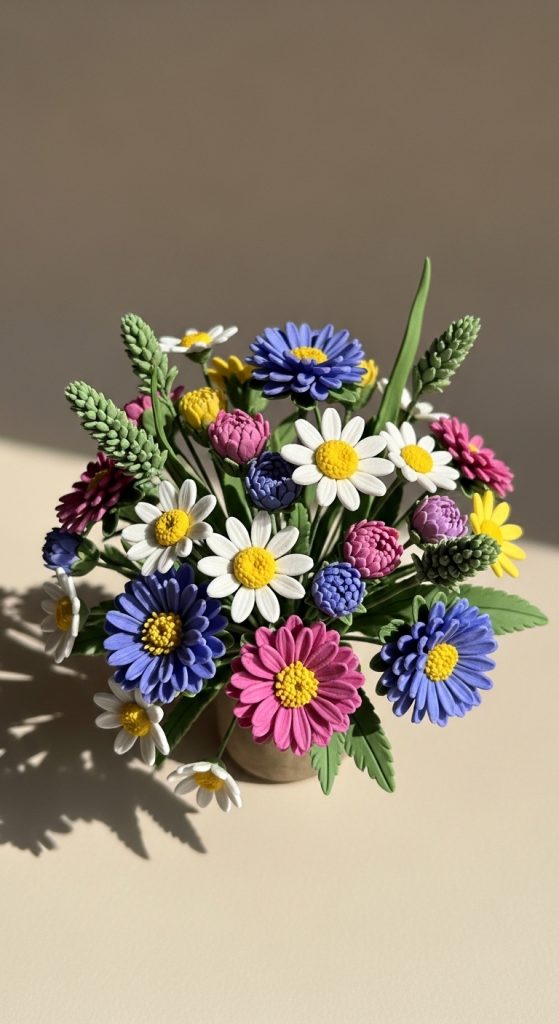
7. Wildflower Mix
Wildflowers add a whimsical touch to any bouquet. For this arrangement, gather clay in multiple colors, floral wire, and a set of small sculpting tools. Shape tiny petals and leaves in different forms to mimic daisies, asters, and small blossoms. Each flower should be around 1–2 inches in size for a natural look.
Attach petals to floral wire stems and arrange them loosely into a bouquet. Add green clay leaves of varying sizes to fill in gaps and enhance realism. A wildflower clay bouquet is perfect for casual home décor, rustic-themed events, or gifts for nature lovers. Air-dry clay is ideal for this project because it allows detailed sculpting of small, delicate flowers that hold their shape over time.
8. Orchid Elegance
Orchids are exotic and sophisticated flowers. You will need pastel-colored clay, floral wire, green clay for leaves, and a ball tool. Roll thin petals and slightly curve the edges for a delicate appearance. Orchids usually have three larger petals and two smaller ones around a central lip.
Assemble the petals on a floral wire stem, shaping them to create a realistic orchid bloom. Add long, slender leaves from green clay. Arrange multiple orchids in a tall bouquet, emphasizing their elegant shape and height. Orchid clay bouquets are ideal for modern décor and special events, as their refined appearance adds a touch of sophistication. Air-dry clay preserves their intricate design without requiring a kiln or oven.

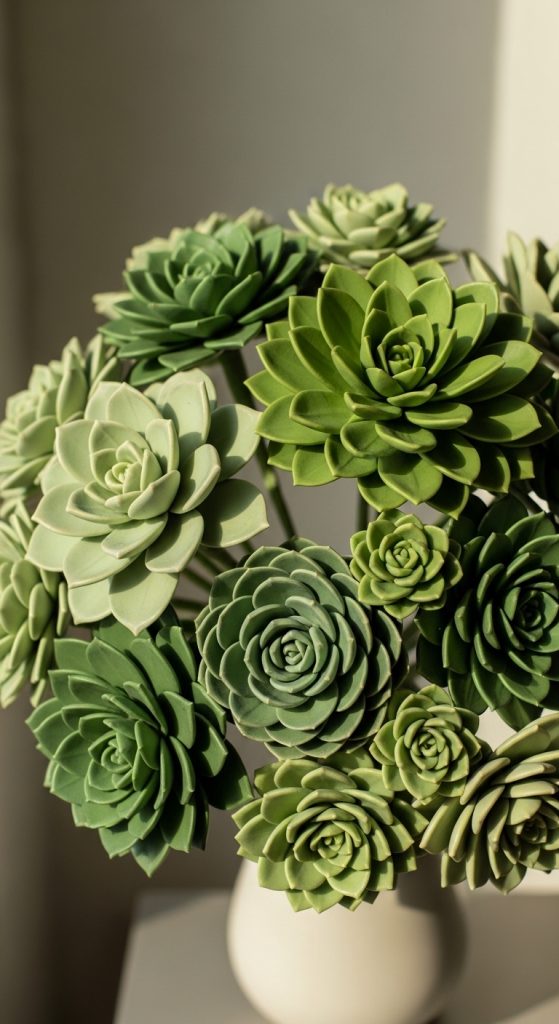
9. Succulent Bouquet
Succulents are unique, adding texture and variety to a bouquet. Materials include various shades of green clay, floral wire, and a sculpting tool. Shape thick, fleshy leaves and layer them into rosettes. Use smaller leaves for younger succulents and larger leaves for mature plants.
Attach each succulent to a floral wire base. Mix different types and sizes for a natural effect. Combine the succulents into a cohesive bouquet, adding filler leaves as needed. Succulent clay bouquets are great for low-maintenance décor, as they do not require watering and maintain their shape indefinitely. Air-dry clay is perfect for creating realistic textures and subtle color variations for a lifelike finish.
10. Mixed Seasonal Bouquet
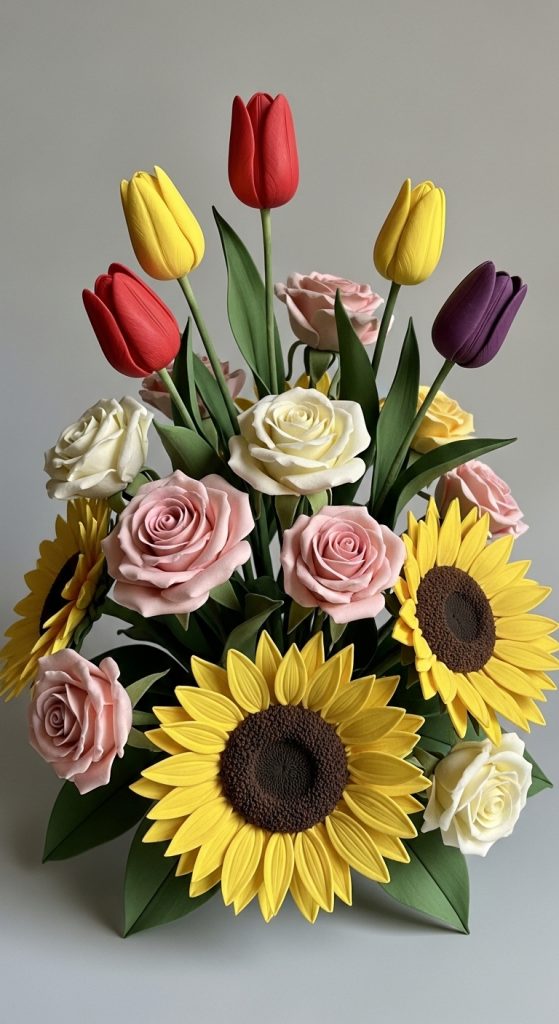
A mixed seasonal bouquet combines several types of clay flowers for a dynamic arrangement. Gather various clay colors, floral wire, and sculpting tools. Choose two to three flower types from the previous suggestions, such as roses, tulips, and sunflowers, and prepare stems and leaves for each.
Assemble individual flowers first, then combine them into a single bouquet. Vary the height and angle of each stem to create depth and dimension. Add green clay foliage for fullness. This bouquet allows creativity in color combinations and flower choices, making it suitable for all seasons. Mixed clay bouquets are perfect gifts or home décor pieces, showcasing both skill and artistic flair. Air-dry clay ensures your arrangement remains beautiful for years.