Making toys at home can be a wonderful way to entertain children while sparking their creativity and imagination. DIY toys are not only affordable, but they also encourage problem-solving, motor skills, and hands-on learning. Instead of buying expensive toys, parents and caregivers can use simple materials lying around the house to create engaging, fun, and safe toys. From sensory activities to imaginative play, the options are endless. This guide presents ten easy-to-make toys that require minimal preparation and materials, making them perfect for a weekend project or rainy day activity. Each toy idea is simple to assemble, safe for children, and promotes learning through play. Whether you want a toy for babies, toddlers, or older children, these DIY projects can be customized to fit your child’s age and interests. You don’t need special skills or tools to make these toys. By the end of this post, you will have ten creative toy ideas that children will enjoy for hours while also supporting their development. These DIY toys prove that sometimes the simplest ideas can be the most fun.
1. Sock Puppets
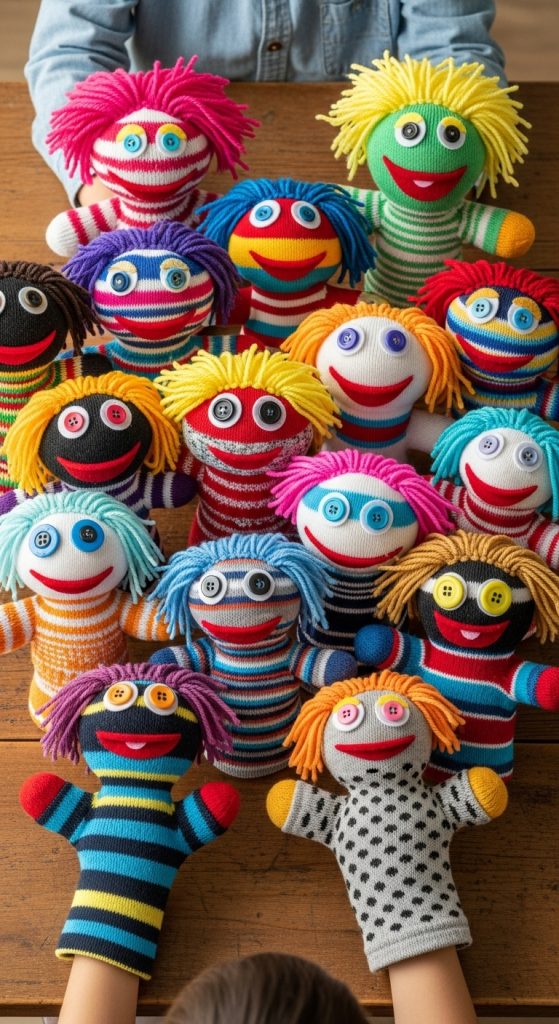
Sock puppets are one of the easiest toys to make and encourage imaginative play. All you need is a clean, long sock, some buttons, felt, and fabric glue. To make a puppet, slip the sock over your hand so that your fingers fit into the toe part, forming the mouth. Glue buttons or felt pieces for eyes and add yarn for hair or other decorations. Children can help choose colors and designs, which makes the activity interactive and fun. Sock puppets can be used for storytelling, role-playing, or puppet shows. This not only entertains children but also improves their communication and social skills. Additionally, sock puppets are safe for young kids as long as small pieces are glued securely. You can also recycle old socks, making this toy eco-friendly and cost-effective. Once made, kids can customize their puppets with different outfits, hats, or accessories, allowing them to be creative while having a new friend to play with.
2. Bottle Cap Stamps
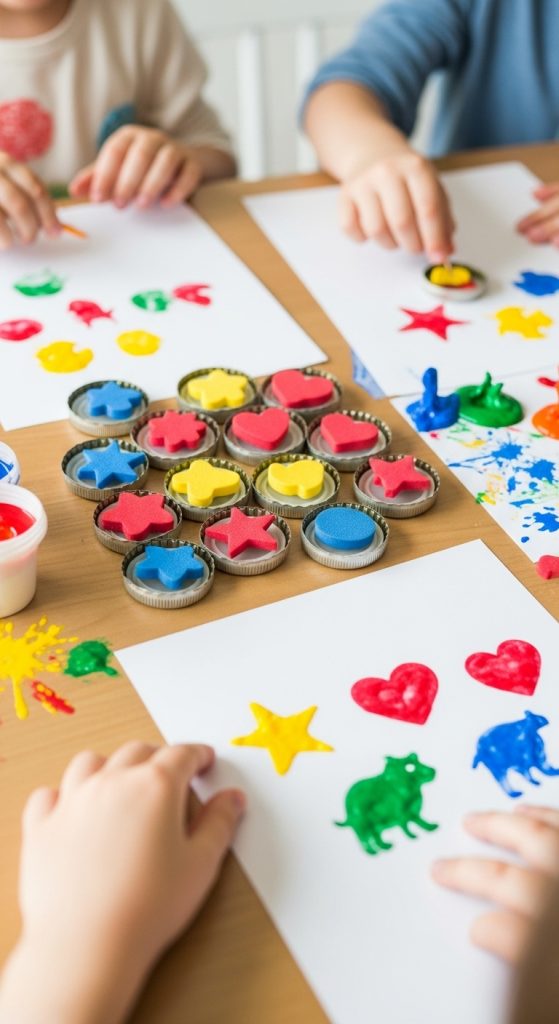
Bottle cap stamps are simple to create and perfect for artistic activities. You need clean bottle caps, foam sheets, glue, and paint. Cut shapes from the foam sheets and glue them onto the flat side of the bottle caps. Pressing the foam-covered cap into paint and stamping it on paper creates fun shapes and patterns. This toy encourages fine motor skills, creativity, and color recognition in children. Bottle cap stamps are inexpensive and can be made using recycled materials. You can make multiple shapes, such as stars, hearts, animals, or letters, to expand the child’s stamping options. Older children can experiment with creating their own patterns and designs. These stamps are also ideal for making greeting cards or decorating notebooks, adding a practical element to playtime. The activity can be supervised easily, making it safe for toddlers and preschoolers. With minimal materials, bottle cap stamps are an affordable way to combine crafting and imaginative play.
3. Paper Plate Tambourine
A paper plate tambourine is a fun musical toy that can be made in minutes. You need two paper plates, some dried beans or rice, stapler or glue, and tape. Place the beans or rice between the two plates and secure the edges by stapling or taping them together. Kids can decorate the plates with markers, stickers, or paints to make them colorful. Shaking the tambourine produces a sound that children will enjoy exploring, which helps with auditory development and rhythm skills. Making this toy also encourages creativity and fine motor skills. Children can invent songs or use it during playtime with other instruments. The tambourine can be easily customized in size and style, depending on the child’s age. Additionally, this project uses simple household items, making it quick and inexpensive. Paper plate tambourines combine art, music, and movement in one engaging activity for children.

4. Cardboard Box Cars
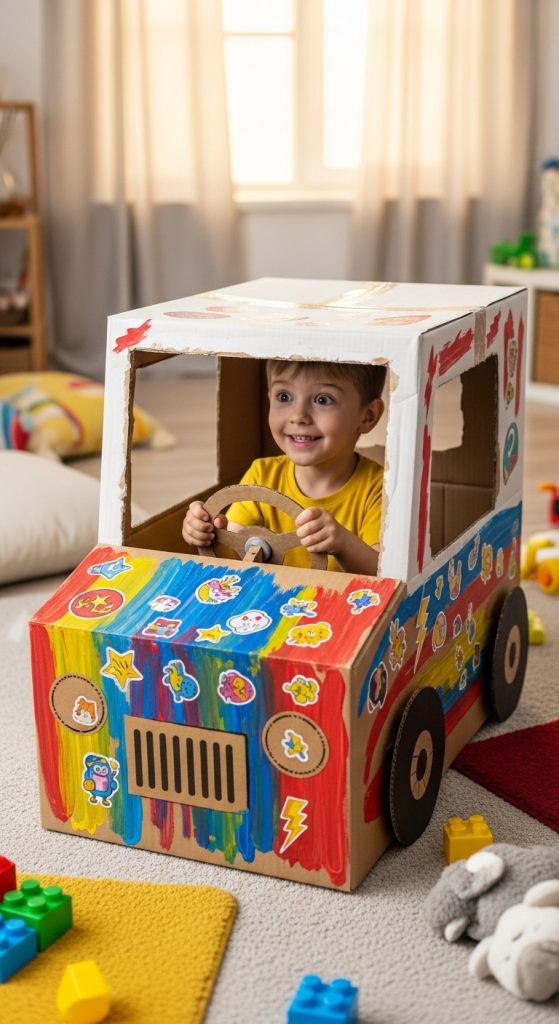
Cardboard box cars are imaginative and fun for active play. You need a large cardboard box, scissors, markers or paint, and tape. Cut out windows and a steering wheel on the box, and let children decorate it with colors or stickers. Kids can sit inside and pretend to drive their own car, bus, or truck. This toy encourages imaginative role-play, storytelling, and gross motor skills. Cardboard box cars are inexpensive and can be reused for multiple games or transformed into spaceships, trains, or boats. The activity also allows children to take part in decorating their toy, giving them a sense of ownership and pride. With supervision, cardboard box cars are safe and versatile for indoor and outdoor play. Parents can add extra details, like headlights or wheels, with simple craft materials. This DIY toy keeps children physically active while stimulating their imagination and creativity.
5. DIY Playdough
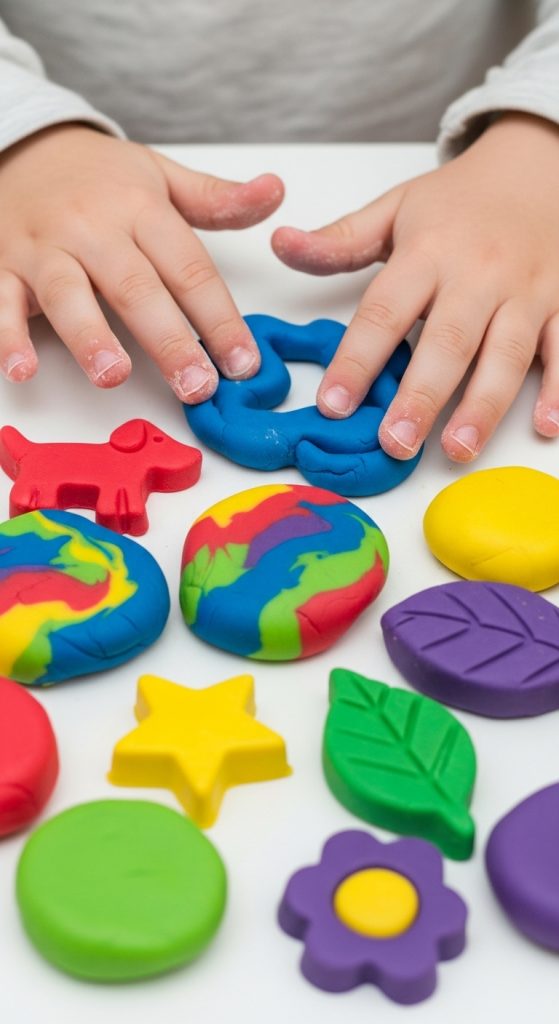
Playdough is a classic toy that can be made at home with a few ingredients: flour, salt, water, and food coloring. Mix the flour and salt, gradually add water, and knead until smooth. Divide the dough and add food coloring to create multiple colors. Children can shape, mold, and sculpt their playdough creations, which develops fine motor skills and hand-eye coordination. Playdough encourages sensory exploration and creativity, making it suitable for toddlers and older children. The recipe is non-toxic, making it safe for young kids to use under supervision. You can store the playdough in airtight containers to keep it fresh for future use. Homemade playdough is cost-effective compared to store-bought versions and allows endless variations in colors and scents. Adding essential oils or glitter can make it even more engaging. This toy is versatile and can keep children entertained for hours while supporting learning and creativity.
6. Balloon Rockets
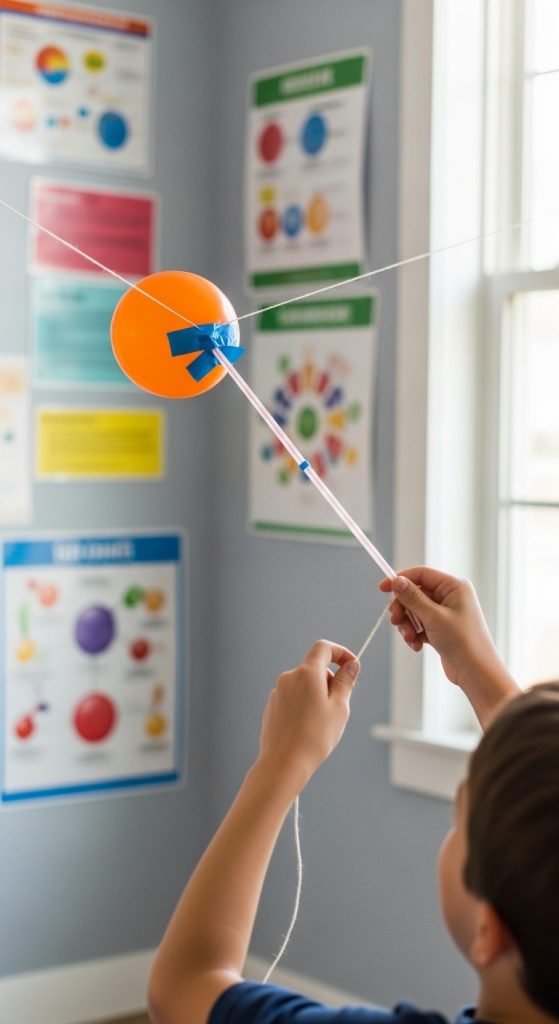
Balloon rockets are an exciting toy that teaches children about motion and science. You need a balloon, a long string, a straw, and tape. Thread the string through the straw and tie the ends of the string to two fixed points. Inflate the balloon, tape it to the straw, and let go. The balloon will move along the string, creating a rocket-like effect. Children enjoy watching their balloon zoom across, and the activity introduces basic physics concepts such as air pressure and propulsion. Balloon rockets are simple to assemble and inexpensive, requiring only household items. Kids can experiment with balloon sizes, string lengths, and shapes to see how it affects speed and distance. This toy promotes curiosity, problem-solving, and hands-on learning. Balloon rockets are perfect for group activities or science experiments at home or school, making learning fun and interactive.
7. Popsicle Stick Catapult
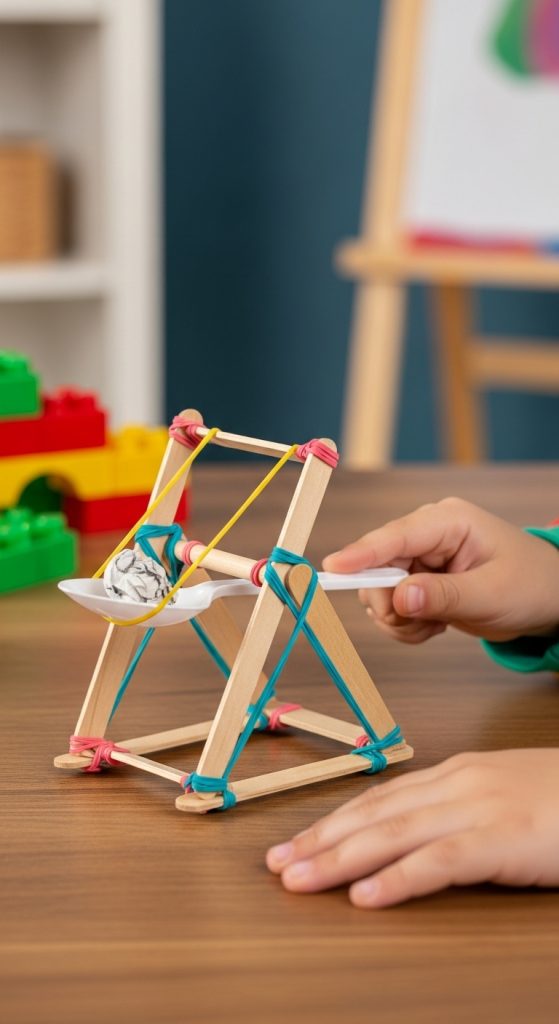
Popsicle stick catapults are easy to make and provide exciting play for older children. You need popsicle sticks, rubber bands, a plastic spoon, and small lightweight objects to launch. Stack three sticks together and secure with rubber bands. Attach a spoon to the top stick and use it as the launching platform. Kids can place objects on the spoon and press down to launch them. This toy teaches basic physics concepts like force, angle, and trajectory. Making a catapult requires careful assembly, which improves fine motor skills and problem-solving. Children can also experiment with different objects and launch techniques to see which works best. Popsicle stick catapults are inexpensive and reusable. They encourage friendly competition and creative games while providing hands-on learning opportunities. Supervision is recommended to ensure safe play.
8. Felt Busy Board
A felt busy board is a sensory toy designed to keep toddlers entertained. You need a large piece of felt or fabric, scissors, glue, and small items like buttons, zippers, and snaps. Cut the felt into shapes and attach different fasteners for the child to manipulate. The board allows children to practice buttoning, zipping, and snapping, which develops fine motor skills and hand-eye coordination. Busy boards are safe, quiet, and reusable, making them ideal for independent play. You can personalize the board with favorite colors, shapes, or themes. This toy encourages problem-solving and concentration while keeping young children engaged. Busy boards are simple to make with minimal materials and are particularly useful for travel or quiet time at home.

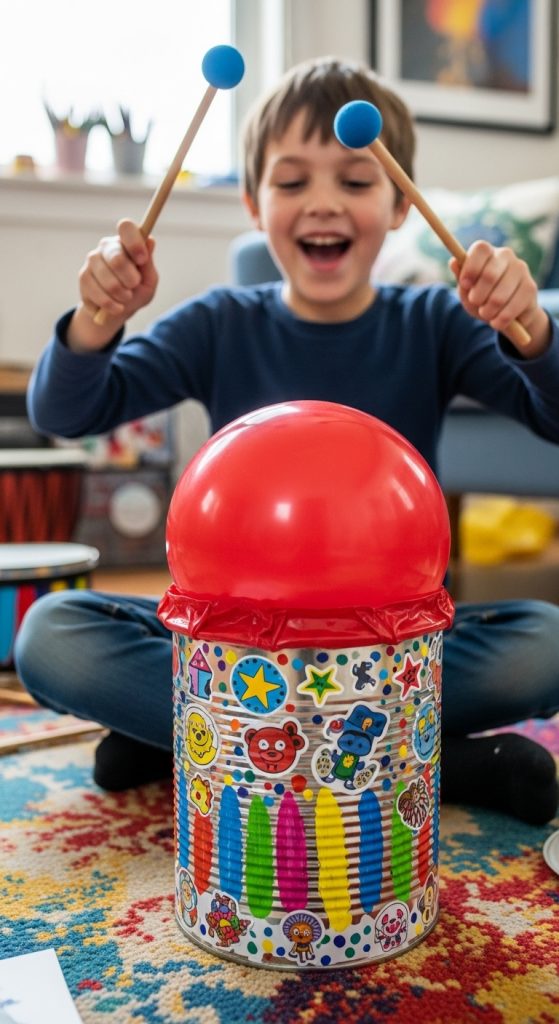
9. Tin Can Drum
A tin can drum is a simple musical toy made from empty cans, tape, and balloons. Stretch the balloon over the open end of the can and secure it with tape or a rubber band. Children can use their hands or sticks to create drum sounds. This toy encourages creativity, rhythm, and auditory development. Tin can drums are inexpensive and make use of recycled materials. Kids can decorate the cans with paint or stickers to personalize their instruments. Playing drums helps develop coordination and provides an outlet for energy and expression. You can make several drums of different sizes to create a small drum set, enhancing musical play and learning. Always supervise young children to ensure safety when handling cans or sharp edges.
10. Paper Bag Puppets
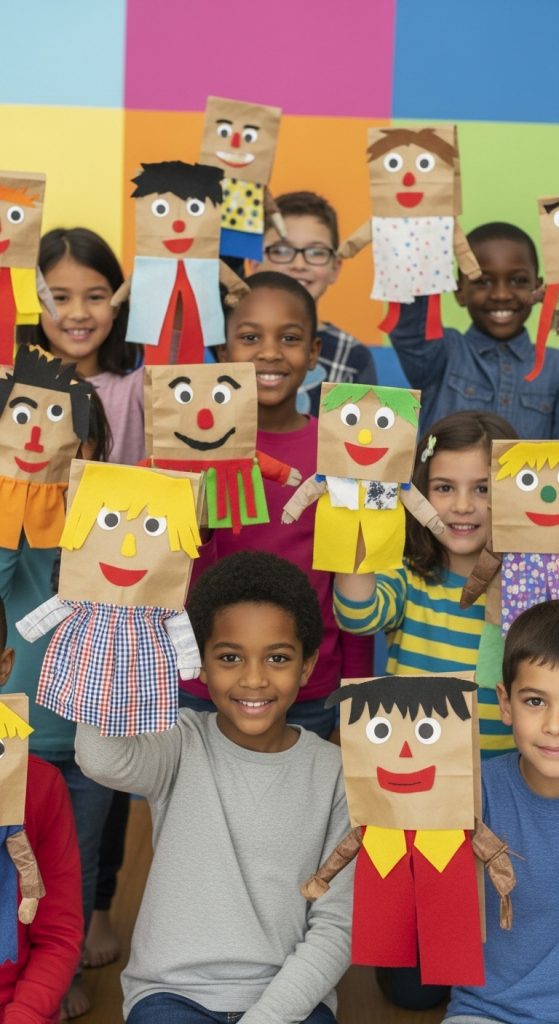
Paper bag puppets are easy, affordable, and perfect for storytelling. Use paper lunch bags, markers, glue, and scraps of paper or fabric to create characters. Fold the top of the bag to form a mouth, and decorate the front to make faces. Children can create animals, people, or monsters and use them for imaginative play. Paper bag puppets improve creativity, fine motor skills, and social skills. They are ideal for group activities or solo play. Kids can put on puppet shows, tell stories, or act out favorite scenes from books. This project is safe, requires minimal materials, and allows children to take part in designing their toys. Paper bag puppets can also be combined with other crafts to make entire puppet theaters or playsets.