Farmhouse rustic style has become one of the most popular interior design trends in recent years. It combines the warmth and charm of traditional rural homes with modern comfort and functionality. The essence of farmhouse rustic design lies in its ability to make a space feel inviting, cozy, and timeless. From exposed wooden beams to distressed furniture, this style embraces natural materials, soft colors, and handcrafted details. It celebrates simplicity while creating a strong connection with nature and history. Whether you live in a countryside home or want to bring a rustic feel into an urban apartment, farmhouse decor allows you to create spaces that are both functional and aesthetically pleasing. In this blog post, we will explore ten farmhouse rustic ideas to inspire your home. Each idea focuses on a unique element of design, offering practical tips and examples. By following these ideas, you can transform any space into a warm, rustic retreat that evokes comfort, character, and natural beauty.

1. Exposed Wooden Beams
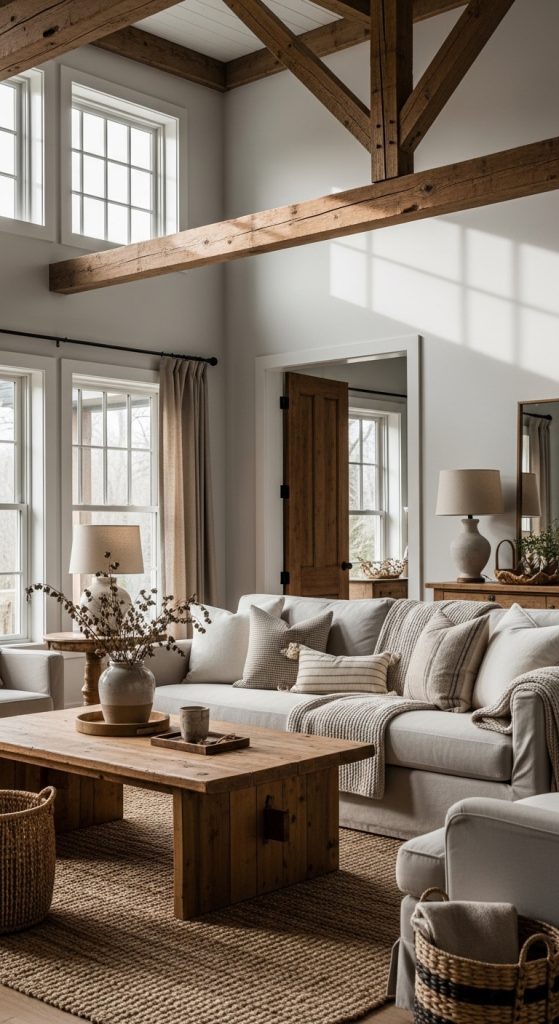
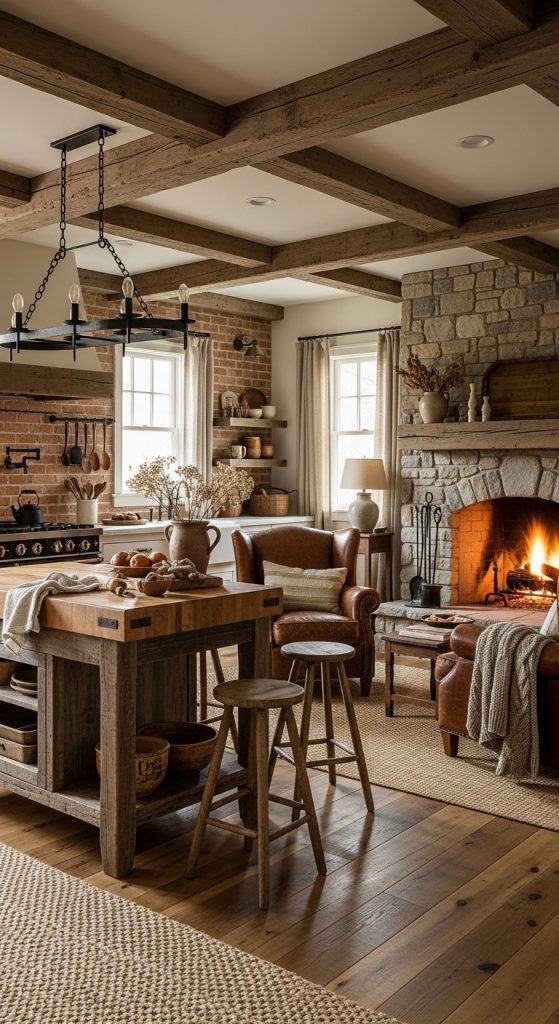
One of the signature elements of farmhouse rustic design is exposed wooden beams. These beams instantly add warmth and character to a room. They can be original structural beams or decorative pieces added to the ceiling for aesthetic purposes. Wood types like oak, pine, or reclaimed barn wood work beautifully to achieve an authentic rustic look. Exposed beams pair well with neutral walls and natural textures, creating a welcoming atmosphere. In living rooms, they draw attention upward and give a sense of spaciousness while adding architectural interest. For kitchens, beams can serve as a base for hanging rustic lighting or pots, blending style with function. To maintain their rustic charm, keep the finish natural or lightly stained. Avoid overly polished wood, as farmhouse style thrives on imperfections and natural textures. Combining exposed beams with vintage furniture and soft textiles completes the farmhouse ambiance, making the space feel both cozy and inviting.
2. Reclaimed Wood Furniture
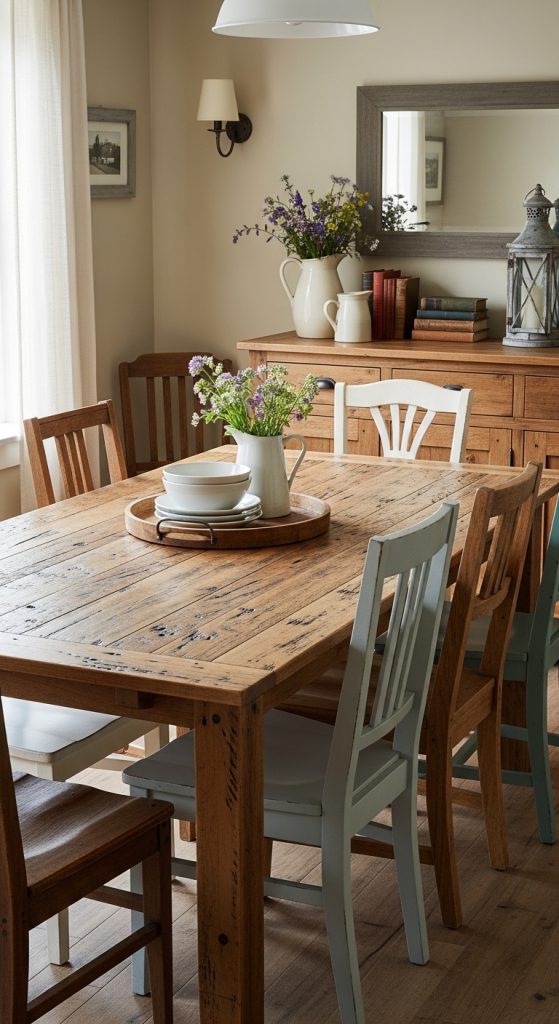
Using reclaimed wood furniture is another essential aspect of farmhouse rustic interiors. Furniture made from old barns, pallets, or salvaged wood has a story, texture, and character that new materials often lack. Dining tables, coffee tables, and sideboards crafted from reclaimed wood instantly become statement pieces. The natural grains, knots, and imperfections create an authentic rustic feel. Besides its aesthetic appeal, reclaimed wood is eco-friendly, promoting sustainability. To style these pieces, pair them with neutral-colored chairs or upholstered benches for a comfortable, lived-in look. Adding iron hardware or simple metal accents enhances the rustic charm. In bedrooms, reclaimed wood headboards or dressers give a warm, grounded feel to the space. Care and maintenance involve occasional polishing with natural oils to preserve the wood’s natural texture. By incorporating reclaimed wood furniture, you can create a home that blends timeless craftsmanship with modern comfort, staying true to the farmhouse rustic ethos.
3. Neutral Color Palette
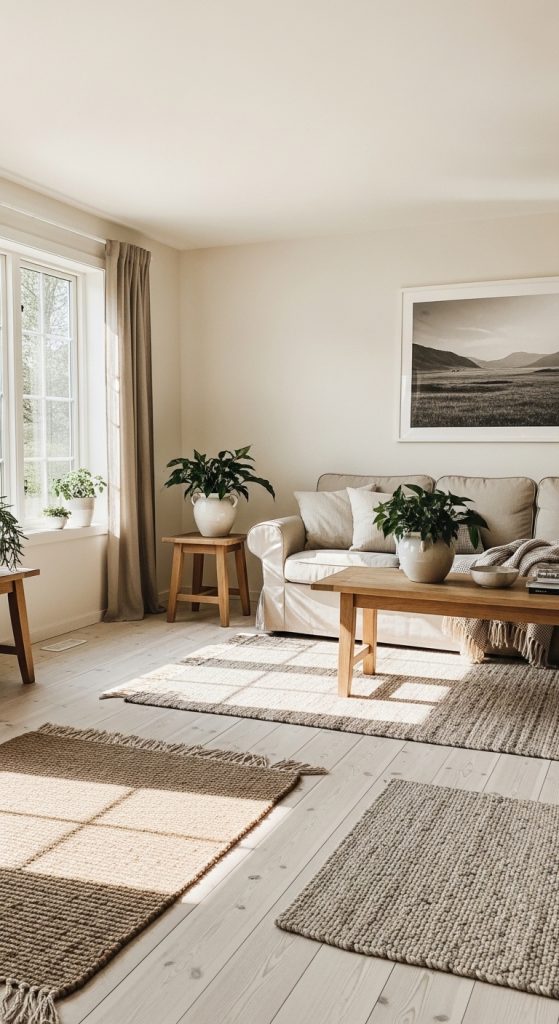
A neutral color palette is a key element in farmhouse rustic design. Colors like beige, cream, soft gray, and warm whites form the perfect backdrop for natural wood, stone, and metal accents. These muted shades make spaces feel light, airy, and inviting while emphasizing textures and materials. Using neutral tones on walls, floors, and large furniture allows smaller accents, like rustic décor or vintage textiles, to stand out. For instance, a cream-colored sofa paired with a wooden coffee table creates a harmonious balance. In kitchens, white cabinetry combined with wooden countertops achieves a classic farmhouse look. Even in bedrooms, soft neutral bedding complements reclaimed wood furniture or exposed beams. Neutral colors also provide flexibility for seasonal accents, allowing homeowners to easily change textiles, cushions, or rugs without clashing with the main palette. Ultimately, a neutral foundation enhances the rustic warmth of a home and emphasizes its natural, unpretentious charm.
4. Stone and Brick Accents
Stone and brick are natural materials that bring authenticity and texture to farmhouse rustic interiors. Exposed brick walls or stone fireplaces create a focal point that immediately adds warmth and character to a room. In kitchens, a stone backsplash or brick oven area evokes traditional countryside charm. Stone flooring or tiles complement wooden furniture and neutral walls, giving the space a grounded, earthy feel. For a more subtle effect, consider incorporating stone or brick elements through decorative pieces like mantelpieces, wall niches, or textured panels. These materials age beautifully, contributing to the rustic aesthetic over time. Pairing stone or brick with natural wood and soft textiles creates a balanced look, avoiding a cold or overly rugged appearance. The combination of these raw materials emphasizes the natural, lived-in feeling that defines farmhouse rustic style, making spaces feel timeless and enduring.
5. Farmhouse Lighting
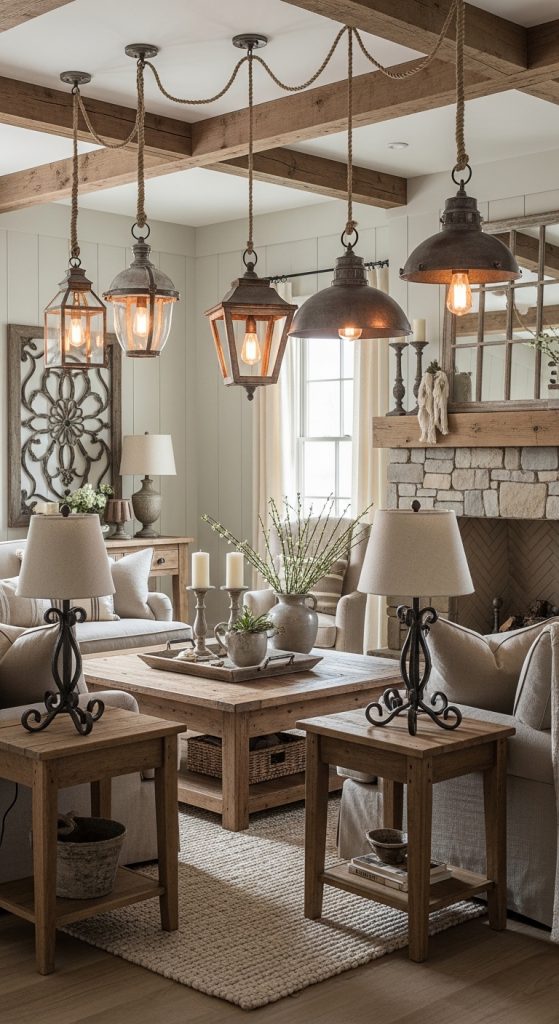
Lighting plays a crucial role in creating a farmhouse rustic ambiance. Traditional fixtures made from iron, bronze, or distressed metals complement wooden furniture and natural textures. Pendant lights over a kitchen island, chandeliers in a dining room, or lantern-style fixtures in entryways enhance the rustic charm. Edison bulbs or warm-toned lighting provide a soft glow, adding to the cozy atmosphere. In living areas, floor and table lamps with wooden or metal bases complete the look. Layering different light sources ensures that the room is both functional and visually appealing. Lighting should highlight key architectural features, such as exposed beams or stone walls, and create warmth throughout the home. Choosing simple, handcrafted designs over overly ornate modern options ensures the farmhouse rustic theme remains authentic and inviting. Proper lighting transforms a simple room into a welcoming rustic retreat.
6. Vintage and Handmade Decor
Decorative elements in farmhouse rustic interiors should tell a story. Vintage or handmade items bring personality, history, and character into a space. Old farm tools, antique clocks, weathered picture frames, or handwoven baskets serve as both functional and decorative pieces. Wall art or rustic signs with muted tones further enhance the farmhouse aesthetic. Handmade textiles, such as quilts, knitted throws, or linen curtains, add softness and warmth to the room. Even small details, like ceramic vases or wooden trays, can reinforce the rustic charm. Mixing vintage elements with modern functionality creates a lived-in, cozy feeling that is central to farmhouse rustic design. These decor items make your home unique, reflecting personal taste while maintaining authenticity and simplicity.

7. Cozy Textiles
Soft and cozy textiles are essential for creating a welcoming farmhouse rustic interior. Materials like wool, cotton, linen, and burlap provide comfort while enhancing the natural aesthetic. Layered rugs, knitted throws, and plush cushions make living spaces feel warm and inviting. In bedrooms, heavy quilts or linen bedding create a relaxed, rustic atmosphere. Curtains in soft, neutral tones complement wooden furniture and exposed beams, maintaining harmony in the space. Textures are just as important as colors; combining smooth linens with rougher woven fabrics adds visual depth. Rugs with subtle patterns or distressed finishes enhance the farmhouse charm. Incorporating textiles strategically ensures comfort while keeping the space visually balanced and aligned with rustic aesthetics. Proper layering of fabrics makes a room feel cozy, lived-in, and authentically farmhouse.

8. Barn Doors
Sliding barn doors are a popular feature in farmhouse rustic homes. These doors save space, add visual interest, and create a distinct rustic element. Made from reclaimed or distressed wood, barn doors can separate rooms or act as decorative features in living spaces or bedrooms. Hardware in black iron or matte metal enhances the authentic farmhouse appeal. Barn doors work well in bathrooms, closets, and kitchens, offering both functionality and style. They create a focal point and bring a sense of history and craftsmanship to modern interiors. Custom designs, such as X-pattern panels or crossbeams, increase their charm. Integrating barn doors into your home reinforces the rustic theme while providing a practical solution for open floor plans or tight spaces.

9. Indoor Plants
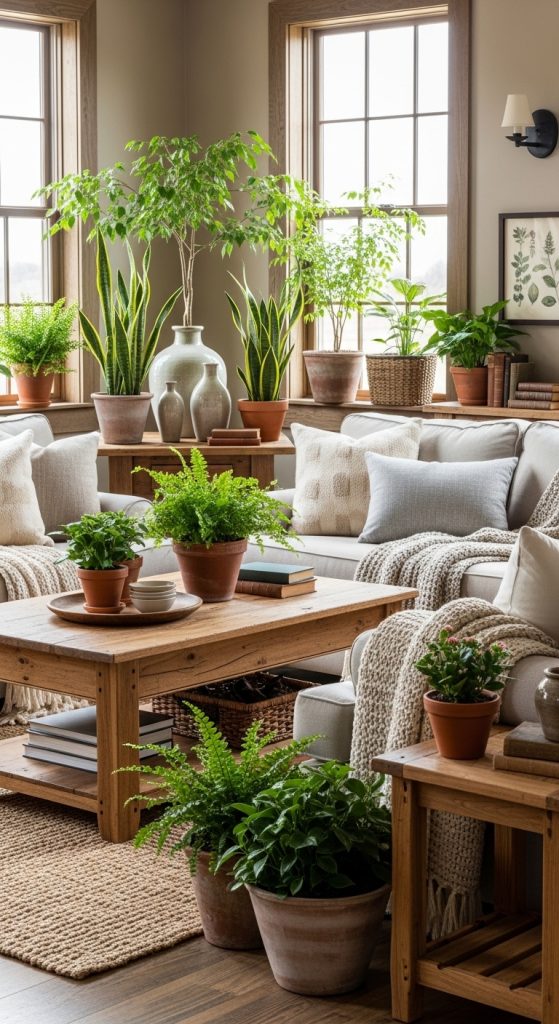
Indoor plants bring life, color, and freshness to farmhouse rustic interiors. Greenery complements natural wood, stone, and neutral tones while softening the rugged textures typical of rustic design. Potted plants, hanging greenery, or herb gardens in kitchens enhance both aesthetics and functionality. Plants like ferns, snake plants, or small potted flowers are ideal choices. Wooden or terracotta planters align with the farmhouse rustic theme, maintaining a natural look. Strategically placing plants near windows or corners adds dimension and warmth to the space. Plants also improve air quality and contribute to a peaceful, calming environment. Integrating greenery into your design helps balance earthy materials with lively, organic energy, creating a harmonious farmhouse interior.
10. Outdoor Rustic Spaces
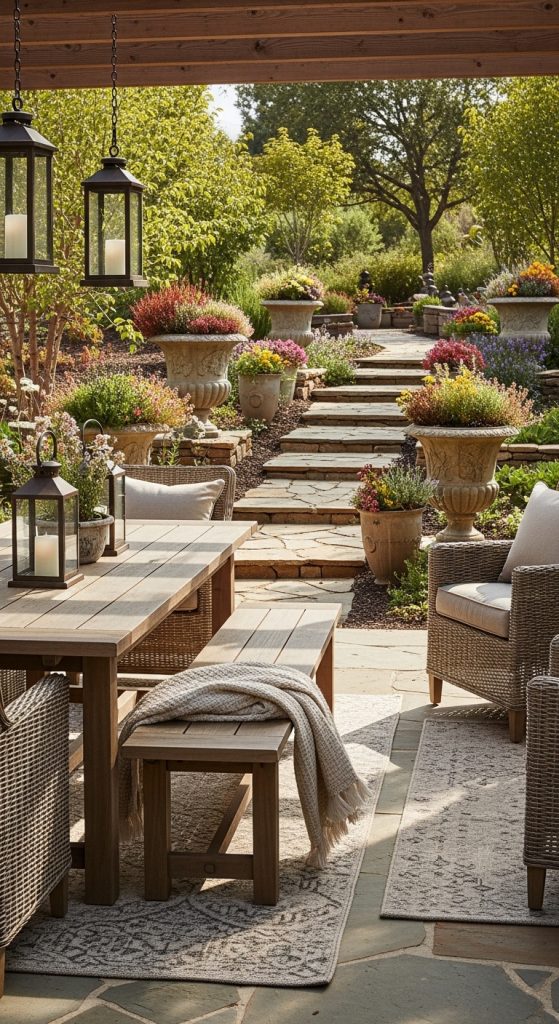
Farmhouse rustic design extends beyond interiors to outdoor areas. Porches, patios, and gardens can reflect the same warm, natural aesthetic. Wooden furniture, wicker chairs, and stone pathways create inviting outdoor retreats. Adding lanterns, vintage planters, or weathered décor enhances the rustic charm. Simple wooden fences, pergolas, and natural landscaping contribute to a harmonious outdoor environment. Outdoor textiles, such as cushions and rugs in neutral tones, make spaces comfortable and cohesive with indoor design. Whether you have a large backyard or a small balcony, incorporating rustic elements outdoors completes the farmhouse experience. It provides a seamless transition from inside to outside, emphasizing nature, simplicity, and comfort.