Creating a minimal garden landscape is about simplicity, elegance, and a focus on clean lines. Unlike traditional gardens that may have a mix of flowers, shrubs, and decorative items, minimal landscaping emphasizes fewer elements with thoughtful placement. This approach helps create a calm and organized outdoor space that feels spacious and relaxing. Minimal gardens are perfect for modern homes, small yards, and urban spaces where clutter-free aesthetics are desired.
Minimal landscapes focus on natural textures, neutral colors, and a limited number of plant species. They often use geometric patterns, stone pathways, wooden elements, and water features to enhance the beauty of the space without overcrowding it. The goal is to create a balance between greenery and hardscape, making it visually appealing while easy to maintain.

In this guide, we will explore ten creative minimal landscape ideas that you can implement in your garden. Each idea includes preparation steps, suggested materials, and practical tips to make your outdoor space both stylish and functional. Whether you have a small backyard or a larger plot, these ideas will inspire you to create a serene and modern garden environment.
1. Zen Garden with Gravel and Stones
A Zen garden is one of the simplest ways to achieve a minimal landscape. It focuses on sand, gravel, and stones arranged in geometric patterns. Start by selecting a flat area in your garden and remove any grass or weeds. Level the ground and add a layer of landscape fabric to prevent weed growth.
Materials include fine gravel, large stones, and a rake for creating patterns. You can also add a few small plants like moss or dwarf shrubs for greenery. The design emphasizes clean lines, symmetry, and empty space to create a sense of calm. Minimal maintenance is required, mostly raking the gravel to refresh patterns and removing any debris.
Zen gardens are excellent for meditation spaces or quiet corners in your yard. They provide a sense of tranquility and complement modern homes with their simplistic design. Their neutral colors also make it easy to combine with wooden decks or stone patios.

2. Modern Concrete Planters
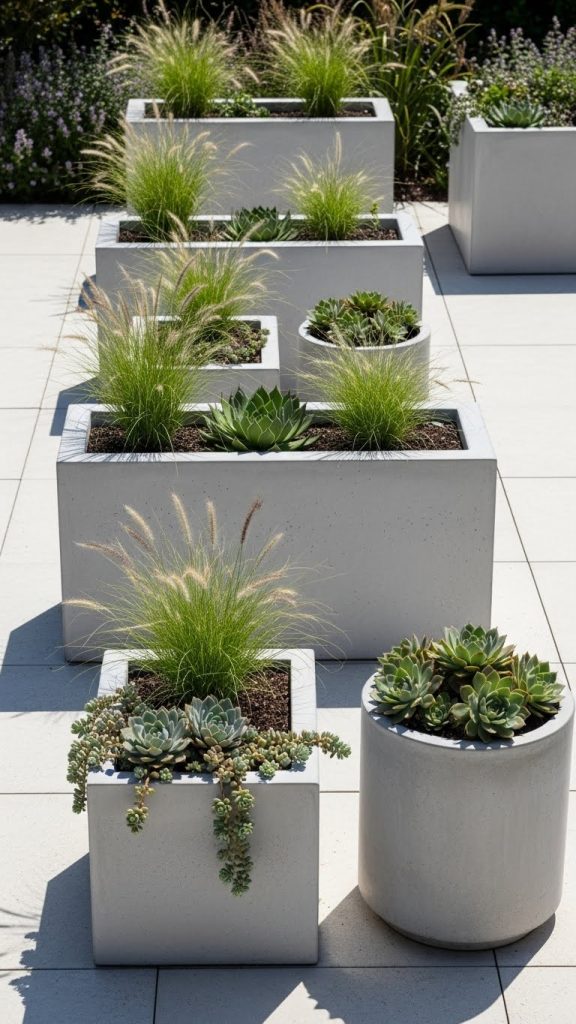
Using modern concrete planters is an effective way to introduce greenery without cluttering the space. Begin by measuring the area where you want the planters and choose rectangular or cylindrical shapes for a clean look.
Materials required include concrete mix, wooden molds, and paint or sealant for finishing. You can grow low-maintenance plants such as succulents, ornamental grasses, or small shrubs. Arrange the planters in a linear pattern or staggered formation for visual interest.
Concrete planters are durable, weather-resistant, and suitable for both small and large gardens. They provide structure and focus in a minimal landscape, allowing the plants to stand out without overwhelming the space. This approach also makes it easy to change plants seasonally or adjust layouts as needed.
3. Lawn with Geometric Pathways
A simple lawn combined with geometric pathways creates a minimal yet inviting garden. Start by preparing the soil, leveling it, and planting drought-resistant grass. Then, create a pathway using concrete slabs, wooden planks, or gravel in a geometric shape such as rectangles or hexagons.
Materials include pavers, sand, gravel, and edging stones. The pathway should be wide enough for easy walking but simple enough to maintain the minimal aesthetic. Surround the path with small plants, grasses, or low hedges for added greenery without clutter.
This design enhances the sense of space and makes the garden visually organized. Geometric pathways also guide visitors through the garden, creating a modern and orderly appearance. Regular mowing and trimming are the only essential maintenance tasks.

4. Vertical Plant Walls
Vertical plant walls save space while adding greenery to your garden. Begin by choosing a sturdy wall or fence and install vertical planters or modular wall systems. These can be made from wood, metal, or recycled materials.
Materials include planter pockets, soil, and suitable plants such as ferns, herbs, or small flowering plants. Arrange them in simple patterns to maintain a minimal look. Watering systems can be automated with drip irrigation for convenience.
Vertical walls are perfect for small gardens or urban spaces where ground space is limited. They create a lush green backdrop without overcrowding the area. Maintenance is simple, focusing on watering, pruning, and occasional fertilization.

5. Minimal Water Feature
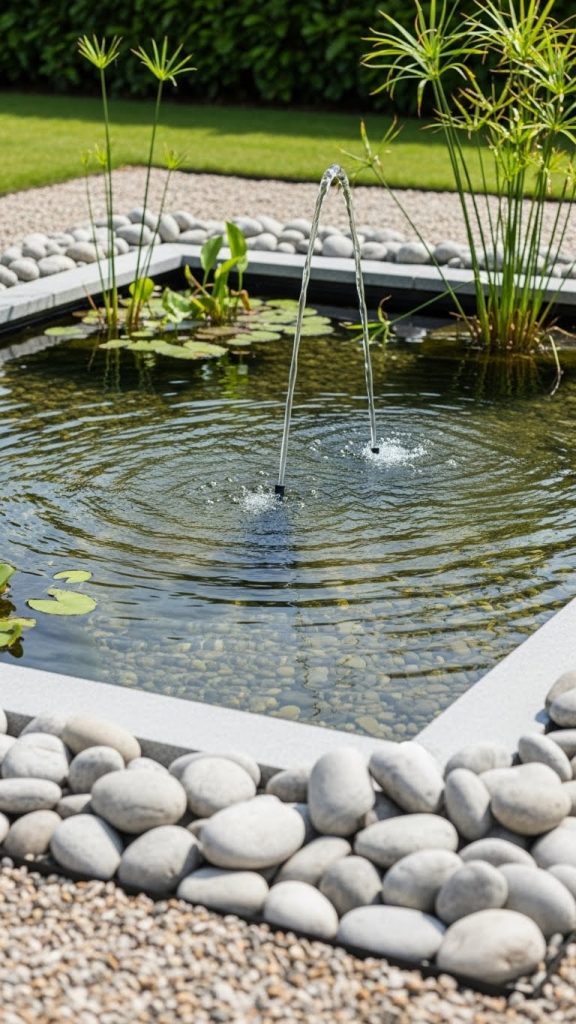
Adding a water feature creates a soothing atmosphere in a minimal garden. A small fountain, pond, or reflecting pool works well. Start by choosing the location, preferably where it can be seen from a seating area.
Materials include a water container, pump, stones, and a few aquatic plants. Keep the design simple: a single fountain or a shallow pond surrounded by gravel and stones. Avoid complex or large installations, as minimalism focuses on subtle elegance.
Water features enhance the sensory experience by adding gentle sound and movement. They also attract birds and provide a cooling effect in warm climates. Maintenance involves checking the pump, cleaning debris, and occasional water treatment.
6. Gravel Garden with Minimal Planting
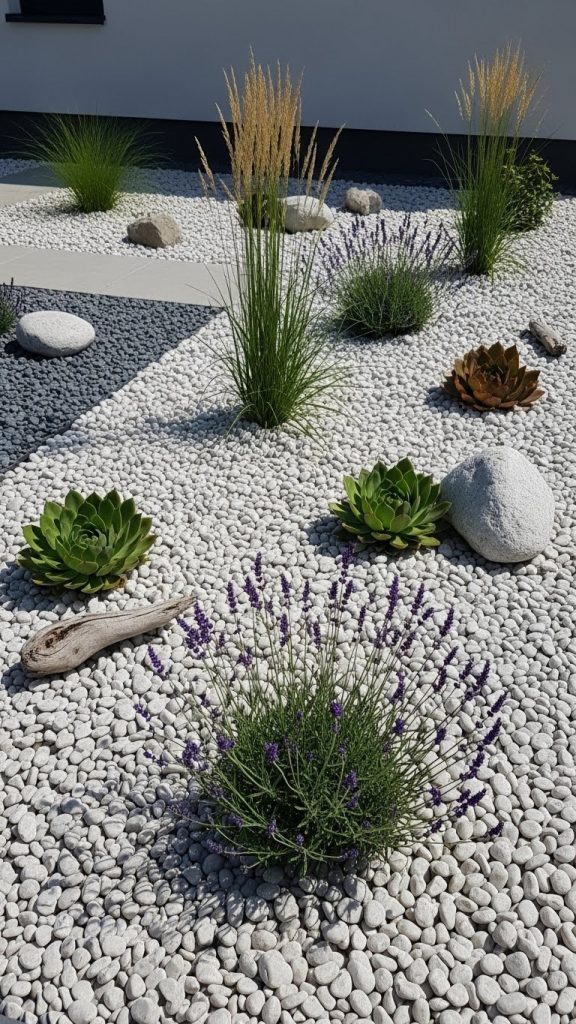
A gravel garden is low-maintenance and perfect for minimal landscapes. Begin by clearing the area of grass and weeds and leveling the ground. Lay down a landscape fabric to prevent weed growth. Cover the surface with gravel of your choice, such as white, gray, or black stones.
Plant sparse greenery like succulents, lavender, or ornamental grasses to maintain the minimalist aesthetic. Decorative stones or driftwood can add subtle visual interest. Gravel gardens are drought-resistant, reducing watering needs and maintenance time.
This design works well for modern and coastal-style homes. It emphasizes simplicity, clean textures, and natural colors. Gravel gardens are versatile and can be expanded easily without losing their minimal appeal.
7. Wooden Deck with Simple Seating
A wooden deck provides a functional and minimal outdoor space. Begin by selecting a flat area and preparing the ground. Use treated timber or composite wood for durability. Keep the deck layout simple with straight lines and neutral tones.
Materials include wood planks, screws, sandpaper, and sealant. Add minimal seating, such as a single bench or a few chairs with a small table. Surround the deck with low plants or potted greenery for a natural touch.
Wooden decks create a modern focal point in the garden while keeping it functional. They offer space for relaxation or social gatherings without overcrowding. Regular maintenance involves cleaning, sanding, and sealing the wood to maintain its appearance.

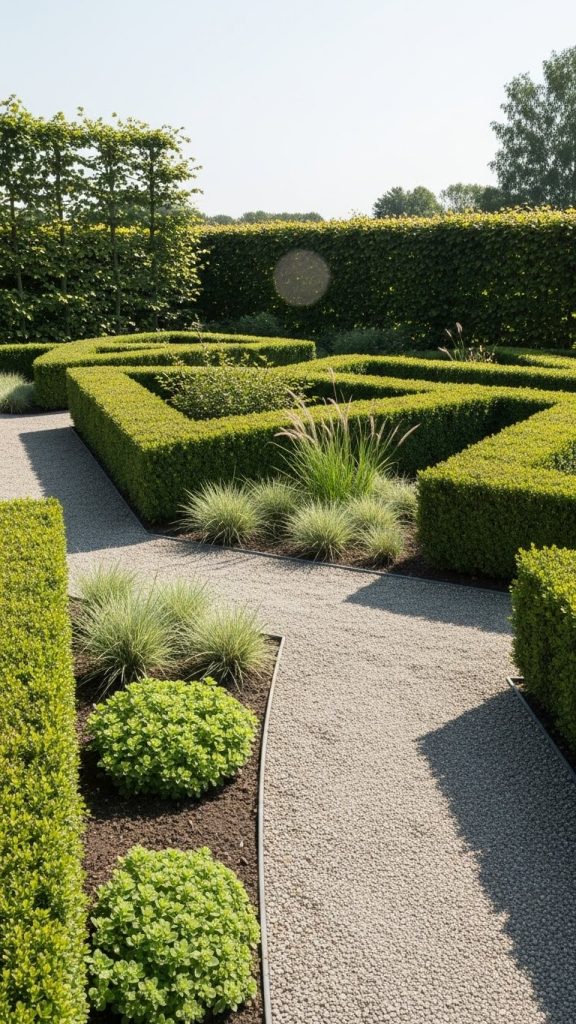
8. Box Hedge Borders
Box hedges create structure in a minimal garden. Start by preparing the soil and planting boxwood or similar low-maintenance shrubs along pathways or around garden beds. Prune them regularly to maintain a neat shape.
Materials include shrubs, soil, mulch, and a pruning tool. Keep the layout simple, such as a single row of hedges or small geometric shapes. Box hedges provide definition to your garden without making it look crowded.
This approach adds greenery while maintaining order and minimalism. Box hedges also work well with other minimalist features, such as gravel paths, stone sculptures, or water features. They require moderate maintenance but greatly enhance the overall design.
9. Outdoor Lighting with Minimal Fixtures
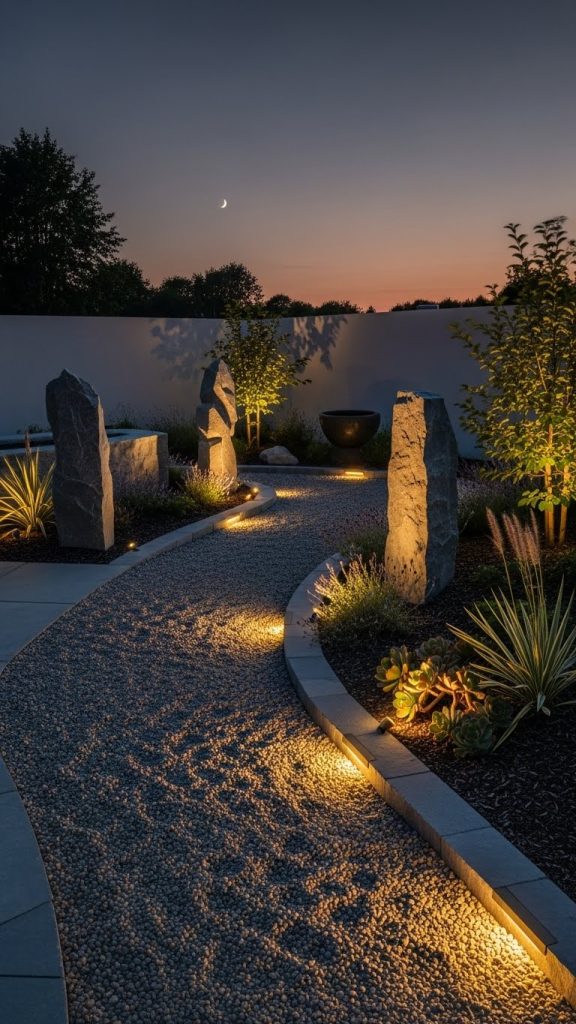
Strategic lighting enhances a minimal garden at night. Use small, simple fixtures such as bollard lights, recessed lights, or LED strips along pathways. Avoid elaborate or large lamps that disrupt the minimal aesthetic.
Materials include low-voltage LED lights, cables, and timers. Place lights to highlight pathways, water features, or vertical walls. Minimal lighting emphasizes the garden’s structure and creates a warm ambiance without cluttering the space.
This approach extends the usability of your garden into the evening. Maintenance is low, mostly involving occasional bulb replacement and cleaning. Thoughtful placement ensures both safety and style in your minimal landscape.
10. Natural Stone Seating Area
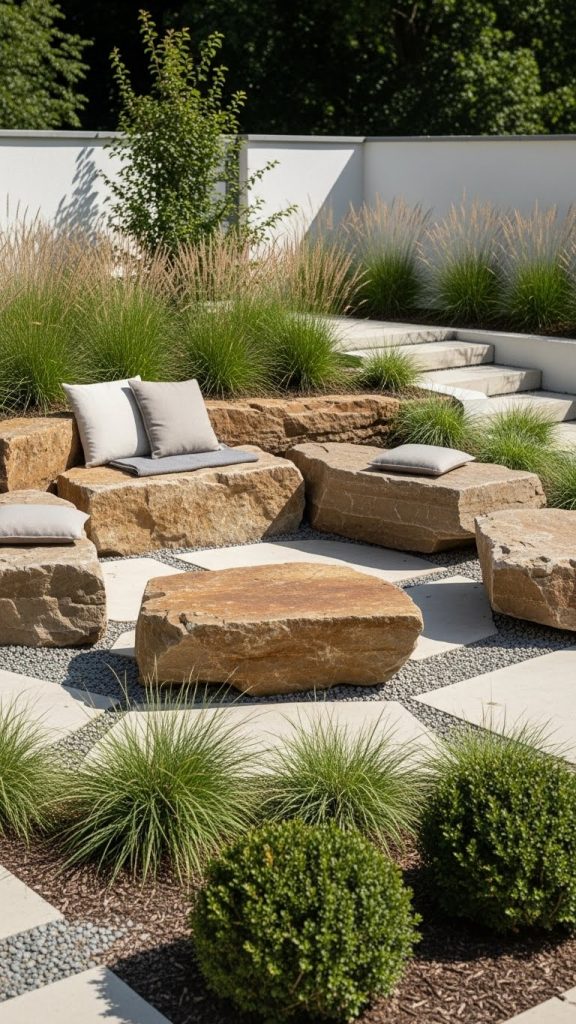
A natural stone seating area adds a rustic touch while keeping the garden minimal. Begin by selecting a flat space and arranging large flat stones or boulders in a circular or linear pattern.
Materials include natural stones, gravel for filling gaps, and cushions for comfort. Keep surrounding greenery simple, such as grasses or small shrubs, to avoid distraction from the seating area. This creates a serene spot for relaxation, reading, or outdoor dining.
Natural stone seating integrates seamlessly with minimal landscapes. It requires little maintenance, only occasional cleaning, and complements other elements like gravel paths or water features. This idea combines functionality with simplicity, enhancing the overall minimalist garden experience.