Olive green has become one of the most popular colors for modern kitchens. Its warm, earthy tone adds depth and elegance while maintaining a natural, calming feel. Unlike brighter greens, olive green is subtle, versatile, and pairs beautifully with a variety of materials, from wood to metal to stone. Using olive green in your kitchen can create a cozy, welcoming environment without being overpowering. Whether you prefer a bold statement wall, cabinetry, or subtle accents, this color can adapt to both traditional and contemporary designs.
Incorporating olive green into a kitchen also offers practical benefits. It works well with neutral colors like white, beige, or grey, making it easier to coordinate appliances, countertops, and flooring. Moreover, olive green can hide minor stains or scratches better than lighter colors, which is particularly useful in high-traffic areas. This blog will explore ten creative and practical ways to use olive green in your kitchen design, including preparation materials, finishes, and layout tips. Each idea provides inspiration for making your kitchen both stylish and functional while embracing the unique charm of olive green.
1. Olive Green Cabinets
One of the most effective ways to incorporate olive green is through kitchen cabinetry. Painted olive green cabinets create a striking focal point while remaining elegant and timeless. This color pairs well with brass or matte black hardware, adding a sophisticated touch to your space. For a cohesive look, consider matching the cabinets with a neutral backsplash, such as white subway tiles or light marble.
When selecting materials, MDF or solid wood cabinets are ideal for painting. Ensure that the surface is properly sanded and primed to prevent peeling or uneven color. Semi-gloss finishes are recommended because they are easy to clean and resistant to moisture, which is important in kitchen environments. Additionally, combining open shelving with olive green cabinets can create a balance between bold color and visual lightness. Open shelves made of natural wood or black metal can complement the green tone while providing functional storage for everyday items. This design works well in both small and large kitchens, offering a stylish and practical solution for integrating olive green into your space.

2. Olive Green Kitchen Island
Adding an olive green kitchen island is a creative way to introduce color without overwhelming the space. Islands serve as both functional workspaces and social hubs, making them perfect candidates for a bold color accent. An olive green island can contrast beautifully with neutral cabinets or countertops while providing a cozy and grounded feel.
For materials, consider a solid wood or laminate island painted in olive green. Pairing it with a marble or quartz countertop enhances the luxurious look. If you want to add visual interest, choose a contrasting countertop color like white, cream, or black. You can also add brass or black fixtures to complete the design. Incorporating storage within the island, such as drawers or open shelving, maximizes its utility. Lighting plays a key role, too. Hanging pendant lights above the island can highlight its color and create a warm, inviting atmosphere. This approach is ideal for homeowners who want a statement piece in their kitchen without committing the entire space to a bold color.

3. Olive Green Backsplash
For a subtle yet impactful design, an olive green backsplash can bring depth and warmth to your kitchen. Unlike cabinets, a backsplash allows you to experiment with different textures and materials, such as ceramic tiles, glass panels, or natural stone. Olive green tiles can complement both white and wooden cabinets, creating a harmonious color palette.
When selecting tiles, consider the size and shape. Subway tiles or hexagonal tiles offer a modern aesthetic, while mosaic or patterned tiles can add personality and visual interest. Materials like ceramic and porcelain are easy to clean and resistant to heat, making them ideal for kitchen use. Glass panels provide a sleek, reflective surface that enhances light and gives the kitchen a more open feel. Pairing an olive green backsplash with neutral countertops or wooden shelving creates a balanced and stylish environment. This approach allows you to experiment with color without committing to large surfaces and provides an easy way to refresh your kitchen’s appearance over time.

4. Olive Green Accents
If painting cabinets or adding a backsplash feels too bold, incorporating olive green through accents is a subtle yet effective option. This can include small appliances, bar stools, kitchenware, or even decorative items like vases and planters. Accents allow you to experiment with the color and change it seasonally or as your preferences evolve.
For example, olive green appliances like toasters, kettles, or mixers can tie the color scheme together without dominating the space. Bar stools with olive green cushions can complement a neutral kitchen island or dining table. Additionally, using olive green in textiles, such as kitchen towels, curtains, or seat cushions, adds warmth and texture. Pairing these accents with natural materials like wood, stone, or metal creates a cohesive and modern design. This method is particularly suitable for renters or those who prefer a flexible approach, as it avoids permanent changes while still infusing the space with personality.

5. Olive Green Walls
Painting your kitchen walls olive green is a bold choice that can create a warm and inviting atmosphere. This approach works best in kitchens with ample natural light, as darker tones can make smaller spaces feel enclosed. Olive green walls pair beautifully with wooden cabinets, light countertops, and metallic accents, creating a balanced and sophisticated look.
For a smooth finish, use high-quality kitchen paint that is washable and resistant to moisture. Semi-gloss or satin finishes are ideal because they are easy to clean and maintain. To avoid overwhelming the space, consider painting only one accent wall in olive green while keeping the remaining walls neutral. This technique allows the color to stand out while maintaining a sense of openness. Adding olive green artwork, shelving, or decorative items can enhance the cohesive look. This method is ideal for homeowners who want to immerse their kitchen in a calming, earthy color palette while keeping flexibility for future design changes.

6. Olive Green Open Shelving
Open shelving in olive green is a trendy and practical way to incorporate color into your kitchen. Painted shelves can add personality and visual interest without dominating the entire space. They are also functional, offering easy access to dishes, glassware, and decorative items.
Materials like solid wood or MDF are suitable for painting. Make sure the shelves are primed and finished with a protective coating to prevent moisture damage. Olive green shelves pair well with natural wooden or marble countertops, adding contrast and texture. Displaying ceramics, glassware, or greenery on these shelves enhances the visual appeal and brings life to the kitchen. This approach works in small kitchens where closed cabinets may feel heavy or in large kitchens where a pop of color is needed. Olive green open shelving provides a balance of practicality and style, making it a versatile design choice.

7. Olive Green Countertops
Although less common, olive green countertops can make a kitchen truly unique. Stone materials like quartz, granite, or soapstone with olive undertones create a sophisticated and natural appearance. These countertops can harmonize with neutral or white cabinetry, offering a modern and elegant contrast.
When selecting materials, prioritize durability and ease of maintenance. Quartz is particularly resistant to stains and scratches, while granite offers a natural, textured look. Pairing olive green countertops with neutral backsplashes and metallic fixtures ensures a balanced design. If a fully olive green countertop feels overwhelming, consider using it only on a kitchen island or bar area for a subtle statement. Additionally, combining the countertop with complementary textures, such as wooden shelves or matte cabinetry, enhances the overall aesthetic. This approach is perfect for homeowners seeking a bold yet refined color element that remains functional and long-lasting.

8. Olive Green Appliances
Modern kitchens allow for more flexibility in appliance colors, making olive green a stylish choice. From refrigerators to mixers, appliances in this tone can complement cabinetry and countertops while creating a cohesive look. This trend works particularly well in mid-century or contemporary kitchen designs.
When selecting appliances, consider finish options such as matte, gloss, or metallic. Matte olive green offers a modern, understated look, while metallic finishes can add a luxurious touch. Pair appliances with neutral or wooden cabinetry to prevent visual clutter. Additionally, matching smaller appliances like toasters, kettles, and coffee makers to the overall color palette helps tie the design together. Olive green appliances are ideal for those who want to infuse their kitchen with personality without committing to large painted surfaces. They also provide flexibility, allowing you to update the color scheme easily as trends or tastes change.

9. Olive Green Flooring
Using olive green for flooring is a bold and unexpected design choice that can make your kitchen stand out. Tiles, vinyl, or painted wooden floors in olive green create a warm and grounded atmosphere. Pairing the flooring with neutral cabinets and light countertops ensures a balanced, inviting space.
Ceramic or porcelain tiles are ideal for high-traffic areas as they are durable, easy to clean, and resistant to moisture. Patterned tiles with olive tones can add visual interest and texture. For a cozier feel, consider olive green painted wooden floors finished with a protective sealant to prevent wear. Rugs in neutral or complementary colors can soften the look and add comfort. Olive green flooring works particularly well in large kitchens, providing a strong color foundation that allows other design elements to stand out while maintaining cohesion and warmth.

10. Olive Green Pantry or Storage Spaces
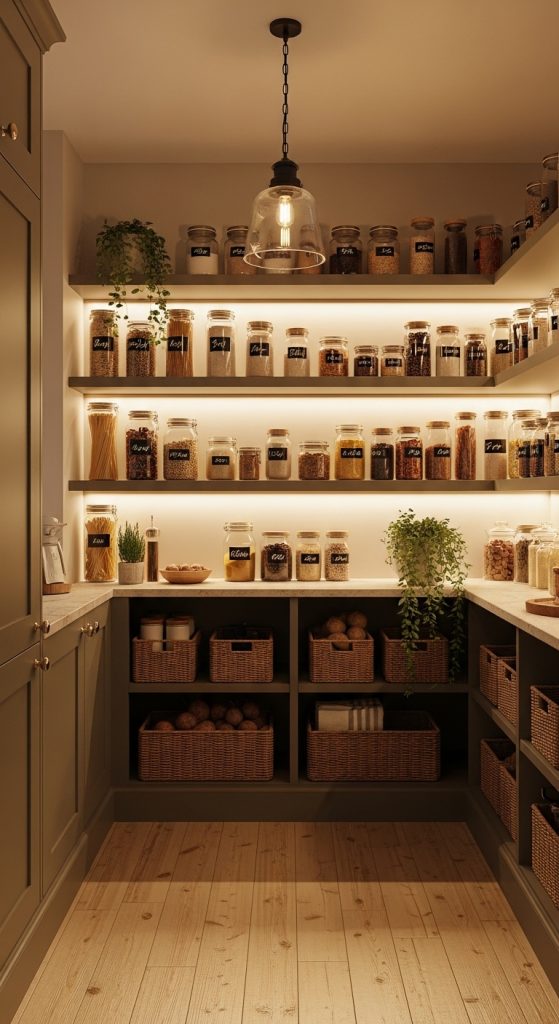
Transforming a pantry or storage area with olive green can subtly incorporate color while enhancing functionality. Painted shelves, cabinets, or even doors in olive green create a cohesive and stylish design. This approach is practical, as storage areas often benefit from darker colors that hide scuffs and stains.
Materials such as wood or MDF work well for painted pantry doors or shelving. Matte or satin finishes are recommended for ease of cleaning. Pairing olive green storage with neutral wall colors or metallic handles adds contrast and sophistication. Additionally, including baskets, jars, and containers in complementary tones enhances organization and visual appeal. Olive green storage spaces allow you to bring color into the kitchen without overwhelming the main areas, providing both functionality and style.