

The kitchen is often the heart of a home. It is not only a place for cooking but also for gathering with family and friends. One of the easiest ways to enhance your kitchen’s style is by choosing the right window curtains, especially over the sink area. Curtains can provide privacy, control sunlight, and add personality to your space. Among various styles, boho (bohemian) curtains have gained popularity for their relaxed, artistic, and natural look. Boho curtains often feature light fabrics, intricate patterns, and warm colors that create a cozy and inviting atmosphere. Whether you want to use ready-made curtains or craft your own, a well-chosen curtain can transform your kitchen into a charming, stylish space. In this blog post, we will discuss 10 essential points about choosing, preparing, and installing kitchen window curtains over the sink in boho style. We will cover materials, measurements, installation tips, and maintenance to help you achieve a perfect bohemian kitchen look.

1. Choosing the Right Fabric
Selecting the proper fabric is the first step in creating beautiful kitchen window curtains. Boho curtains often use natural fabrics like cotton, linen, or a cotton-linen blend. These fabrics are lightweight, allowing sunlight to filter through while providing some privacy. Sheer fabrics work well if your window faces a garden or a quiet street, letting in soft light and maintaining an airy feel. Heavier fabrics like thick cotton or tapestry material can be used if you want more privacy or a bold design statement. When choosing fabric, also consider color and pattern. Boho style favors earthy tones, warm hues, and eclectic patterns such as floral, paisley, or tribal designs. Mixing textures can add depth to your kitchen decor. A good tip is to feel the fabric for quality; it should drape well and withstand kitchen humidity. Avoid fabrics that stain easily, as cooking areas can be messy. With the right fabric, your curtains will enhance the kitchen’s style while remaining practical for daily use.

2. Measuring Your Window Correctly
Accurate measurements are critical for kitchen window curtains. Start by measuring the width of your window, including the frame if you plan to cover it entirely. Boho curtains often have a loose, flowing style, so add 1.5 to 2 times the width of the window for gathering. For the length, decide if you want the curtains to hang just below the windowsill, cover the entire wall to the counter, or extend to the floor. Most kitchen sink windows benefit from a shorter curtain, allowing easy access while washing dishes. Also, consider the curtain rod placement, which can add extra height above the window. Always measure in three places – top, middle, and bottom – to account for any uneven edges. Accurate measurements prevent the fabric from looking too short, long, or bunched awkwardly. Once measurements are done, you can purchase or cut fabric with confidence. Proper sizing ensures your boho curtains fit well and look intentional, complementing your kitchen’s relaxed, artistic atmosphere.

3. Selecting Curtain Styles
Boho curtains offer multiple style options for kitchen windows over sinks. Popular choices include café curtains, rod pocket curtains, and tiered curtains. Café curtains cover only the lower half of the window, allowing light to enter from the top while providing privacy below. Rod pocket curtains have a sewn pocket through which the rod slides, creating natural gathers. Tiered curtains feature two or three layers, giving a playful, eclectic feel. Another option is string curtains with lightweight fabric panels that flow freely. Boho style encourages mixing styles, patterns, and textures for a layered look. Consider adding tassels, pom-poms, or lace trims to enhance the bohemian vibe. When choosing a style, think about functionality. A kitchen sink curtain should be easy to remove for washing and simple to open or close. Combining style and practicality ensures your curtains look beautiful while serving the essential purposes of light control and privacy in your kitchen.

4. Preparing Materials
Before creating or hanging your kitchen curtains, gather all necessary materials. Essential items include the fabric, curtain rod, hooks or rings, measuring tape, scissors, pins, sewing machine or needle and thread, and optionally, decorative trims. For a boho look, choose fabrics with textures such as cotton, linen, or gauze. If you plan to sew, prepare matching thread and basic sewing tools. For ready-made curtains, make sure the rod and brackets are sturdy enough to hold the weight of your fabric. You may also want tiebacks, beads, or other decorative items to enhance the boho aesthetic. Having all materials ready before starting saves time and ensures a smoother process. A checklist can help prevent missing essential items, especially if you plan a DIY project. Preparing everything in advance allows you to focus on measuring, cutting, and assembling your boho curtains efficiently, resulting in a polished and stylish final product.

5. Cutting the Fabric
Cutting your fabric accurately is essential for a professional-looking finish. Lay your fabric flat on a clean surface and double-check your measurements before cutting. Mark the measurements with tailor’s chalk or a washable fabric marker to avoid mistakes. If your curtains require hems, add extra fabric for the top, bottom, and sides – usually about 2 inches on each edge. For tiered or layered boho curtains, cut each panel separately according to your design plan. Use sharp fabric scissors to ensure clean edges and avoid fraying. Some fabrics, like linen or loosely woven cotton, may require finishing the edges with a zigzag stitch or fabric tape to prevent unraveling. Cutting carefully ensures your curtains hang evenly and create the relaxed, flowing look typical of boho style. Accurate cutting also makes sewing easier, reducing frustration during assembly and helping your kitchen curtains look well-crafted.

6. Sewing the Curtains
Sewing is a crucial step if you are making your curtains from scratch. Start with the hems by folding the edges twice and pinning them in place. Sew the top hem first if your curtain rod requires a pocket, then work on the sides and bottom. For tiered curtains, attach each layer carefully, maintaining consistent spacing. Boho style often embraces a slightly imperfect, handmade look, but even slight irregularities should be intentional and neat. Use a straight stitch for standard seams, and reinforce stress points like corners for durability. If you prefer a no-sew option, fabric glue or iron-on hem tape can be used, though sewn curtains tend to last longer. Adding decorative trims, lace, or tassels during sewing enhances the boho aesthetic. Proper sewing ensures your curtains hang evenly, look polished, and maintain their shape through frequent washing in a kitchen environment.

7. Choosing Curtain Rods and Hardware
The right curtain rod complements your boho kitchen curtains. Wooden rods, wrought iron, or painted metal are common choices for bohemian style. Ensure the rod is sturdy enough to hold your fabric without bending. Measure the window width and select a rod slightly wider to allow the curtains to stack neatly when open. Brackets should be installed securely into wall studs or with anchors to prevent sagging. Rings or hooks can make opening and closing the curtains easier, especially for heavier fabrics. For added style, consider rods with decorative finials, or choose a simple, natural look to match the relaxed boho vibe. Installing the rod at the proper height above the window can make the space appear taller and more elegant. The right hardware not only supports your curtains but also contributes to the overall aesthetic of your kitchen’s design.

8. Hanging the Curtains
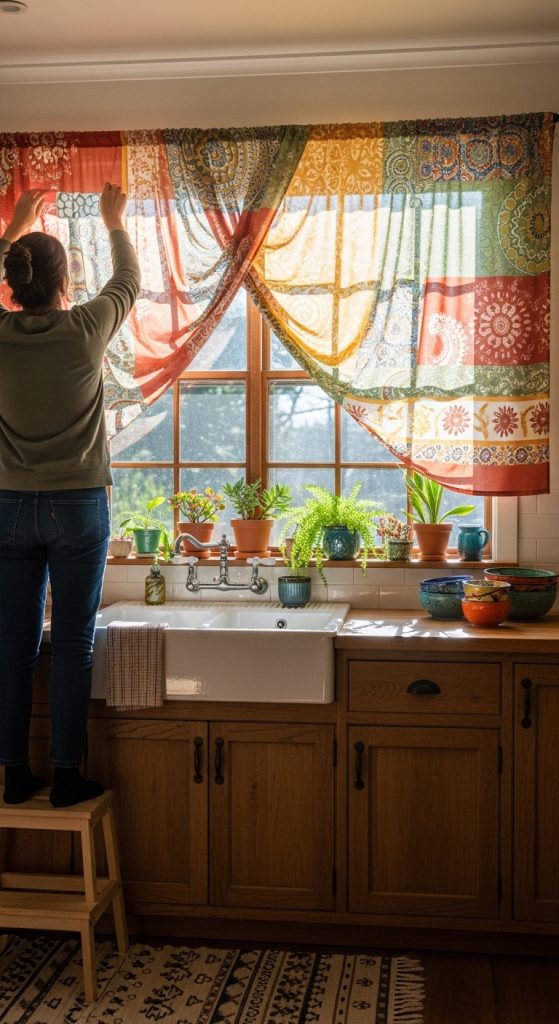
Once your fabric is prepared and your rod is installed, it is time to hang your curtains. Slide the fabric into the rod pocket or attach it to rings or hooks, depending on your curtain style. Adjust the gathers evenly across the window for a balanced appearance. For café curtains, ensure the bottom edge aligns neatly with the windowsill. Check that the curtains open and close smoothly and that the fabric does not obstruct faucet handles or sink space. Boho curtains often benefit from slightly uneven or relaxed draping, which adds to their charm. If you are using tiebacks, position them at a comfortable height to hold the curtains open without interfering with kitchen activities. Taking the time to hang curtains carefully ensures they look intentional, functional, and enhance the cozy, eclectic style of your kitchen.
9. Maintaining and Cleaning
Kitchen curtains require regular maintenance due to exposure to moisture, steam, and cooking odors. Boho curtains made from cotton or linen are generally machine washable. Always follow fabric care instructions to prevent shrinkage or fading. Sheer fabrics can be hand washed for gentler cleaning. Avoid harsh chemicals, as they may damage natural fibers. Wipe down hardware and rods to prevent dust and grease buildup. Some kitchens may benefit from periodic steaming to remove wrinkles and refresh the fabric. Regular maintenance preserves both the appearance and functionality of your curtains. A clean curtain enhances the overall aesthetic, keeps your kitchen feeling fresh, and maintains the soft, relaxed boho style that adds warmth and personality to your home.

10. Adding Decorative Touches
The final step in achieving a boho kitchen look is incorporating decorative details. Consider adding tassels, macrame tiebacks, or small beads to enhance your curtain’s design. Layering curtains with sheer panels behind patterned fabrics creates depth and visual interest. Mix colors, textures, and patterns while keeping a harmonious palette of earthy tones and warm hues. You can also use plants, hanging baskets, or small decorative items near the window to complement your curtains. These finishing touches personalize your kitchen, making it feel inviting and cozy. Boho style celebrates individuality and creativity, so don’t hesitate to experiment. Thoughtful decorative details complete your kitchen window curtains, turning a simple functional item into a focal point that reflects your personality and design sensibility.
