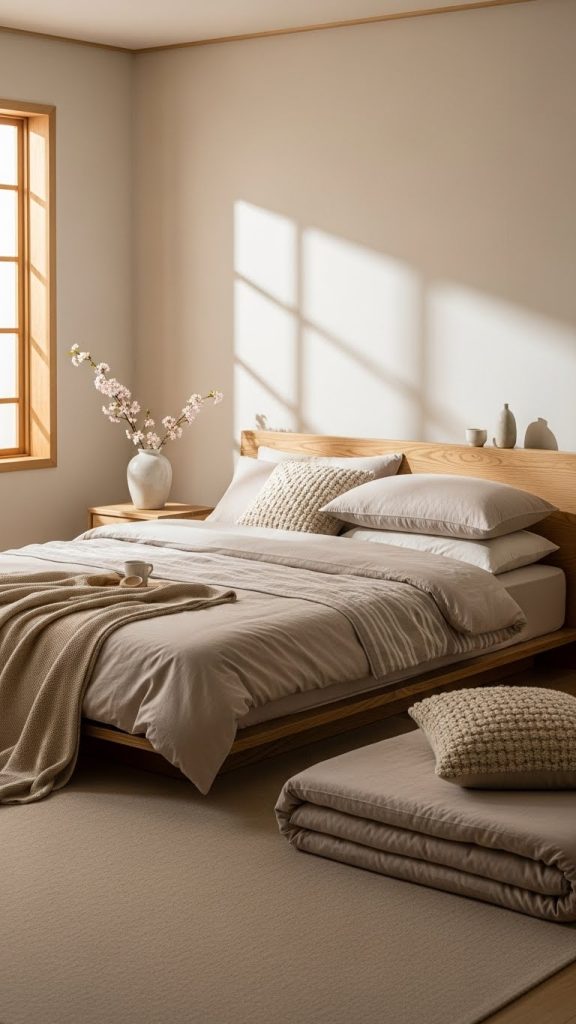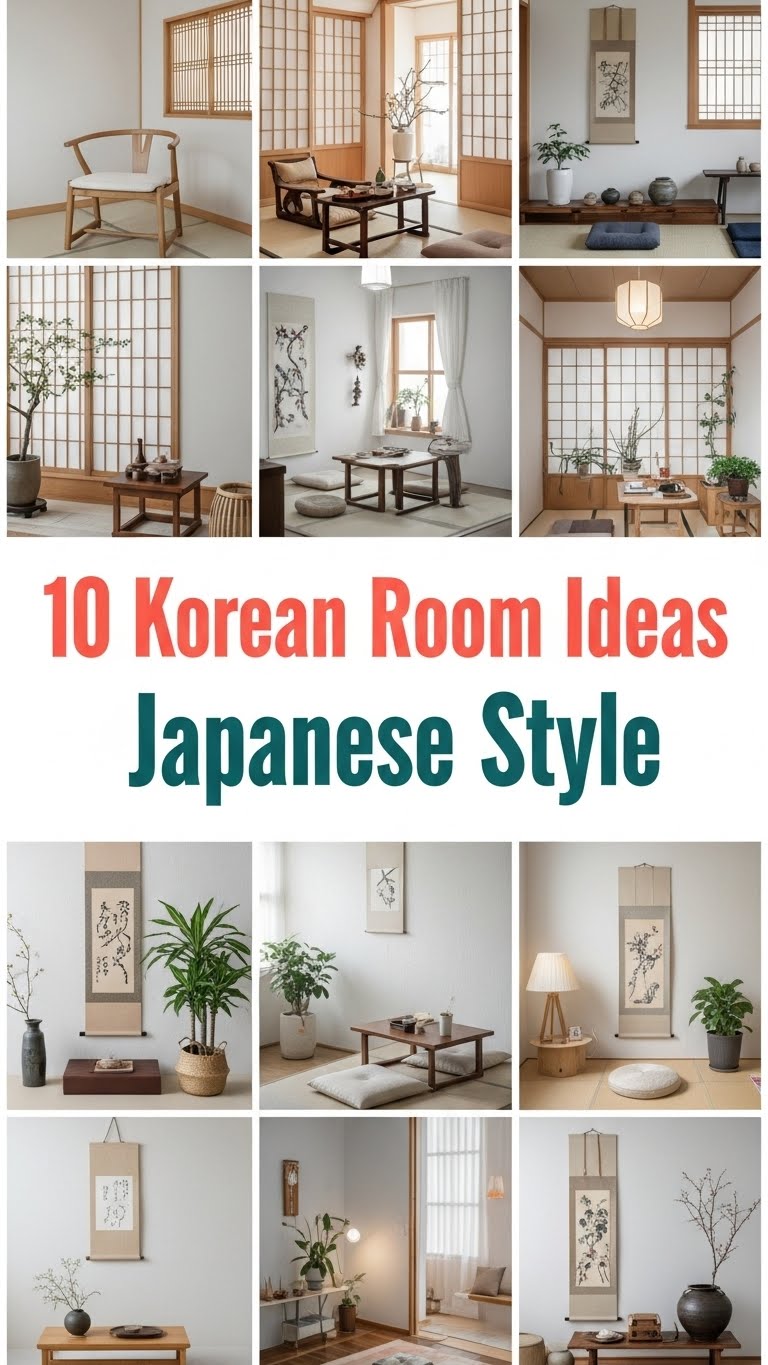
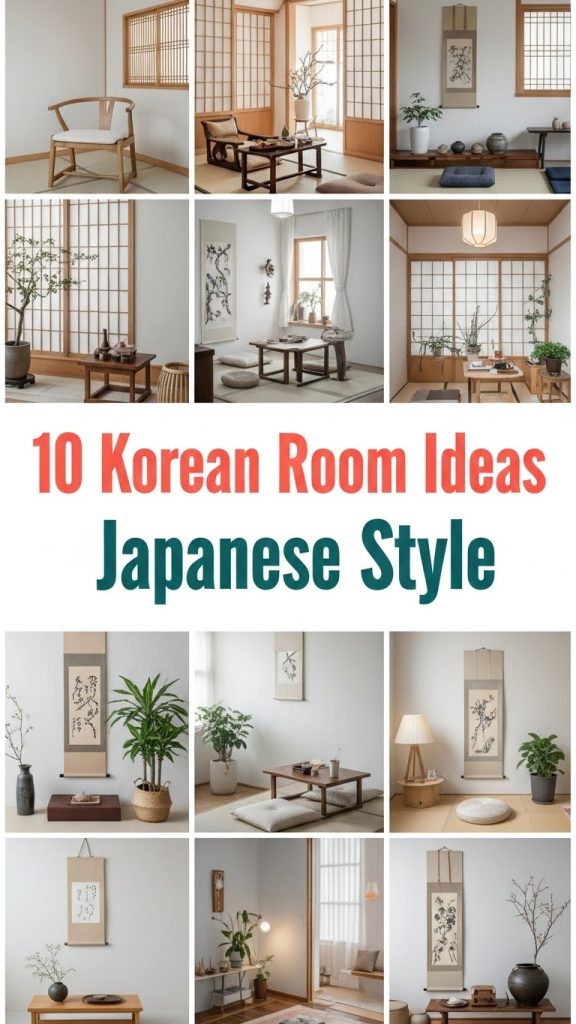
Korean and Japanese interior styles share a love for simplicity, harmony, and natural elements. Combining these aesthetics can transform a room into a calm, functional, and visually appealing space. Korean style often emphasizes warmth, subtle elegance, and modern minimalism, while Japanese interiors focus on natural materials, low furniture, and a serene atmosphere. By blending these two styles, you can create a room that is clean, organized, and inviting, while reflecting cultural charm. Whether you are redecorating a bedroom, living room, or study area, this guide provides ten practical ideas to give your room a Korean-Japanese fusion. We will cover furniture choices, color palettes, lighting, storage solutions, and decorative touches that create a balanced, cozy space. With some preparation and the right materials, even small rooms can feel spacious, airy, and peaceful. These ideas are designed to be simple, achievable, and adaptable to different room sizes and budgets.
1. Low Wooden Platform Bed
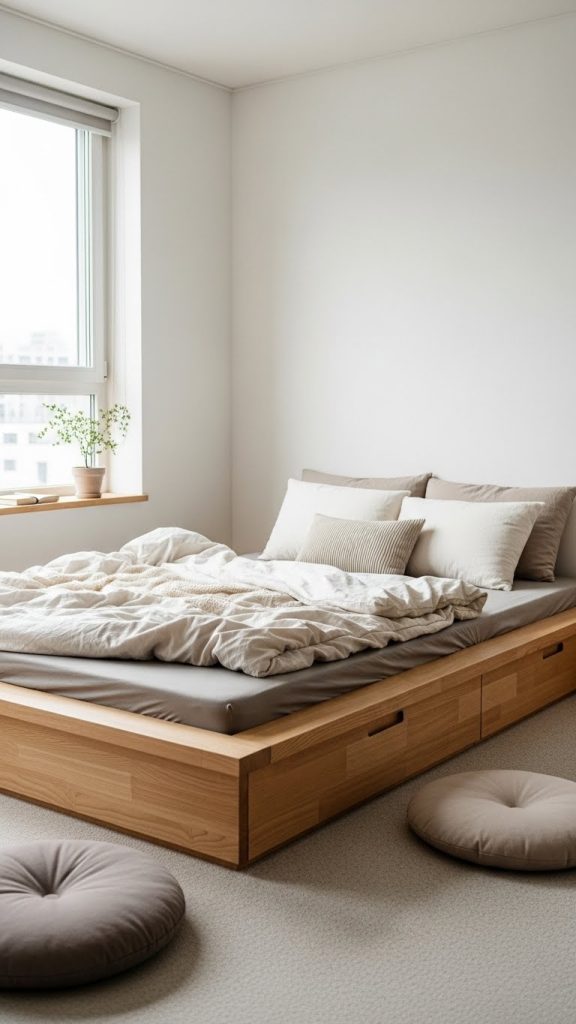
A low wooden platform bed is a key element of Japanese-inspired bedrooms. Unlike traditional Western beds, these sit close to the floor, promoting a minimalist and spacious feeling. In Korean-Japanese fusion design, choose a platform bed with clean lines and a light wood finish. You can add a thin, neutral-colored mattress and soft bedding in muted tones, such as beige, ivory, or soft gray. The bed can be paired with simple side tables or floor cushions for extra seating. Avoid bulky headboards or ornate details, keeping the focus on simplicity and functionality. For preparation, measure your room and decide on the appropriate bed size. Materials needed include a wooden platform bed, mattress, bedding, and optional floor cushions. This setup not only enhances the visual openness of the room but also creates a serene sleeping environment inspired by traditional Japanese futons while incorporating Korean warmth in texture and color.
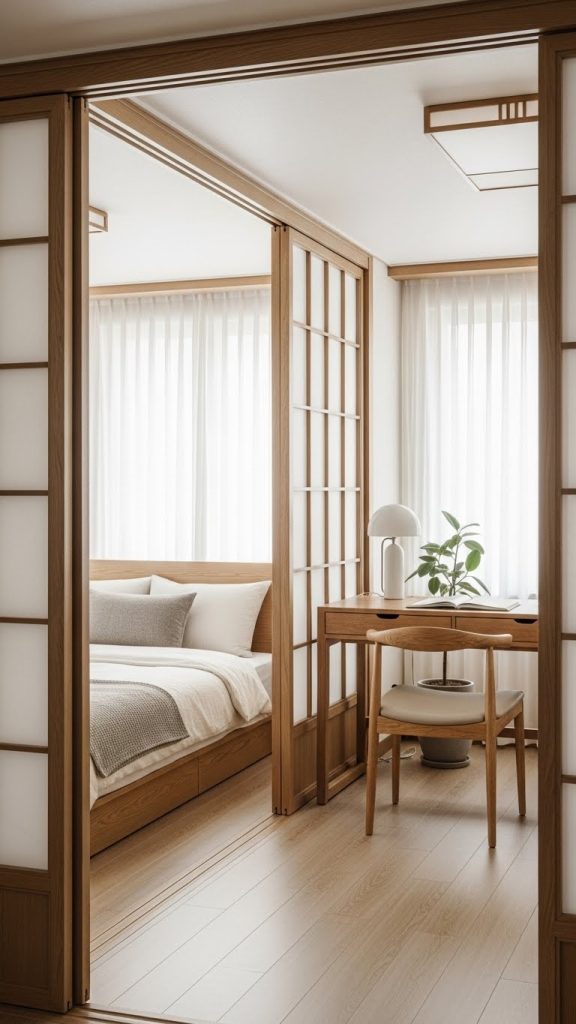
2. Sliding Shoji Screens
Shoji screens are traditional Japanese room dividers made of translucent paper framed with wood. In a Korean-Japanese room, these screens can create flexible spaces while maintaining light flow. They are perfect for separating a bedroom from a study area or creating privacy in open-plan rooms. You can also use Shoji screens as decorative wall panels or window covers. For preparation, measure the space where you want the screen and choose panels that fit proportionally. Materials include wooden frames, rice paper or frosted panels, and sliding rails if needed. These screens complement low furniture and light wood tones, reinforcing a calm and minimalist aesthetic. They also allow natural light to softly diffuse through the room, creating a warm and inviting atmosphere while maintaining clean lines and uncluttered space.
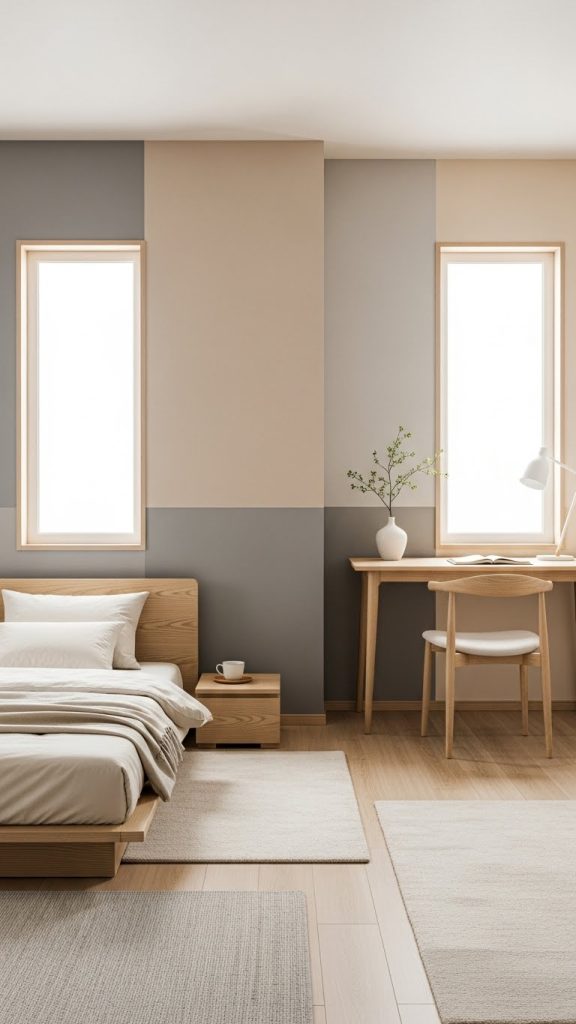
3. Neutral and Earthy Color Palette
A combination of Korean and Japanese interior styles often features neutral and earthy tones. Think beige, cream, soft gray, and muted greens or browns. This color palette helps maintain a calm and cohesive environment, allowing furniture and decor to shine without overwhelming the senses. Paint walls in light shades, use bedding in neutral tones, and add wooden accents for warmth. Preparation involves choosing a base color for walls and coordinating complementary shades for furniture, rugs, and textiles. Materials needed include paint, fabric, cushions, rugs, and light-colored wood furniture. These colors evoke natural elements, making the room feel grounded and serene. They also make small rooms appear more spacious while harmonizing with minimalist furnishings and simple decor.
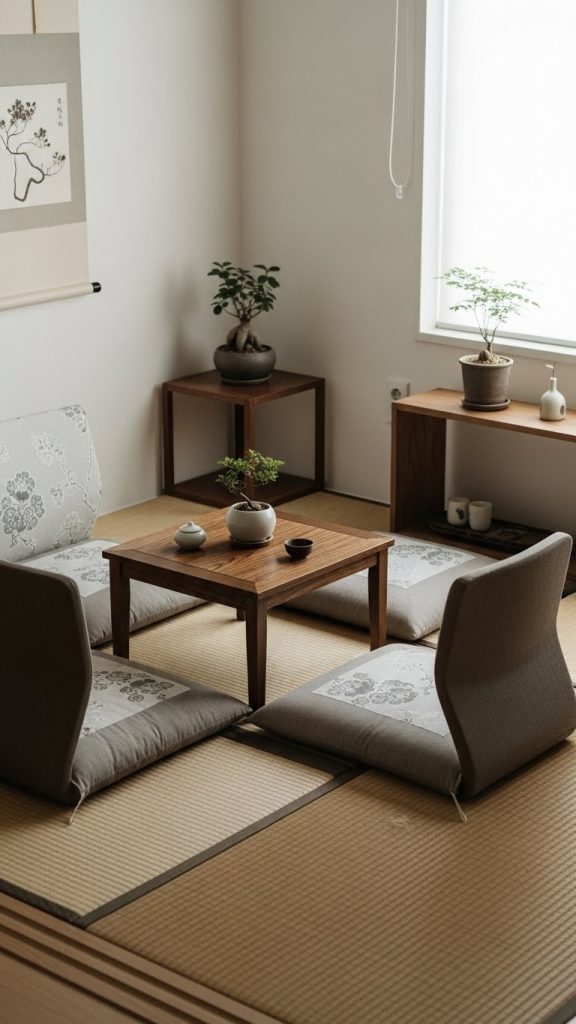
4. Tatami Mats and Floor Seating
Tatami mats are a traditional Japanese flooring choice made from woven straw. Adding tatami mats to a Korean-style room creates a comfortable area for floor seating or meditation. Pair tatami mats with floor cushions or low seating benches for a multifunctional space. Preparation includes measuring the floor area and purchasing mats in appropriate sizes. Materials include tatami mats, floor cushions, and optional low tables. This setup encourages relaxation and creates a cultural aesthetic blending Japanese tradition with Korean minimalism. You can also use mats to define zones, such as a reading nook or tea corner, without cluttering the room with heavy furniture.
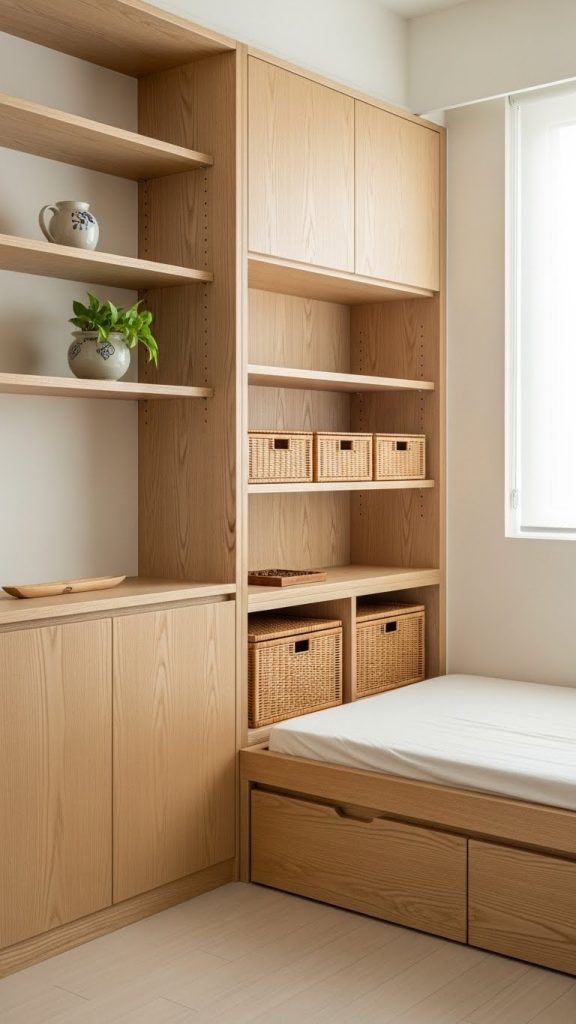
5. Minimalist Storage Solutions
Korean and Japanese rooms thrive on clean and uncluttered spaces. Incorporate minimalist storage with low cabinets, built-in shelves, or baskets. Hidden storage under platform beds or benches keeps items out of sight while maintaining the room’s aesthetic. Preparation includes evaluating the items you need to store and selecting storage units that match your room’s color palette and wood finishes. Materials include low wooden cabinets, storage baskets, under-bed organizers, and shelving units. Organized storage contributes to the calm atmosphere, ensuring the space remains functional without appearing crowded. It also enhances the visual harmony, which is central to both Korean and Japanese design philosophies.
6. Natural Light and Soft Curtains
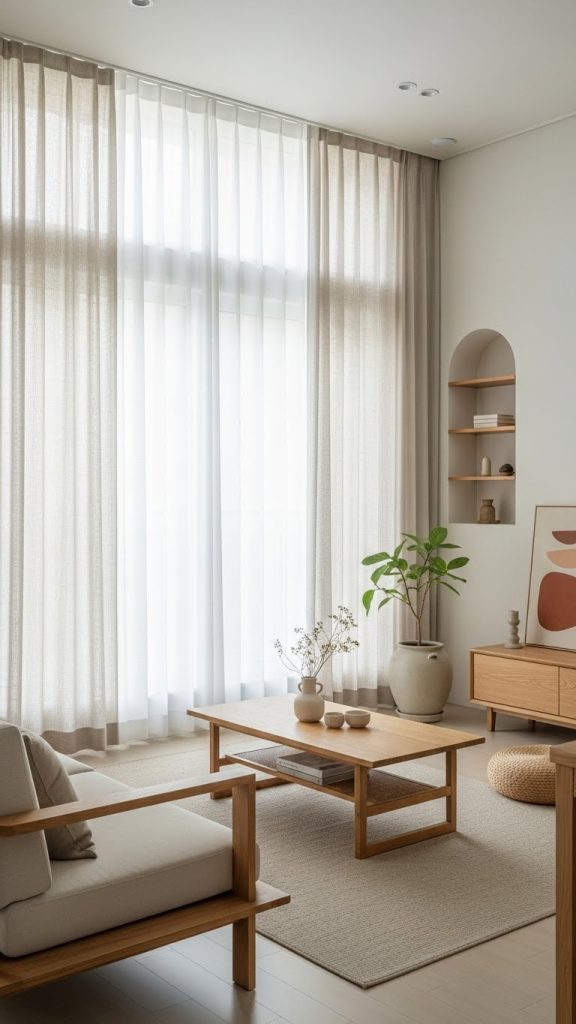
Natural light is essential for creating a bright and peaceful room. Use sheer or light-colored curtains to maximize daylight while maintaining privacy. Floor-to-ceiling windows, if available, enhance the room’s spaciousness and highlight the natural textures of wooden furniture. Preparation involves measuring window dimensions and selecting curtain styles that complement your neutral color scheme. Materials include sheer or linen curtains, curtain rods, and tiebacks if desired. Proper lighting highlights the natural beauty of furniture and decorative pieces, making the room feel airy and harmonious. This approach reflects both Korean emphasis on elegance and Japanese respect for natural elements.
7. Indoor Plants and Natural Elements
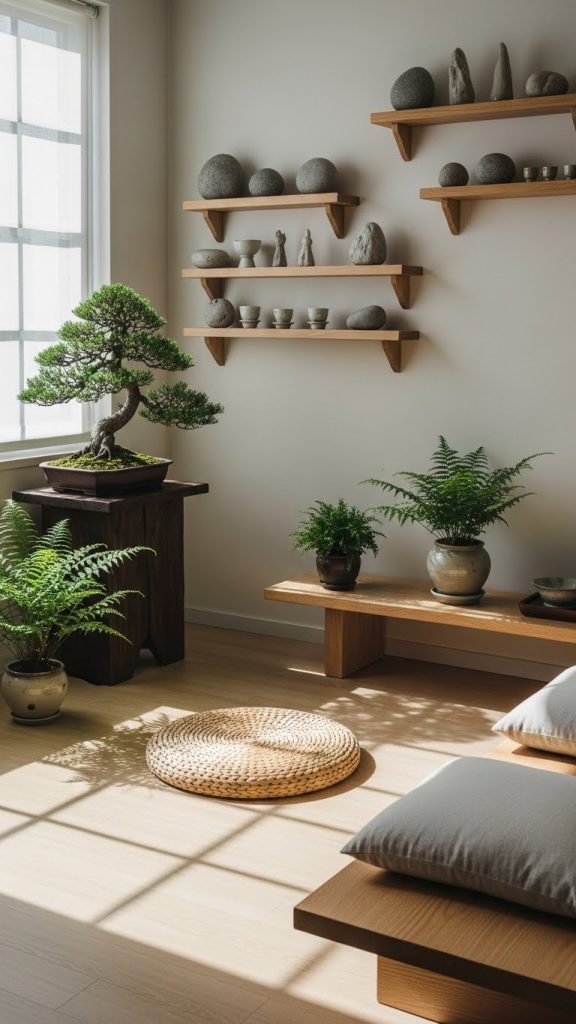
Adding indoor plants brings life and freshness into a Korean-Japanese room. Plants such as bonsai, ferns, or small potted trees create a sense of tranquility and natural beauty. Incorporate natural materials like bamboo, stone, and wooden accessories to enhance the organic feel. Preparation involves selecting plant types that thrive indoors and determining placement to ensure adequate light. Materials needed include pots, plants, wooden trays, and decorative stones. Indoor greenery softens the room, improves air quality, and adds subtle color to neutral palettes. It perfectly complements the minimalistic furniture and natural textures central to this fusion style.
8. Low Wooden Desk or Study Area
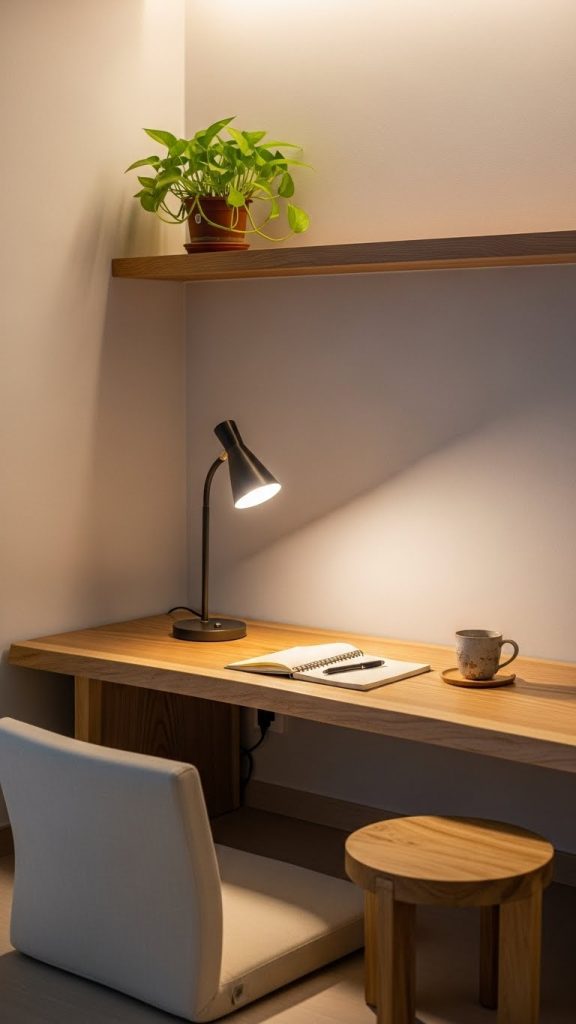
For a functional workspace, a low wooden desk aligns with Japanese minimalism and Korean modern aesthetics. Choose a desk without heavy drawers and pair it with a floor chair or small stool. Keep the desk clear of clutter, using only essential items like a lamp, notebooks, or a small plant. Preparation includes measuring the area for the desk and selecting a style that complements other furniture. Materials include a wooden desk, floor chair, desk lamp, and minimal accessories. This setup encourages productivity while maintaining a clean and calm environment, perfectly blending practical needs with aesthetic simplicity.
9. Simple Wall Art and Decorative Touches
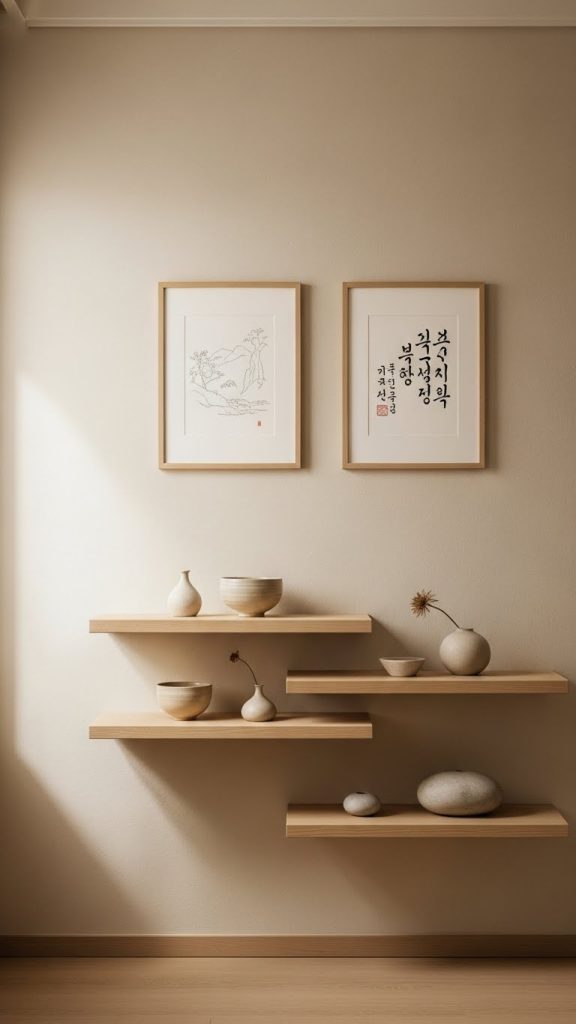
Walls in Korean-Japanese rooms are best kept simple. Use minimal wall art, such as framed line drawings, calligraphy, or small tapestries. Avoid large or overly colorful paintings. You can also hang wooden shelves for small decorative items like ceramics or incense holders. Preparation involves selecting art pieces that fit the room’s size and color palette. Materials include frames, prints, shelves, and small decorative objects. Subtle decor enhances the room’s personality without overpowering its minimalist charm. This approach allows the furniture, textures, and natural light to remain the main focus.
10. Soft Textiles and Layered Bedding
Layered bedding in soft fabrics adds warmth and comfort to a Korean-Japanese room. Use cotton or linen sheets, light blankets, and throw pillows in neutral tones. Add a futon or thin quilt for extra flexibility, allowing the bed to function as both a sleeping and lounging area. Preparation includes choosing fabrics that are breathable and easy to maintain. Materials needed include bed linen, pillows, blankets, and optional futons. Textiles soften the minimalistic look, making the room cozy without cluttering it. This combination of Korean comfort and Japanese simplicity ensures the bedroom remains inviting and restful.