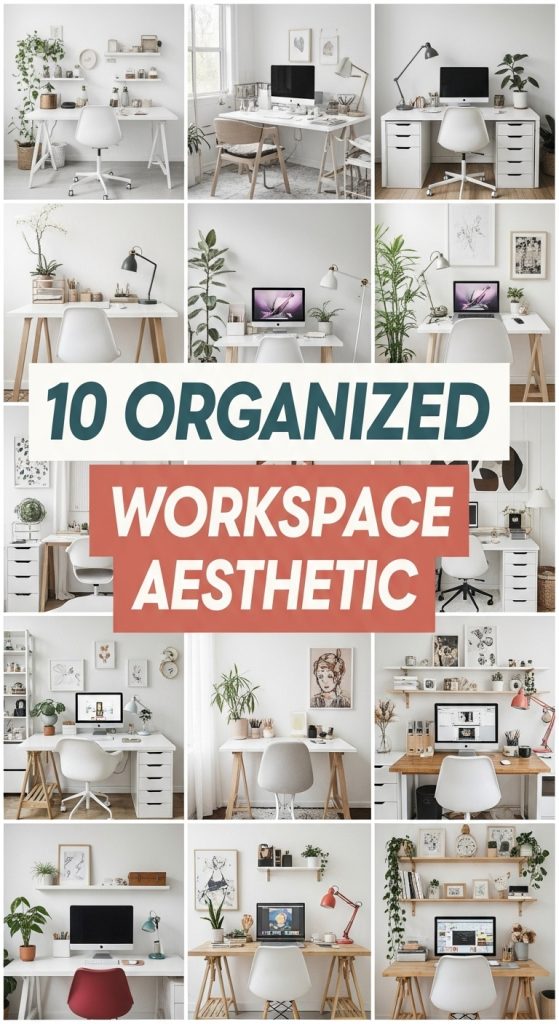
Creating an organized workspace aesthetic is a purposeful process that involves blending functionality with visual harmony. A well designed workspace can dramatically improve productivity, reduce mental clutter, and help maintain consistent focus throughout the day. Many people feel overwhelmed when their desk area is cluttered or when storage solutions are poorly planned. By using thoughtful design strategies, material preparation, and intentional placement of items, any workspace can be transformed into an efficient and appealing environment that supports daily workflow. Whether you work from home, manage a study space, or maintain a small office corner, the goal is to build a setting that aligns with your personal workflow and minimizes distractions. In this detailed guide, we explore ten essential ideas that contribute to an organized workspace aesthetic. Each idea highlights why it matters, how to prepare the materials needed, and techniques to apply the concept effectively. These ideas focus on practicality, minimalism, and design coherence, helping you create a workspace that feels structured and visually calm. Through thoughtful adjustments, your workspace can become a place where creativity flows, tasks are completed with ease, and long working hours feel more comfortable and manageable.
1 Minimalist Desk Layout
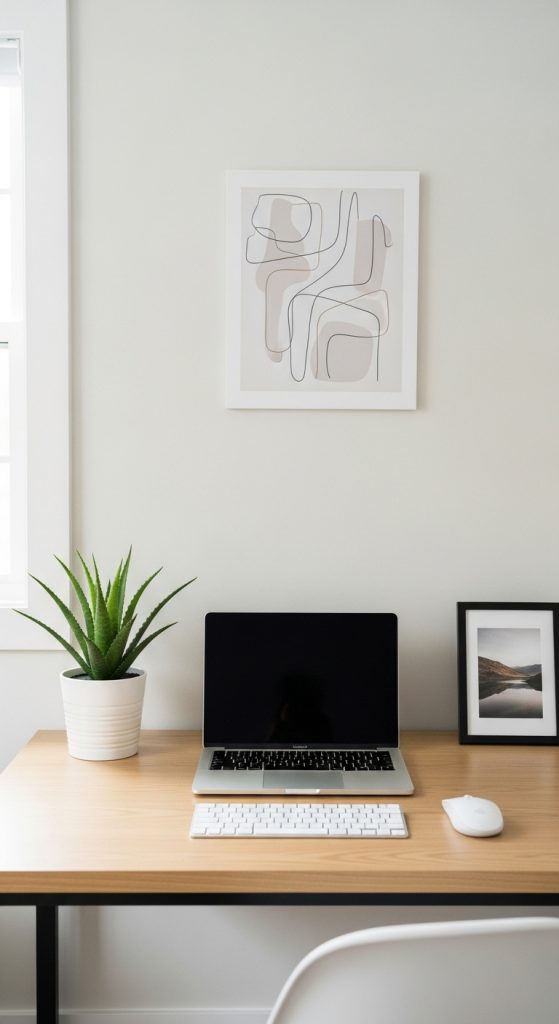
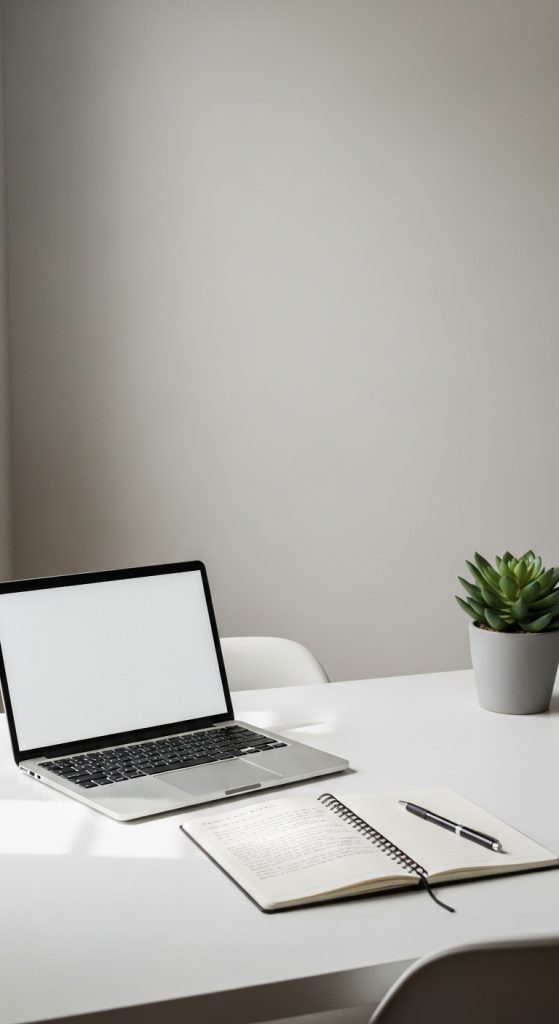
A minimalist desk layout is one of the most effective approaches to creating an organized workspace aesthetic. The goal is to keep only essential items on the desk surface while removing everything that does not serve your daily workflow. Before starting, gather cleaning supplies, a microfiber cloth, a small container for loose items, and a storage box for items you plan to keep but do not need on display. Begin by clearing the entire desk and cleaning the surface thoroughly. After cleaning, assess each item and ask whether it is required every day. Essential items usually include a laptop or computer, a lamp, a notebook, and a pen. Place necessary items symmetrically or in a balanced visual arrangement to maintain a clean and composed look. Avoid overcrowding the desk with decor pieces. One small plant or a single framed photo is enough for aesthetic appeal without causing distraction. A minimalist desk layout helps reduce visual noise and improves concentration. It also makes it easier to clean and maintain the workspace. When everything has a clear purpose and position, your mind automatically adapts to a more focused and calm working environment, allowing you to complete tasks more efficiently.
2 Drawer and Cabinet Organization
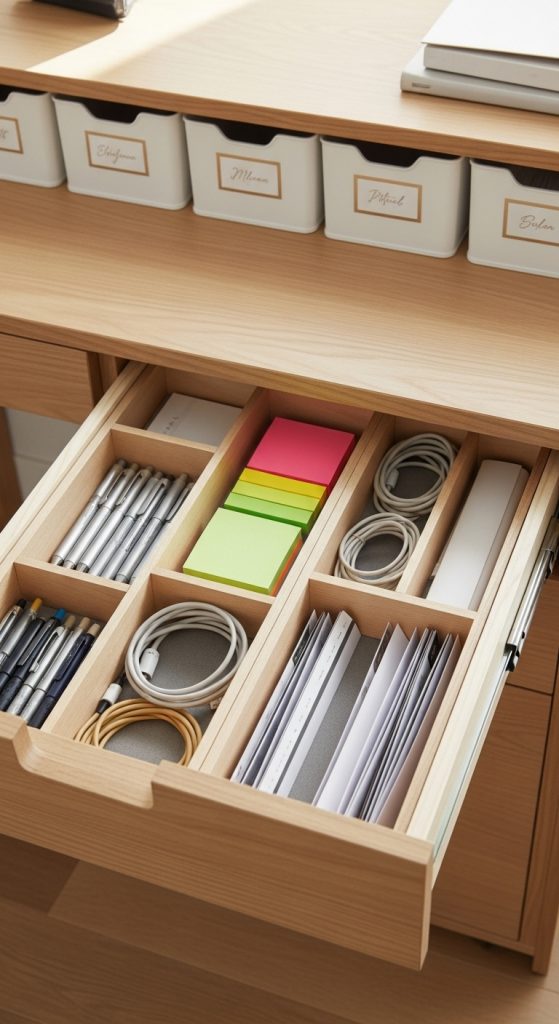
Drawer and cabinet organization plays a crucial role in maintaining a clean workspace aesthetic. Before organizing, gather small storage bins, dividers, labels, and cleaning wipes. Start by emptying each drawer or cabinet and grouping similar items together such as stationery, documents, cables, tools, or electronics. Once items are sorted, clean the interior surfaces. Use drawer dividers to separate categories and make items easier to locate. For example, keep pens, markers, and sticky notes in one section while placing cables and chargers in another. Labeling sections can make the system more efficient, especially if you share the workspace with others. In cabinets, use stackable containers to maximize vertical space. Keep frequently used items in accessible drawers and place rarely used items in deeper or lower cabinets. A well arranged storage system ensures that the desk surface remains free of unnecessary clutter. It also reduces the amount of time spent searching for items during busy work hours. When everything has a designated place, stress levels decrease and workflow becomes smoother. Drawer and cabinet organization enhances the aesthetic appeal of your workspace because it prevents random objects from piling up. A hidden yet efficient organization system is essential for long term workspace clarity.
3 Cable Management Solutions
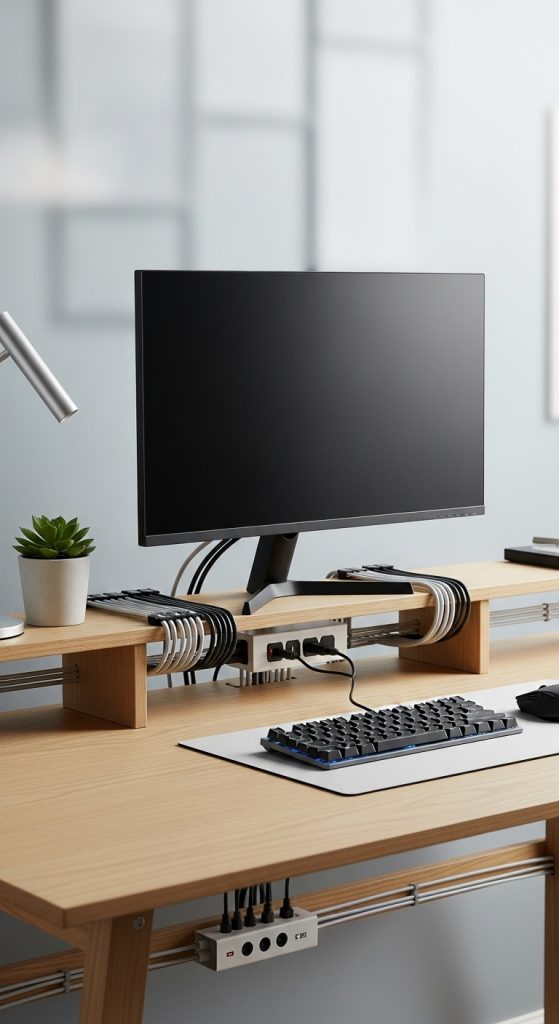
Cable management is often overlooked but is essential for maintaining a clean and organized workspace aesthetic. Tangled cables create visual clutter and increase the risk of damage to electronic devices. Before organizing, gather materials such as cable clips, zip ties, cable sleeves, adhesive hooks, and a power strip with built in surge protection. Begin by unplugging all cables and detangling them. Clean the surface behind your desk and reposition the power strip in an accessible but hidden location such as under the desk or attached to the back panel. Use cable clips to guide wires along the edges of the desk. Cable sleeves help group multiple wires into a single clean line which reduces visual clutter. Zip ties can be used for temporary bundling but avoid tightening them too much to prevent damage to the cables. Labeling each cable can also help identify which device belongs to which cord. Organized cables improve safety by reducing tripping hazards and preventing overheating. More importantly, cable management creates a visually neat workspace that feels calm and professional. A clean line of cables can completely transform the overall look of your desk area and make daily device usage easier and more efficient.
4 Aesthetic Storage Boxes and Bins
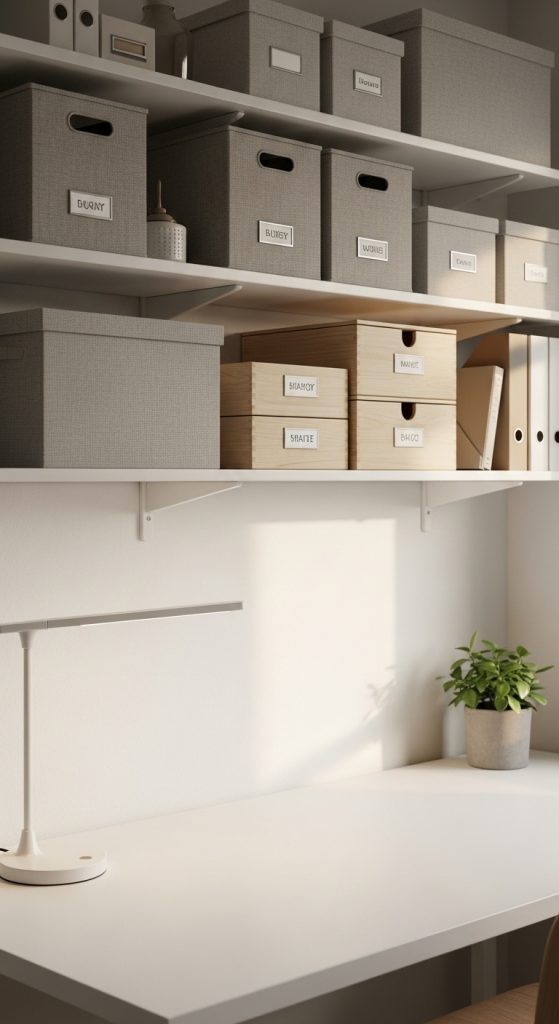
Aesthetic storage boxes and bins help keep essential items organized while contributing to the overall design of your workspace. Before beginning, gather boxes of different sizes, label stickers, fabric bins, or wooden containers depending on the theme you want to maintain. Start by identifying items that do not need to be on the desk but should still remain within reach. Examples include extra stationery, notebooks, art supplies, cables, and small electronics. Choose storage boxes that complement the color palette of your workspace. Neutral toned boxes provide a calm and minimalist feel while wooden boxes add warmth and natural texture. Label each box for convenience and consistency. Store boxes on shelves, in cabinets, or neatly aligned on the desk if space allows. When boxes are visually cohesive, they help unify the workspace aesthetic and reduce the appearance of clutter. In addition to visual appeal, storage boxes protect items from dust and damage. They also make it easier to maintain long term organization because every item has a defined location. Aesthetic storage solutions help build a workspace environment that looks intentional and polished while supporting a tidy and efficient workflow throughout the day.
5 Wall Mounted Shelves
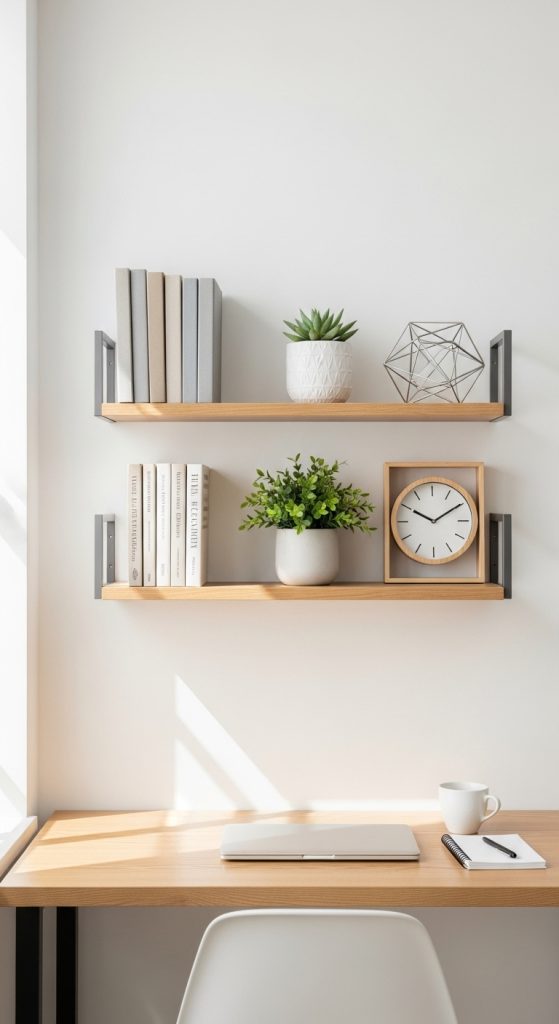
Wall mounted shelves are an excellent way to maximize vertical space while keeping the workspace visually organized. Before installation, gather a measuring tape, level tool, wall anchors, screws, a drill, and shelf boards that match your preferred aesthetic. Start by measuring the wall area to determine the ideal shelf height and spacing. Mark positions carefully to ensure alignment. Install wall anchors and secure the shelves in place. Once installed, decide how to arrange items in a balanced and neat way. Place books, small decor items, plants, or storage boxes on the shelves, making sure not to overcrowd them. Use the top shelf for decorative pieces and the lower shelves for functional items. Wall shelves help keep the desk area clear while providing easy access to frequently used objects. They also create an open and visually appealing workspace environment. With proper placement, shelves can become a focal point of the room, adding personality and structure to your workspace. By elevating items off the desk, you increase working surface availability and reduce clutter. This approach helps create a workspace that feels larger, cleaner, and more inviting, making it easier to focus on tasks and maintain long term organization.
6 Labeling Systems
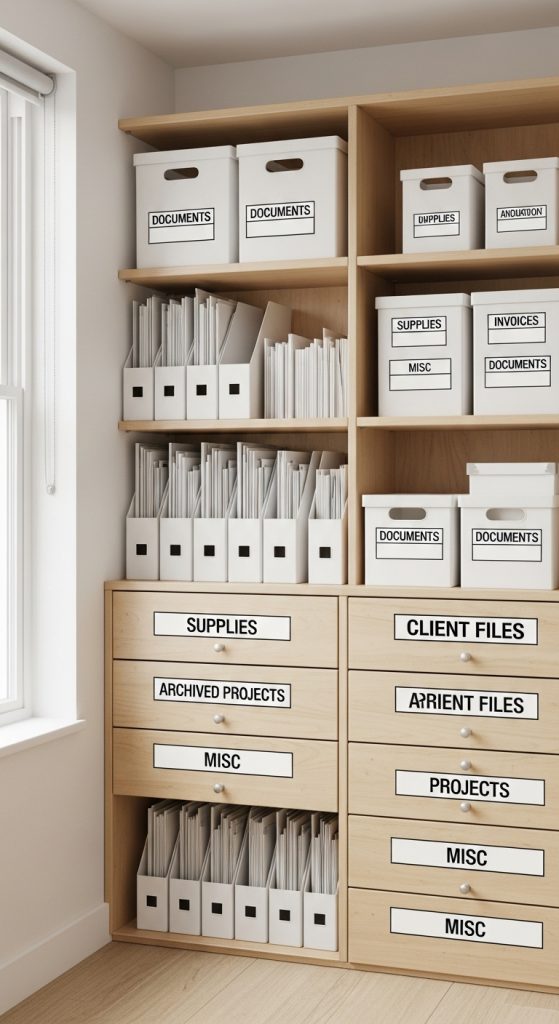
A clear labeling system is an essential part of maintaining an organized workspace aesthetic. Labels help reduce guesswork and keep items in their designated places. To prepare, gather label stickers, a marker or label maker, storage containers, file folders, and drawer dividers. Begin by identifying all categories within your workspace including documents, stationery, cables, tools, personal items, and tech accessories. Create simple readable labels for each category. Place labels on drawers, storage boxes, file folders, and shelves. Avoid overly decorative labels that may distract from the clean visual aesthetic. A labeling system works particularly well in shared workspaces or homes where multiple family members use the same area. It ensures consistency and helps maintain long term organization. In addition to improving efficiency, labeling reduces visual clutter because it encourages a structured and intentional arrangement for each item. When everything is clearly marked, you save time and avoid unnecessary frustration during busy work hours. A good labeling system supports productivity, encourages tidiness, and strengthens the overall visual harmony of your workspace, making it both beautiful and functional.
7 Functional Desk Accessories
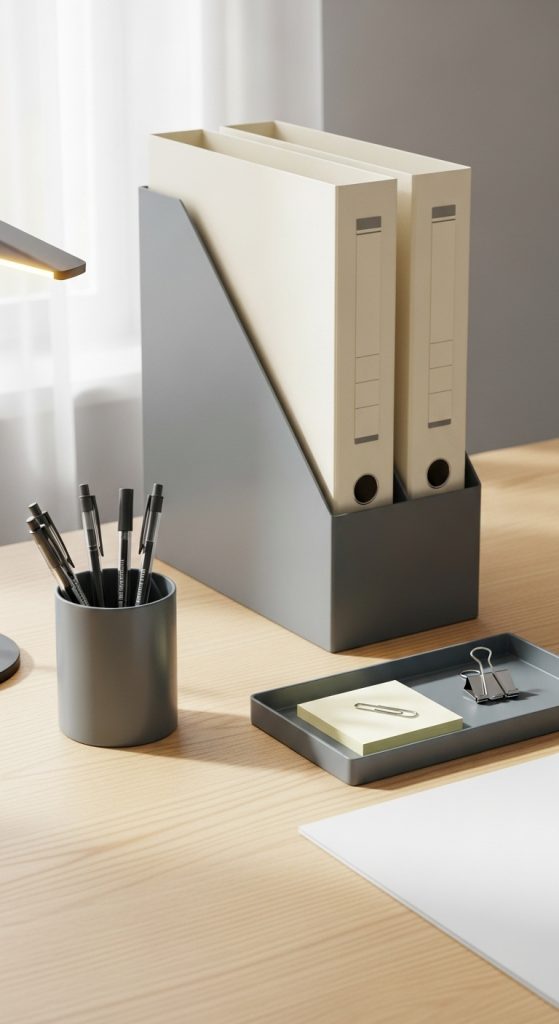
Functional desk accessories enhance both organization and productivity. Before reorganizing your desk accessories, gather items such as a pen holder, desktop organizer tray, file stand, coaster, and a small notepad. Choose accessories that match your workspace color scheme to maintain visual harmony. Begin by assessing which accessories you truly need. A pen holder is essential for writing tools, while a file stand can hold active documents that require daily attention. A desk tray helps contain loose items such as paper clips or sticky notes. Keep accessories minimal and functional. Avoid overcrowding the desk with too many organizers. Place accessories strategically so that everything remains within easy reach without blocking your workspace. Functional accessories help create a sense of structure and reduce the chances of items piling up. They also contribute to the overall aesthetic by giving the desk a polished and intentional look. When accessories are well chosen and properly arranged, your workspace becomes more efficient and visually balanced. This encourages better focus, increases motivation, and supports a smoother daily workflow.
8 Digital Workspace Organization
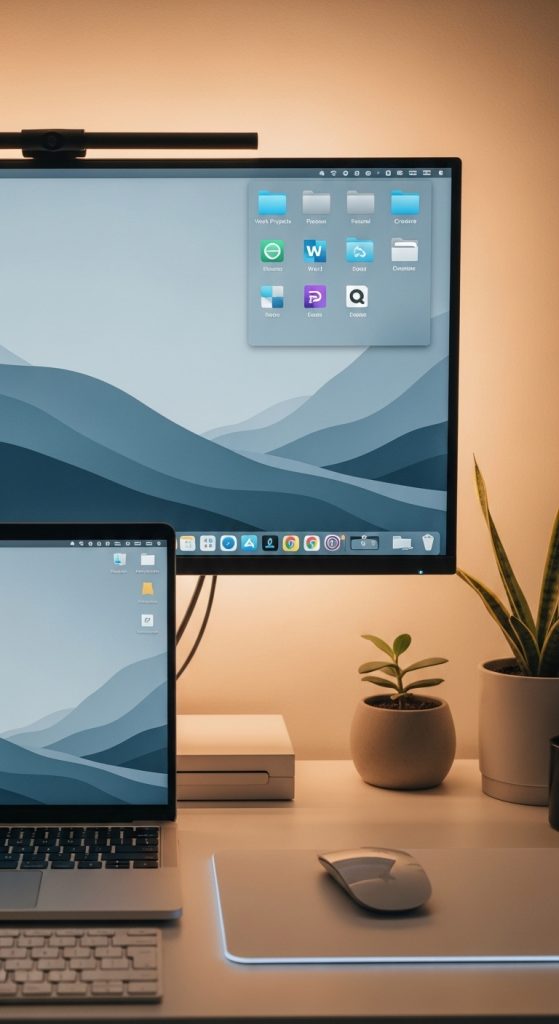
Digital workspace organization is just as important as physical organization because cluttered screens and unorganized files can reduce productivity. Before organizing, prepare by identifying your digital tools such as laptop, cloud storage service, and note taking apps. Start by cleaning your desktop background and removing unnecessary icons. Create folders and categorize your files based on projects, dates, or content types. Use cloud storage for important documents to reduce device overload and enable easy access across multiple platforms. Organize your email inbox by sorting messages into folders and unsubscribing from unnecessary newsletters. Clean up your browser by removing unused bookmarks and closing excess tabs. A tidy digital workspace supports mental clarity and makes it easier to find files quickly. It also enhances the visual appeal of your computer screen and reduces distractions. Digital organization ensures harmony between your physical desk and your virtual environment. When both areas are aligned, you work more efficiently and maintain a consistent sense of order throughout your workflow. Regularly updating your digital system helps you stay productive and prevents overwhelming file buildup.
9 Lighting Setup for Workspace Clarity
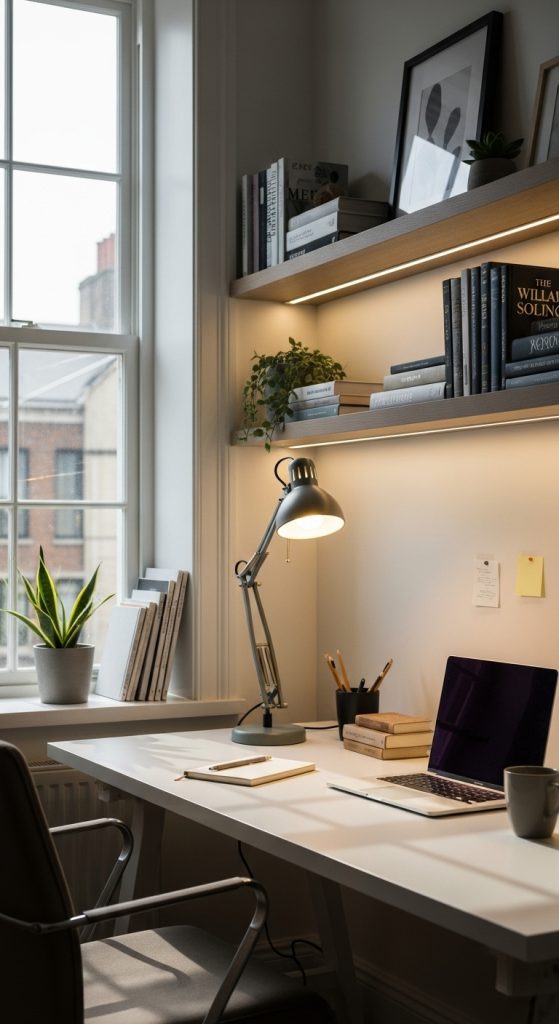
A thoughtful lighting setup is essential for creating an organized and visually appealing workspace. Before setting up lighting, gather a desk lamp, warm or neutral white bulbs, and optional lighting accessories such as LED strips. Begin by assessing your natural light sources. If possible, position your desk near a window to take advantage of daylight which enhances clarity and reduces strain on the eyes. Use a desk lamp for focused task lighting. Adjustable lamps offer flexibility and allow you to direct light exactly where needed. Choose bulbs that produce soft yet bright illumination to avoid harsh shadows. Accent lighting such as LED strips under shelves can help highlight organization features while adding subtle visual depth to the workspace. Proper lighting reduces eye fatigue, improves mood, and contributes to a clean and structured workspace aesthetic. A well lit environment feels more spacious and inviting, encouraging longer periods of productive work. Lighting not only enhances functionality but also elevates the design quality of the workspace, making it feel more intentional and refined.
10 Personalized Minimal Decor
Personalized minimal decor adds character to your workspace without compromising organization. To prepare, gather one or two decor pieces such as a small plant, a framed photo, a minimal clock, or a simple artwork print. The goal is to enhance the aesthetic appeal without overcrowding the space. Choose items that reflect your personality but maintain a clean and minimal design. Position decor pieces in areas that do not interfere with your work surface or storage. For example, place a small plant in a corner of the desk or hang a simple art piece on the wall above your workspace. Keep decor limited to maintain visual balance. Personal touches help create a workspace environment that feels comfortable and inspiring. They contribute to a more enjoyable work atmosphere and can boost motivation during long working hours. When combined with organized storage, proper layout, and strategic lighting, minimal decor completes the workspace aesthetic by adding warmth and individuality. It ensures your workspace remains visually pleasing while still prioritizing functionality and efficiency.