Penguins are fascinating creatures that capture the curiosity and imagination of children. Their unique black and white appearance, waddle, and playful nature make them perfect subjects for arts and crafts projects. Engaging kids in penguin-themed crafts not only helps them develop creativity but also improves fine motor skills, hand-eye coordination, and focus. Whether it is through painting, paper crafts, or recycled materials, there are countless ways to bring these adorable birds to life in a fun, educational manner. Crafting penguins also provides opportunities to teach children about wildlife, habitats, and environmental awareness. From simple cut-and-paste activities to more involved projects, penguin arts and crafts can be adapted for various age groups and skill levels. The following ten ideas offer a mix of techniques and materials, ensuring that there is something for every young artist. By preparing a few basic supplies, children can enjoy hours of hands-on learning, creating their own wintery penguin world while exploring textures, colors, and shapes. These activities are perfect for home, classrooms, or themed parties and encourage imaginative play alongside creative expression.
1. Paper Plate Penguin
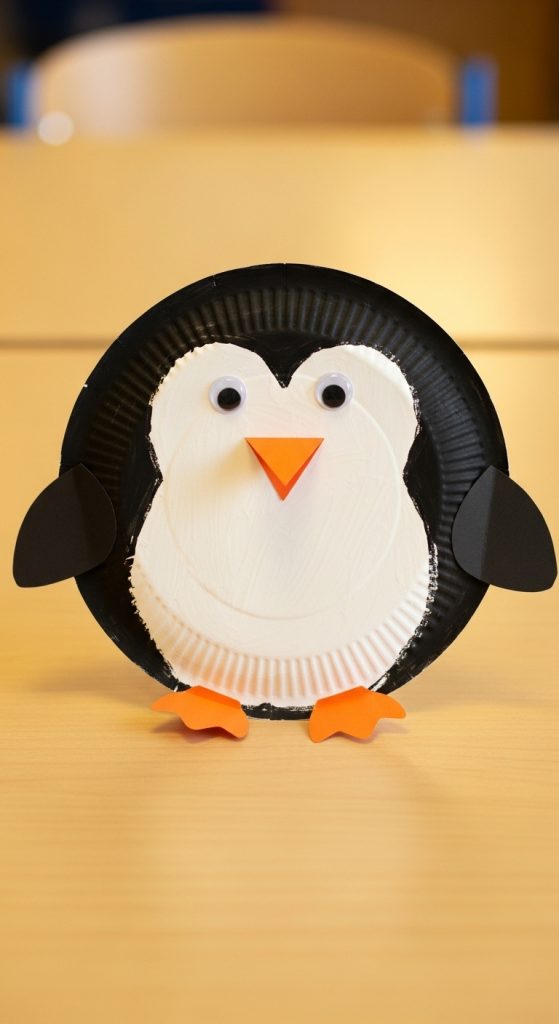
A simple and fun craft for young children is creating a penguin from a paper plate. For this project, you will need a plain paper plate, black and white construction paper, glue, scissors, and markers. Start by painting the outer part of the plate black and leaving a white oval in the center for the penguin’s belly. Cut out a small orange triangle for the beak and two orange ovals for the feet. Use black paper to create wings or simply draw them with markers. Once all the pieces are ready, glue them onto the plate in the appropriate places. Children can add eyes with googly eyes or by drawing them with markers. This activity teaches kids about shapes and encourages careful placement while developing fine motor skills. It is simple enough for preschoolers but can be enhanced with extra details for older children. Displaying the finished penguins on a wall or as part of a winter-themed display can give children a sense of pride and accomplishment.
2. Penguin Handprint Art
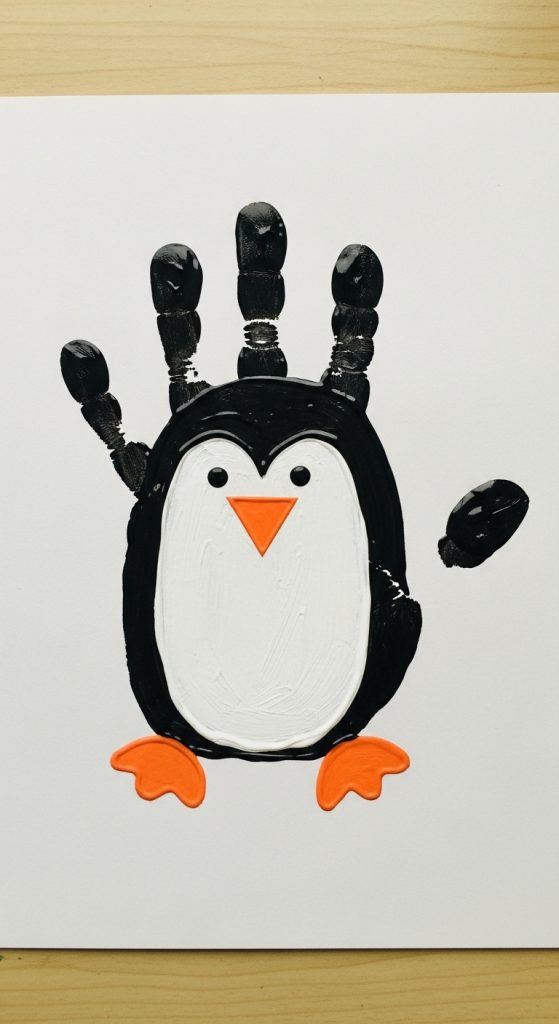
Handprint art is a creative way to involve kids in making personalized penguins. You will need white and black paint, an orange marker or paint, and paper. Start by painting the child’s palm and fingers with black paint and press it onto the paper to create the penguin’s body. Once dry, paint a white oval in the center for the belly. Add a small orange triangle for the beak and orange footprints for the penguin’s feet. Finally, draw eyes using a black marker or add small stickers. This craft allows children to see their own hands become part of the artwork, making it highly interactive. It is also excellent for sensory play and helps children experiment with colors and textures. Handprint penguins can be turned into greeting cards, wall decorations, or part of a larger collage project, providing a lasting memory of the child’s creativity.
3. Penguin Popsicle Stick Craft
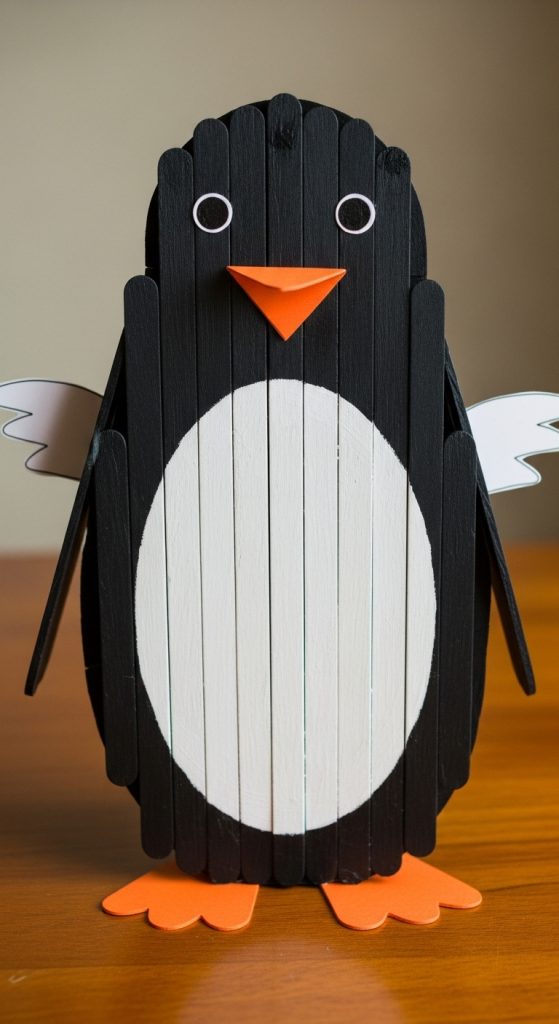
Using popsicle sticks is a creative way to make a 3D penguin craft. Supplies include popsicle sticks, black and white paint, orange construction paper, scissors, and glue. Paint the popsicle sticks black and allow them to dry. Glue the sticks together in a vertical arrangement to form the penguin’s body. Cut out a white oval for the belly, and add a small orange triangle for the beak and two orange feet. Attach small paper or sticker eyes to complete the face. Children can also decorate their penguins with scarves, hats, or accessories using colored paper. This craft strengthens hand-eye coordination, encourages creativity in decorating, and teaches children how to assemble different materials into a cohesive project. Popsicle stick penguins can also be used as puppets for imaginative storytelling activities.
4. Penguin Sock Puppet
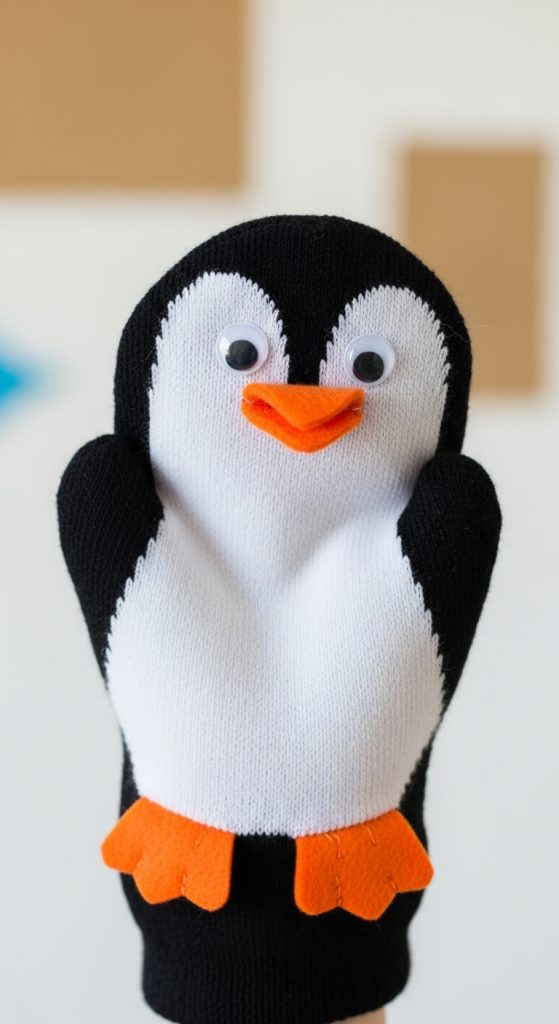
Creating a penguin sock puppet is both fun and functional. You will need a black or white sock, felt or construction paper, glue, scissors, and markers. Place a white oval piece of felt or paper on the sock to create the penguin’s belly. Add a small orange triangle for the beak and two orange feet at the bottom. Attach googly eyes or draw them with markers to complete the face. Children can use their fingers inside the sock to animate their penguin, making storytelling more interactive. This activity encourages imagination, communication skills, and creative thinking. Kids can also decorate their penguins with scarves, hats, or tiny accessories to make each puppet unique. The puppet can be used in classroom plays, at home for fun storytelling, or as a gift to friends and family.
5. Penguin Paper Bag Craft
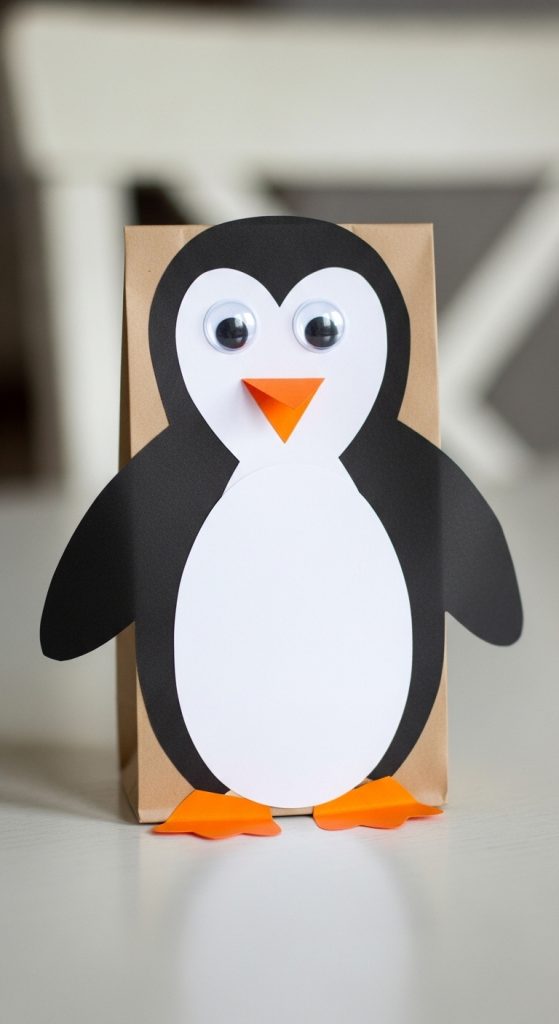
A paper bag penguin is an easy craft using materials commonly found at home. You will need a small brown or white paper bag, black and white construction paper, glue, scissors, and markers. Cut a white oval for the belly and glue it onto the center of the bag. Add small black paper wings on the sides, an orange triangle for the beak, and two orange feet at the bottom. Draw or stick eyes to finish the face. Children can also use the bag as a puppet by placing their hand inside. This project develops creativity, cutting, and gluing skills, and allows children to explore 3D construction using simple materials. Paper bag penguins can be displayed on shelves or used in imaginative play scenarios, making them versatile and fun.
6. Penguin Origami
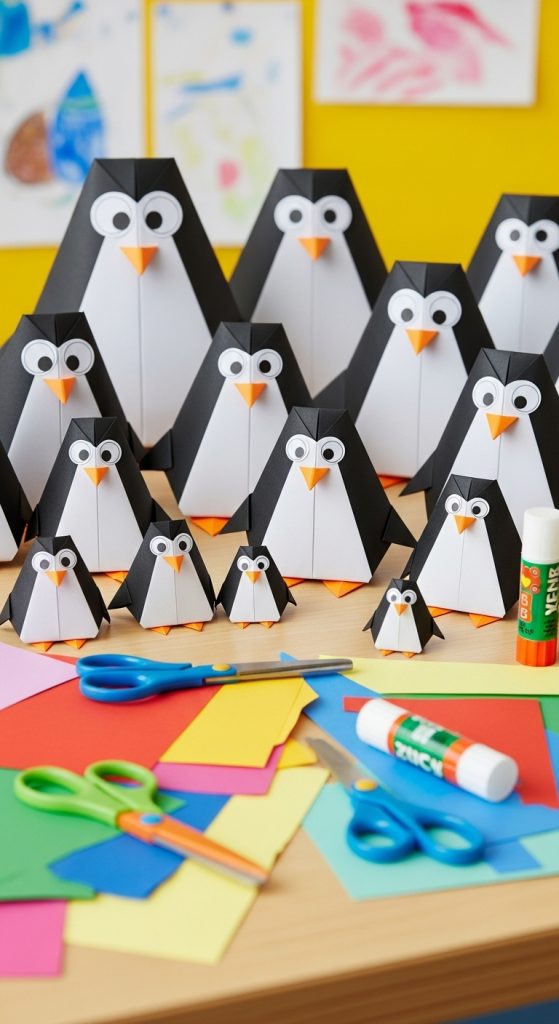
Origami penguins are a fun challenge for older children who enjoy folding paper. You will need black and white origami paper or colored paper cut into squares. Start by folding the paper into a triangle to form the body. Then, fold smaller triangles or flaps to create the wings and feet. Use markers to add the beak and eyes. This activity improves concentration, patience, and fine motor skills. Origami penguins can be placed on desks, used as decorations, or incorporated into a winter diorama. With practice, children can learn to fold multiple penguins in different sizes, enhancing spatial awareness and precision.
7. Penguin Rock Painting
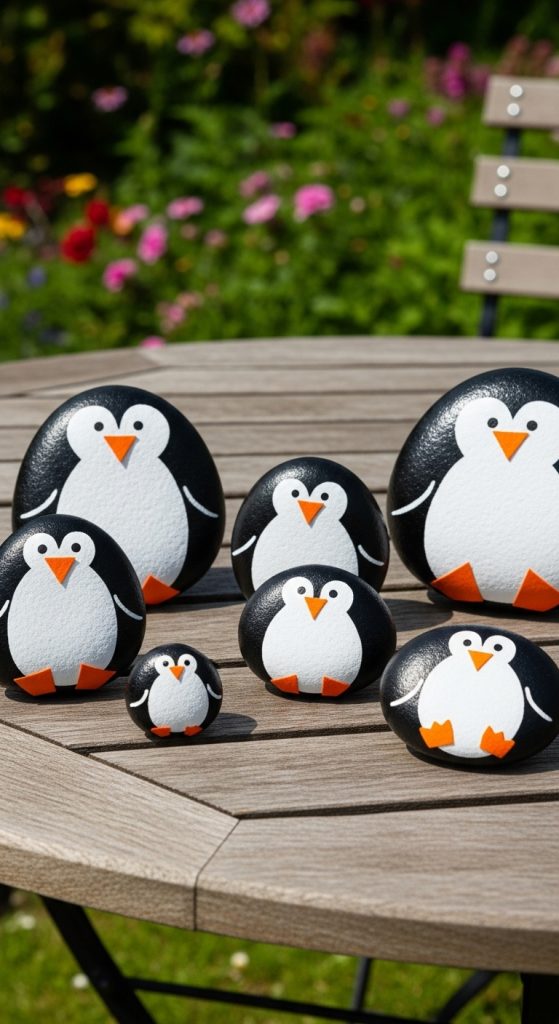
Rock painting is a creative way to make penguins using natural materials. Collect smooth, flat rocks and paint them black and white to resemble penguins. Add orange triangles for beaks and feet, and draw eyes using a fine brush or marker. Once dry, rocks can be displayed in the garden, used as paperweights, or added to a craft collection. This activity teaches children about shapes, encourages painting skills, and allows them to personalize each penguin with unique designs. Rock painting also connects children with nature and is a great outdoor craft activity.
8. Penguin Cotton Ball Craft
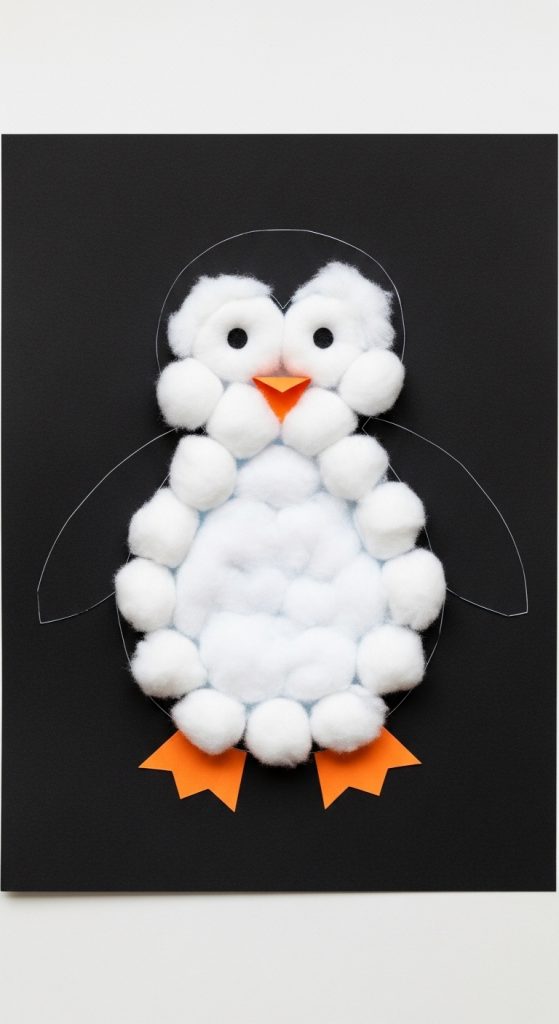
Using cotton balls, children can create fluffy penguins. Supplies include cotton balls, glue, construction paper, scissors, and markers. Glue cotton balls onto black paper to form the penguin’s body, leaving a space for the white belly. Cut a white oval for the belly and add an orange beak and feet. Draw or stick on eyes to complete the penguin. This activity introduces children to textures and layering techniques while allowing them to explore softness and tactile creativity. Cotton ball penguins are perfect for winter-themed classroom displays or home décor projects.
9. Penguin Footprint Craft
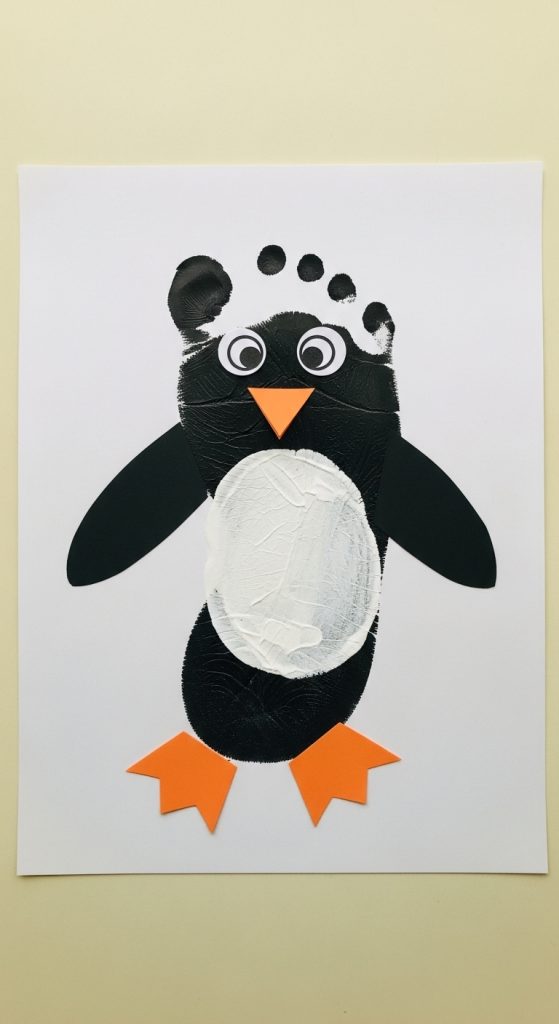
This craft is a twist on handprint art, using footprints instead. Children will need black paint, white and orange paper, and markers. Paint the child’s foot with black paint and press it onto paper to create the penguin’s body. Once dry, add a white belly, orange beak, and feet using construction paper or markers. Draw eyes to finish the face. Footprint penguins are unique, interactive, and highly memorable. This craft also doubles as a keepsake, documenting the child’s growth while developing creativity and coordination.
10. Penguin Felt Board Craft
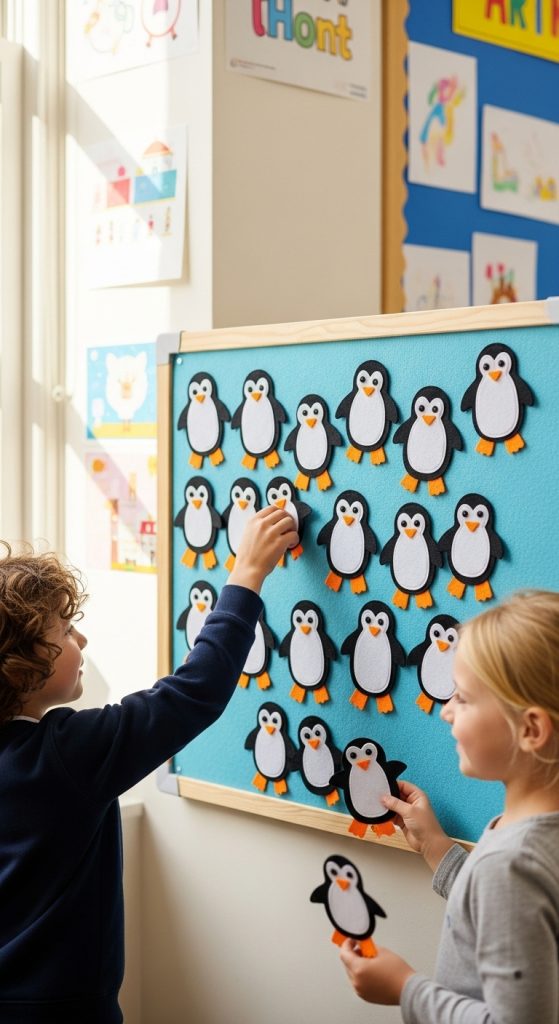
Felt board crafts allow children to create and manipulate penguins repeatedly. You will need a felt board, black, white, and orange felt, scissors, and adhesive dots or Velcro. Cut out penguin shapes, including the body, wings, beak, and feet, and attach small adhesive dots to stick pieces to the felt board. Children can rearrange the penguins to create different scenes, such as winter landscapes or group gatherings. This craft encourages imaginative storytelling, sequencing, and problem-solving skills. Felt penguins can be reused multiple times, making this an eco-friendly and versatile activity suitable for classrooms or playrooms.