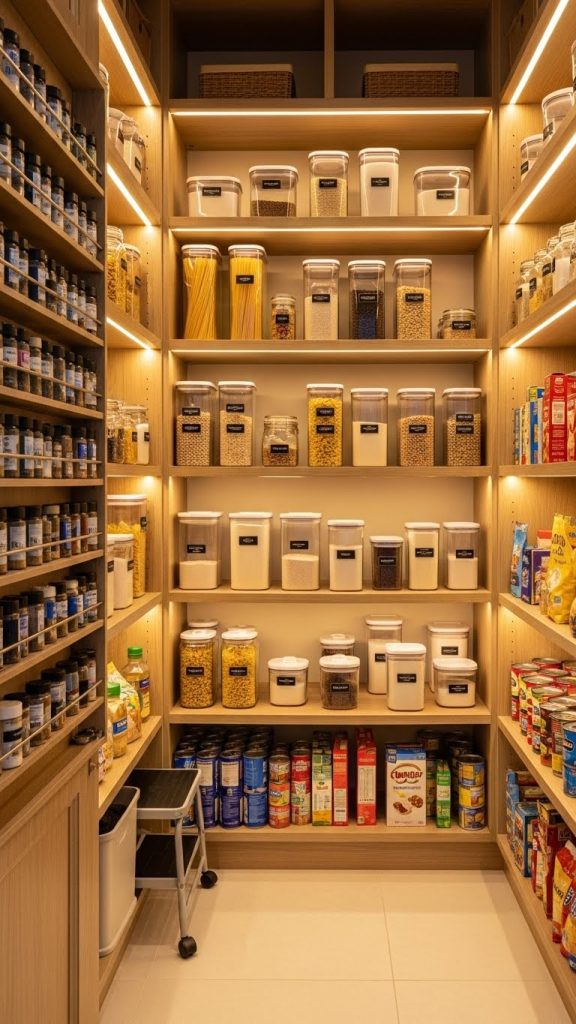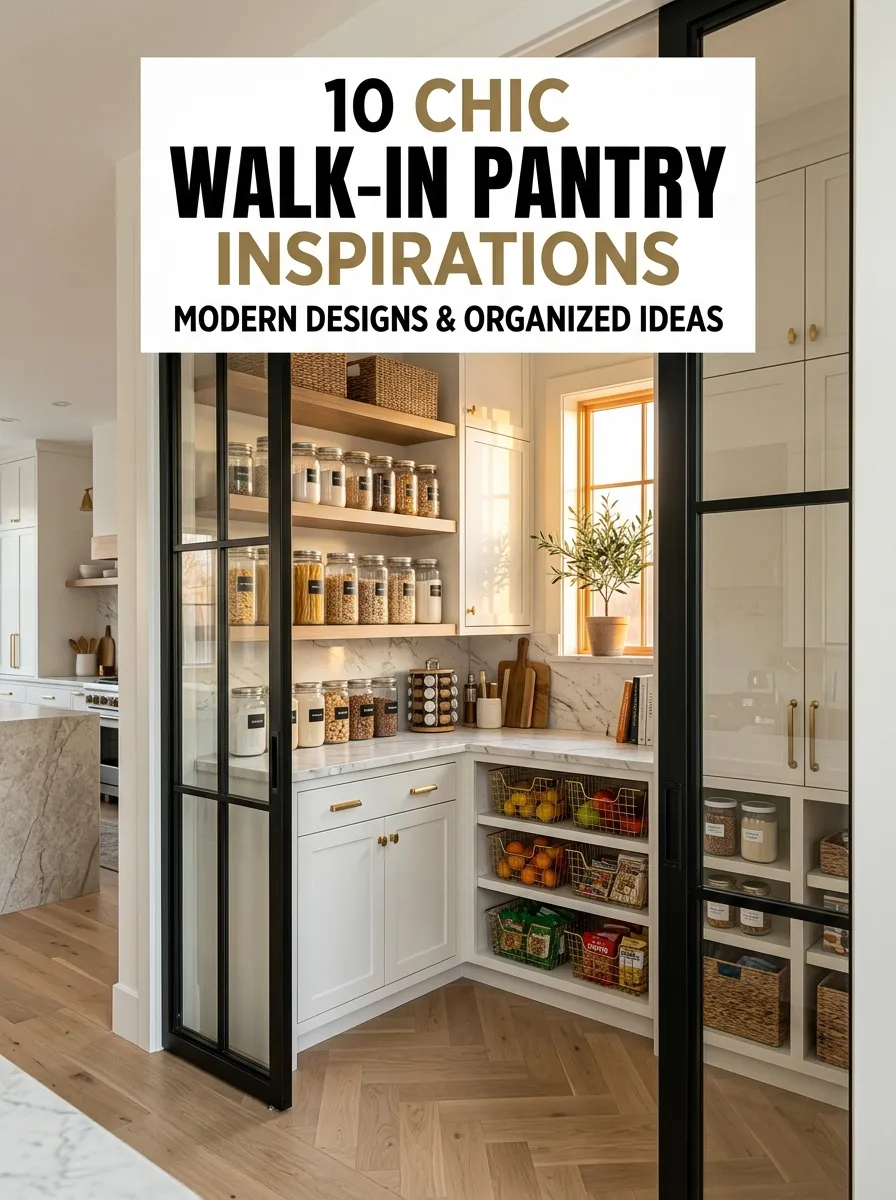
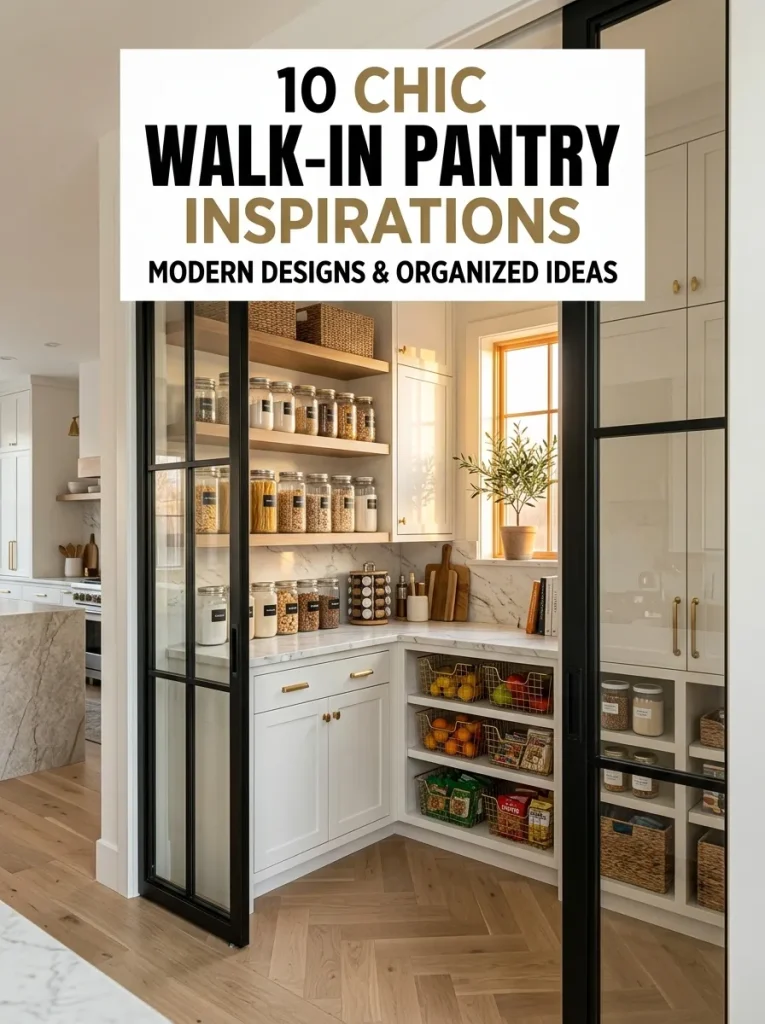
A well-designed walk-in pantry is more than just storage. It combines functionality with style, ensuring your kitchen remains organized while making daily cooking and meal prep easier. The right layout, shelving, lighting, and storage solutions can transform a simple pantry into a highly efficient, aesthetically pleasing space. Below, we explore ten inspiring walk-in pantry ideas, complete with preparation tips and material recommendations.
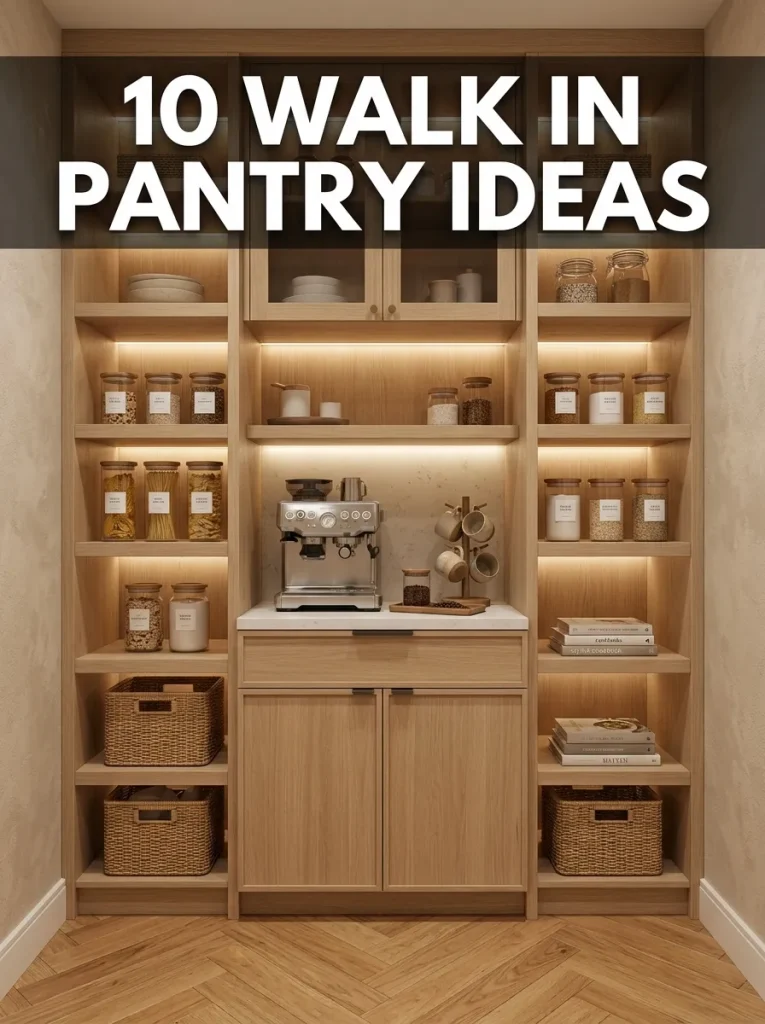
1. Classic Wooden Shelving Pantry
A classic wooden shelving pantry never goes out of style. Using high-quality wood like oak, maple, or walnut ensures durability and a warm, timeless aesthetic. Adjustable wooden shelves allow you to customize heights according to your storage needs. You can combine open shelves for easy access to frequently used items and closed cabinets for less attractive essentials.
Preparation: Measure the pantry space accurately and plan for maximum vertical storage. Ensure proper wall reinforcement for heavy shelving. Consider using non-toxic wood finishes for a safe kitchen environment.
Materials: Solid wood planks, brackets, screws, wood stain, or paint.
Additional Considerations: Add labeled jars and baskets to maintain organization. Installing a sliding ladder can make upper shelves more accessible in taller pantries. Proper lighting enhances both visibility and the warmth of the wood tones.

2. Contemporary Minimalist Pantry
For modern homes, a minimalist pantry emphasizes clean lines and uncluttered surfaces. White or neutral-toned shelves with handleless drawers provide a sleek appearance. Materials like laminate, melamine, or lacquered MDF are easy to clean and resistant to stains, making them ideal for high-traffic pantries.
Preparation: Decide whether you want open shelving, closed cabinetry, or a mix of both. Incorporate hidden pull-out drawers for small items and snacks.
Materials: MDF panels, laminate sheets, concealed hinges, pull-out drawer mechanisms.
Additional Considerations: Use uniform storage containers to maintain a cohesive look. LED strip lighting under each shelf adds a modern touch and ensures everything is easily visible. A minimalist pantry can also include a small countertop area for prepping ingredients.

3. Glass Door Pantry
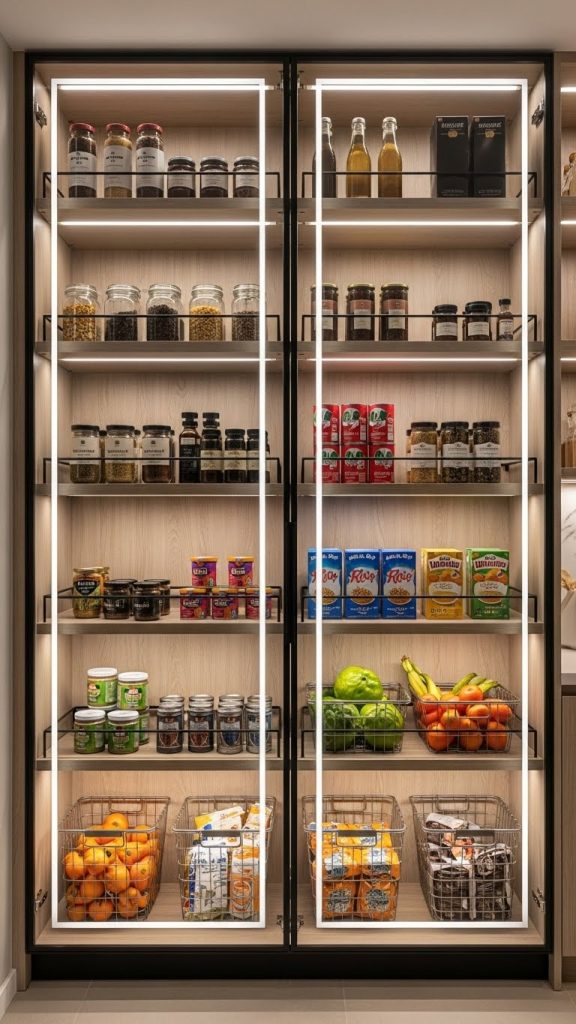
Glass doors are an elegant solution that combines visibility with protection. Clear or frosted glass doors prevent dust accumulation while allowing you to see your inventory at a glance. This type of pantry works well in kitchens with open layouts or as a statement piece in your home.
Preparation: Measure carefully for door installation and ensure smooth sliding or hinge operation. Decide whether you want full glass or framed glass panels.
Materials: Tempered glass, wooden or metal frames, handles, hinges, or sliding tracks.
Additional Considerations: Frosted glass provides a semi-private storage solution while still showcasing organization. Incorporate internal lighting to highlight items and maintain easy visibility. Glass door pantries require regular cleaning but add a modern and sophisticated feel.
4. Pull-Out Pantry Cabinets
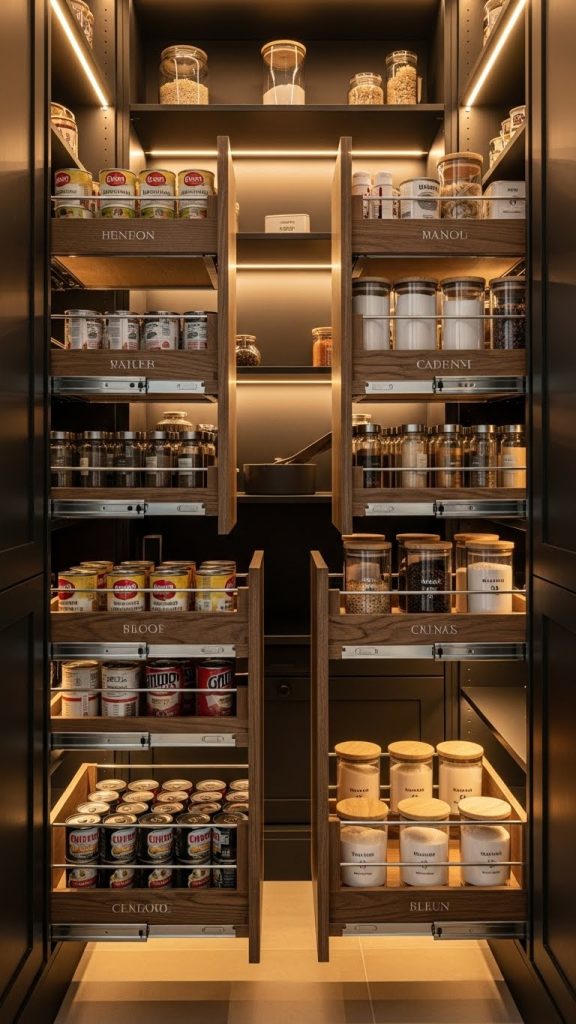
Pull-out pantry cabinets are ideal for compact kitchens or narrow spaces. They provide full access to the pantry contents without taking up additional floor space. Each pull-out shelf or drawer can be tailored to specific items, such as canned goods, spices, or snacks.
Preparation: Measure the width of the cabinet carefully and plan for smooth sliding mechanisms. Ensure weight capacity is considered for heavier items.
Materials: Hardwood or engineered wood, metal runners, soft-close drawer slides.
Additional Considerations: Label each shelf for efficient storage. Combine pull-out cabinets with tall vertical shelving to maximize overall space. This design is highly functional, particularly for kitchens with limited room.
5. Walk-In Pantry with Island
Adding a small island to a walk-in pantry transforms it into a multi-functional space. The island can serve as a prep station, additional storage area, or even a baking center. Drawers and cabinets beneath the island provide extra storage for utensils, small appliances, or bulk ingredients.
Preparation: Ensure adequate floor space for movement around the island. Plan for sufficient countertop surface area while maintaining comfortable walkways.
Materials: Solid wood or laminate countertop, cabinets, drawers, hardware handles.
Additional Considerations: Consider adding seating or a rolling cart for flexibility. Lighting above the island ensures a functional workspace. This setup is ideal for larger pantries and enhances the usability of the space beyond storage.

6. Pantry with Open Shelving and Baskets
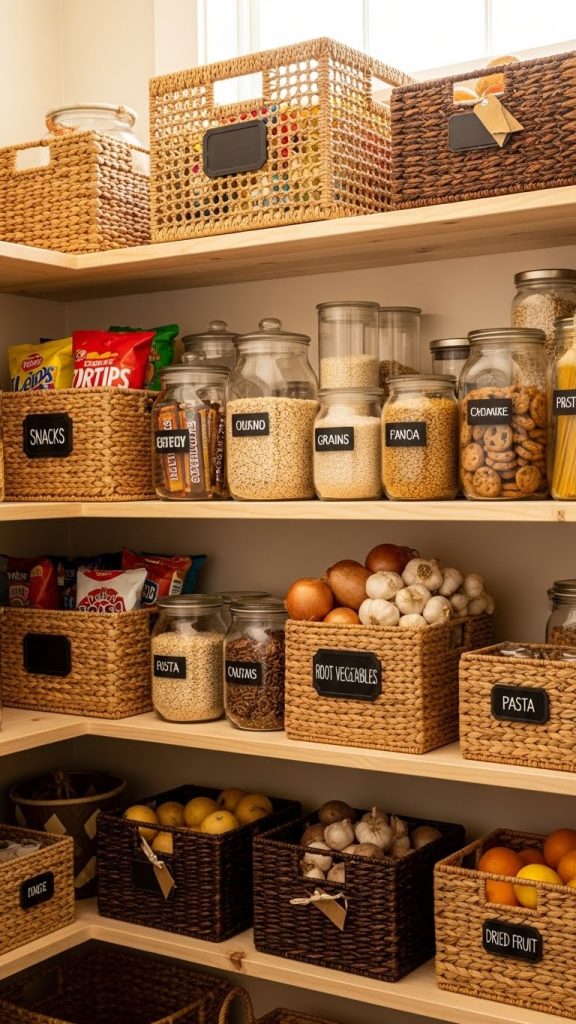
Open shelving combined with baskets offers an organized yet casual look. Baskets of various sizes help categorize items such as snacks, grains, and vegetables, while open shelves allow quick access. This approach is particularly useful for families or frequent cooks who need a highly accessible pantry.
Preparation: Decide on basket dimensions and shelf spacing. Use sturdy shelving to support the combined weight of baskets and food items.
Materials: Wood or metal shelving, woven baskets, metal hooks for additional storage.
Additional Considerations: Label each basket for easier organization. Choose breathable baskets for perishable items. Consider mixing materials, such as metal baskets on wooden shelves, for added texture and visual interest.
7. Pantry with Sliding Barn Doors
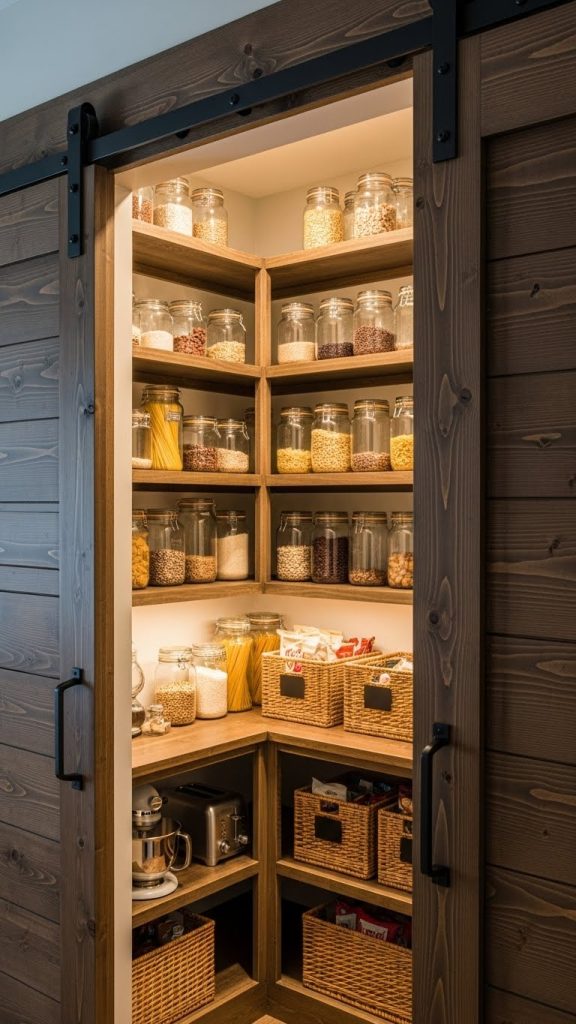
Sliding barn doors add a rustic charm while saving space compared to traditional swinging doors. This design works well for pantries adjacent to living areas, maintaining a stylish look while keeping clutter out of sight. Doors can be made of wood, metal, or a combination, depending on your kitchen style.
Preparation: Measure door height and width accurately. Ensure the wall structure supports the sliding mechanism and plan for smooth operation.
Materials: Wooden or metal doors, sliding hardware track, handles, screws.
Additional Considerations: Incorporate full-height storage behind the door to maximize efficiency. Add internal lighting since sliding doors can block natural light. Barn doors provide aesthetic appeal while enhancing the functionality of your pantry.
8. Pantry with Built-In Appliances
A walk-in pantry can double as an extension of your kitchen by incorporating built-in appliances. Adding a microwave, small oven, wine fridge, or coffee station keeps your main kitchen counters clear and centralizes prep tasks. This design is ideal for homes with frequent entertaining or large families.
Preparation: Ensure proper electrical outlets and ventilation. Plan appliance placement according to workflow and accessibility.
Materials: Cabinet panels, built-in appliance kits, wiring, and ventilation systems.
Additional Considerations: Use pull-out drawers or shelves above or below appliances for storing utensils, trays, or recipe books. This multifunctional approach maximizes both storage and efficiency.
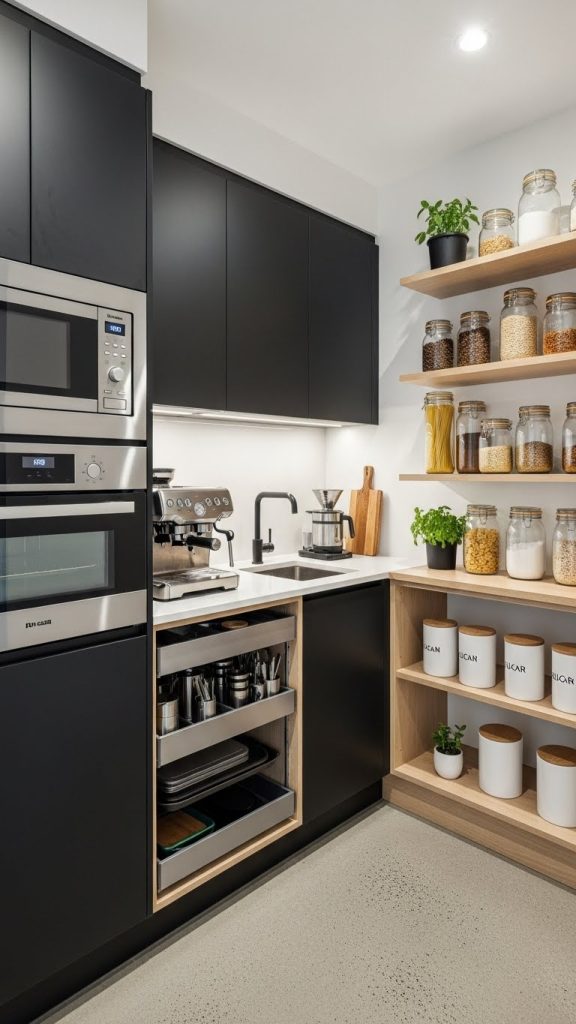
9. Pantry with Adjustable Shelving and Hooks
Flexibility is key in a pantry that grows with your storage needs. Adjustable shelves allow you to accommodate items of varying sizes, while hooks and hanging racks can hold kitchen tools, aprons, or bags of produce. This design combines versatility and organization.
Preparation: Plan for a variety of shelf heights and ensure the walls can support the weight of heavy items. Include multiple hooks and racks in strategic locations.
Materials: Metal or wooden shelving, brackets, hooks, storage bins.
Additional Considerations: Use pull-down racks for high shelves, making everything easily accessible. Adjustable designs are perfect for homeowners who regularly change their storage needs or purchase bulk items.
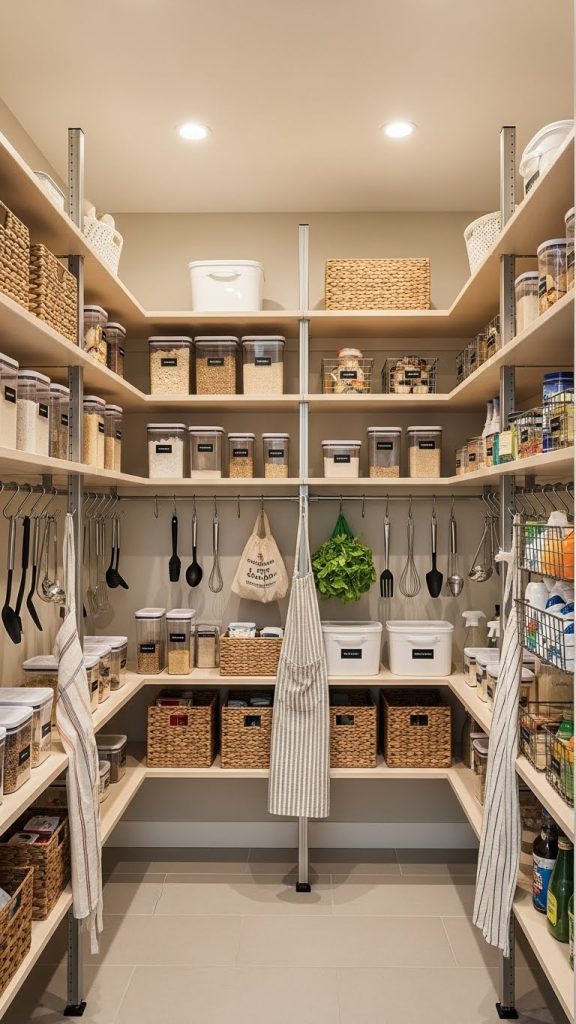
10. Pantry with Integrated Lighting and Labels
Lighting is one of the most important yet overlooked features of a walk-in pantry. Integrated LED lights inside cabinets, shelves, and drawers improve visibility and highlight organization. Pair lighting with clearly labeled containers and shelves to create a highly functional and user-friendly space.
Preparation: Plan for electrical wiring or battery-operated solutions. Decide on light placement for maximum coverage and minimal shadows.
Materials: LED strips, light fixtures, wiring, labeled containers, adhesive labels.
Additional Considerations: Use motion sensor lighting to turn lights on automatically when the pantry door opens. Combine lighting with glass jars, clear containers, and color-coded labels for an efficient and visually appealing pantry.