Creating a cozy small bedroom is all about maximizing space, utilizing warm textures, and incorporating thoughtful design elements. A small bedroom can still feel inviting, functional, and aesthetically pleasing when the right strategies are applied. Here are ten ideas to make a small bedroom cozy and comfortable.

1. Soft Layered Bedding
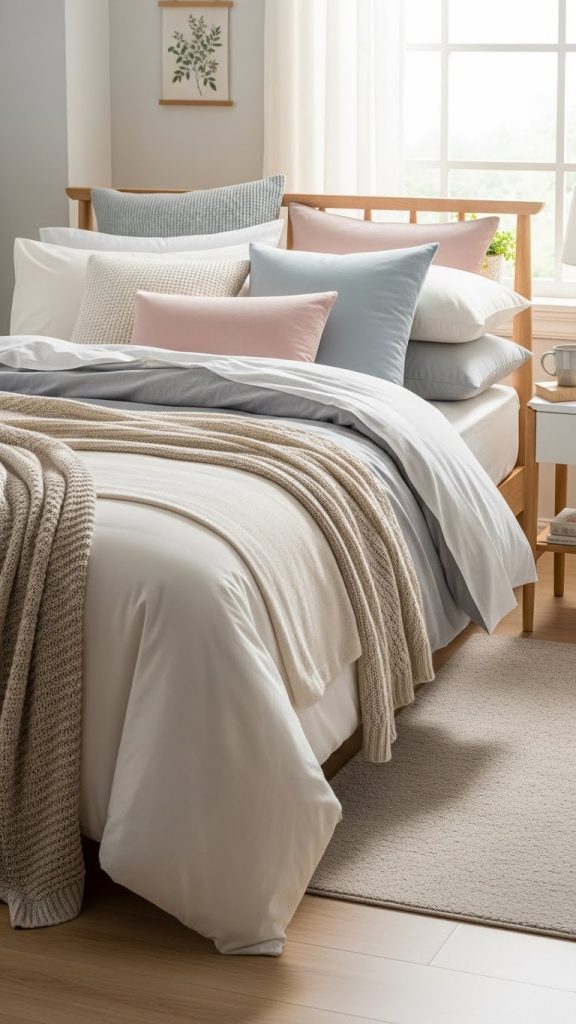
One of the simplest ways to make a small bedroom feel cozy is by investing in soft layered bedding. Layering your bed with multiple textures, such as a plush duvet, soft sheets, and decorative throws, creates a warm and inviting atmosphere. Using neutral or pastel colors can make the room feel larger while still maintaining a sense of intimacy. Adding a few pillows with varying textures, like velvet or knitted materials, can enhance the visual interest and comfort.
Preparation and Materials: Start with high-quality cotton or linen sheets for breathability. Choose a medium-weight duvet or comforter to suit the room temperature. Add a knitted throw or faux fur blanket for texture. Decorative pillows in complementary shades help pull the look together. Before layering, ensure the bed is positioned to allow easy movement around the room to avoid clutter.
Tips: Avoid overloading the bed with too many pillows or heavy blankets, as this can make the space feel cramped. Stick to a cohesive color palette to maintain visual harmony and a serene atmosphere.
2. Warm Lighting
Lighting plays a critical role in creating a cozy environment. In a small bedroom, soft, warm lighting can make the space feel more inviting and relaxing. Avoid harsh overhead lights and instead focus on multiple light sources, such as bedside lamps, string lights, or wall-mounted sconces. Adjustable lighting allows you to set the mood for reading, relaxing, or sleeping.
Preparation and Materials: Choose lamps with warm-colored bulbs, ideally around 2700K for a soft glow. Incorporate LED string lights for ambient lighting or a small floor lamp to brighten dark corners. Wall-mounted sconces save floor space, making them ideal for small bedrooms.
Tips: Layer different types of lighting to create depth and dimension. Dimmer switches are a great addition, allowing you to adjust the brightness according to your needs. Avoid placing bright lights directly in front of mirrors to prevent glare.

3. Compact Furniture
Selecting the right furniture for a small bedroom is crucial to maintain a cozy yet functional space. Compact furniture, such as low-profile beds, small nightstands, and multi-functional pieces, helps maximize floor space and avoids overcrowding. Consider furniture with built-in storage to reduce clutter.
Preparation and Materials: Measure the room carefully to ensure the furniture fits proportionally. Materials like wood, metal, or acrylic work well for compact designs. Multi-functional pieces, such as beds with storage drawers or desks that double as nightstands, provide practicality without sacrificing style.
Tips: Avoid bulky or oversized furniture, which can make the room feel cramped. Furniture with exposed legs can create a sense of openness. Utilize vertical storage like shelves or wall-mounted organizers to keep the floor clear.

4. Cozy Rugs
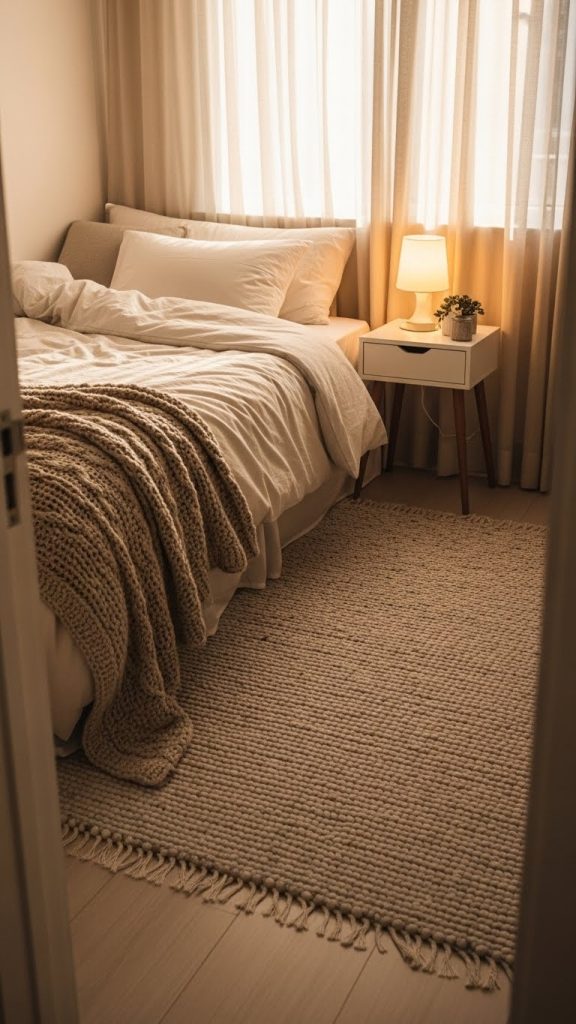
Adding a soft rug can instantly transform a small bedroom into a cozy retreat. Rugs provide comfort underfoot, add warmth to the room, and help define the space. In smaller rooms, choose rugs that complement the color palette and are proportionate to the floor area.
Preparation and Materials: Opt for rugs made from soft materials such as wool, cotton, or synthetic fibers that are easy to clean. Measure the room to ensure the rug is not too small or too large. Layering smaller rugs can also create texture and depth.
Tips: Place rugs partially under the bed to create a seamless look. Light-colored rugs make the room feel larger, while darker tones add warmth. Ensure rugs have non-slip pads to prevent accidents.
5. Wall Art and Personal Touches
Personalizing a small bedroom with wall art and decor adds character and coziness. Art, photographs, or decorative mirrors create visual interest without taking up floor space. Mirrors, in particular, reflect light and give the illusion of a larger room.
Preparation and Materials: Choose frames and art pieces that match the room’s style and color scheme. Lightweight frames or canvas prints are ideal for small spaces. Plan the placement before hanging to maintain balance and avoid cluttered walls.
Tips: Create a gallery wall with small frames to add personality without overwhelming the space. Use mirrors strategically to reflect natural light and make the room feel more open. Avoid overly large or heavy pieces that dominate the room.

6. Soft Curtains
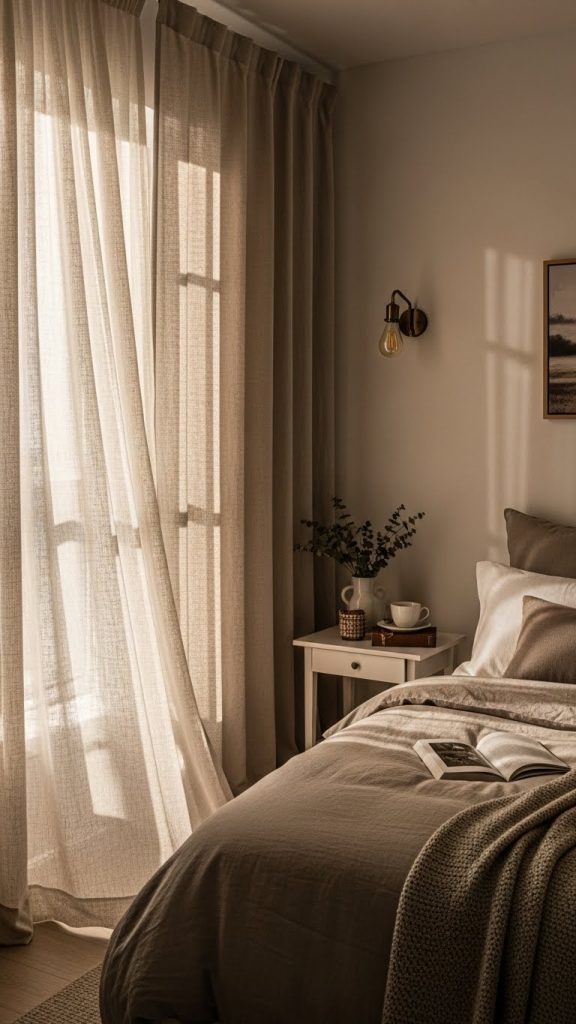
Soft, flowing curtains enhance the cozy atmosphere by adding texture and warmth. In small bedrooms, curtains can also help manage light and create a sense of privacy. Sheer curtains allow natural light while maintaining softness, whereas heavier fabrics can add insulation and warmth.
Preparation and Materials: Measure your windows accurately for proper fit. Materials like linen, cotton, or velvet are ideal for creating a soft look. Choose curtain rods that blend with the wall to avoid visual clutter.
Tips: Floor-length curtains make ceilings appear taller and the room larger. Layering sheer curtains with heavier drapes gives flexibility for both light and privacy. Avoid patterns that are too bold, as they can overwhelm a small space.
7. Minimalistic Decor
A clutter-free, minimalistic approach helps small bedrooms feel spacious yet cozy. By carefully selecting decor items, you can maintain a clean and organized environment. Minimalism emphasizes quality over quantity, creating a serene and inviting atmosphere.
Preparation and Materials: Prioritize functional decor items such as small plants, a few personal objects, or a statement piece of art. Use storage solutions like baskets, trays, or under-bed storage to keep items out of sight.
Tips: Stick to a neutral or soft color palette to maintain calmness. Avoid overcrowding surfaces with knick-knacks. Regularly declutter to preserve the cozy, minimalistic feel.
8. Small Plants
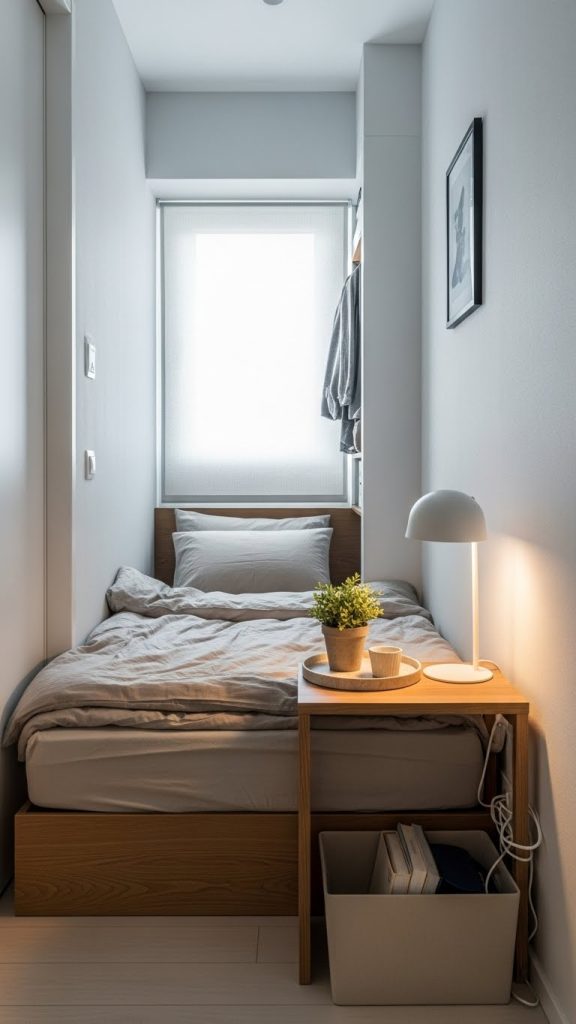
Introducing small plants into a bedroom enhances coziness by bringing a touch of nature indoors. Plants improve air quality, reduce stress, and create a lively, fresh atmosphere. Small potted plants, hanging planters, or terrariums work well in limited spaces.
Preparation and Materials: Choose low-maintenance plants like succulents, snake plants, or pothos that thrive indoors. Select pots that complement the room’s decor and are appropriately sized for shelves, desks, or windowsills.
Tips: Group plants together for a mini indoor garden effect. Ensure adequate lighting for each plant type. Avoid overcrowding surfaces, and rotate plants occasionally to promote even growth.
9. Layered Textures
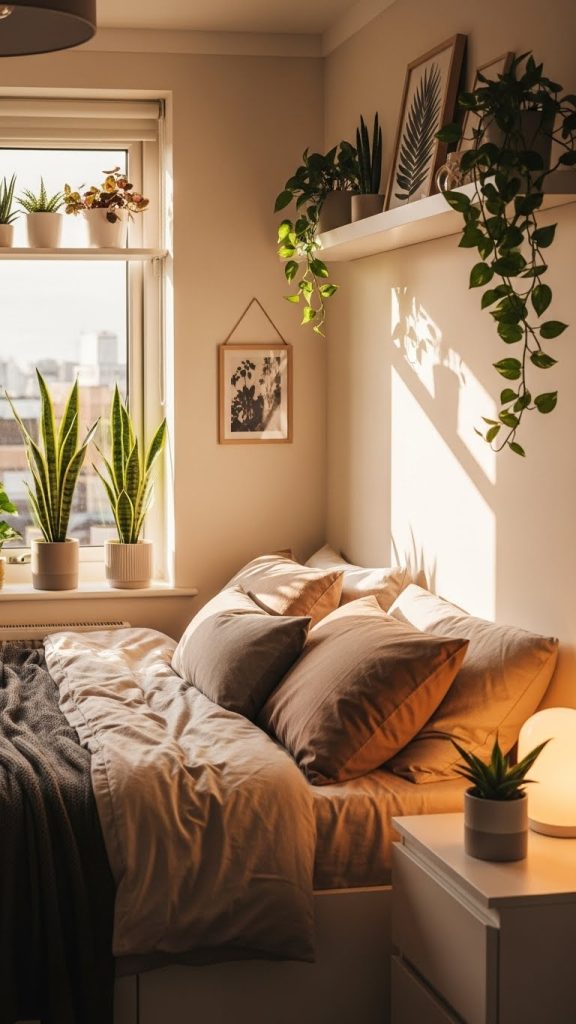
Combining different textures in a small bedroom creates visual depth and comfort. Use a mix of fabrics, finishes, and materials to make the room feel warm and inviting. For example, pairing a soft throw with a wooden bed frame or a velvet pillow on a cotton sheet adds dimension.
Preparation and Materials: Choose a variety of textures such as wood, metal, cotton, velvet, wool, and faux fur. Incorporate texture through bedding, rugs, curtains, and furniture accents.
Tips: Keep the color palette cohesive to avoid visual chaos. Avoid using too many competing textures at once; balance soft and hard materials for harmony. Layering textures in small areas like the bed or a corner seating nook works best.
10. Cozy Nooks
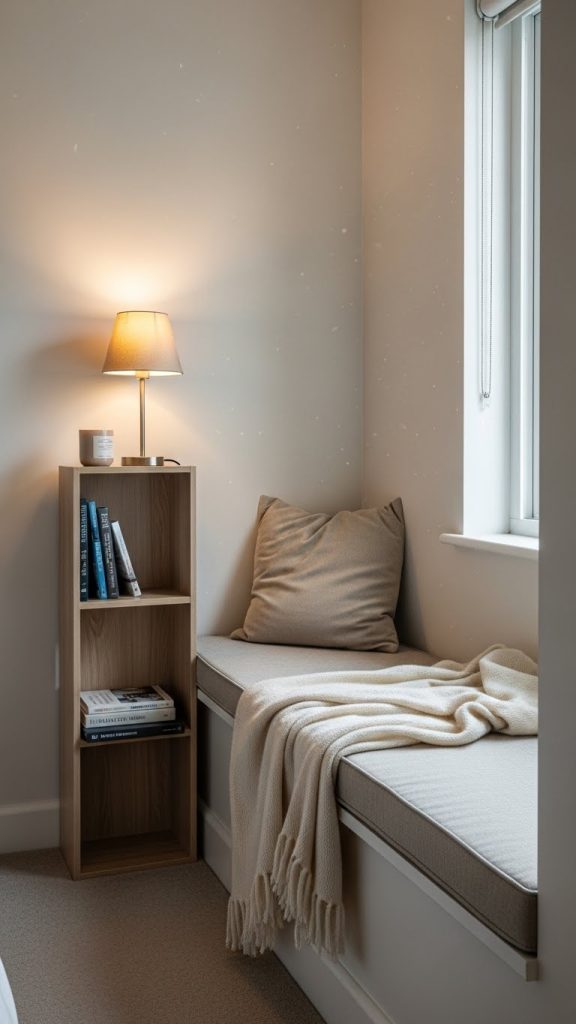
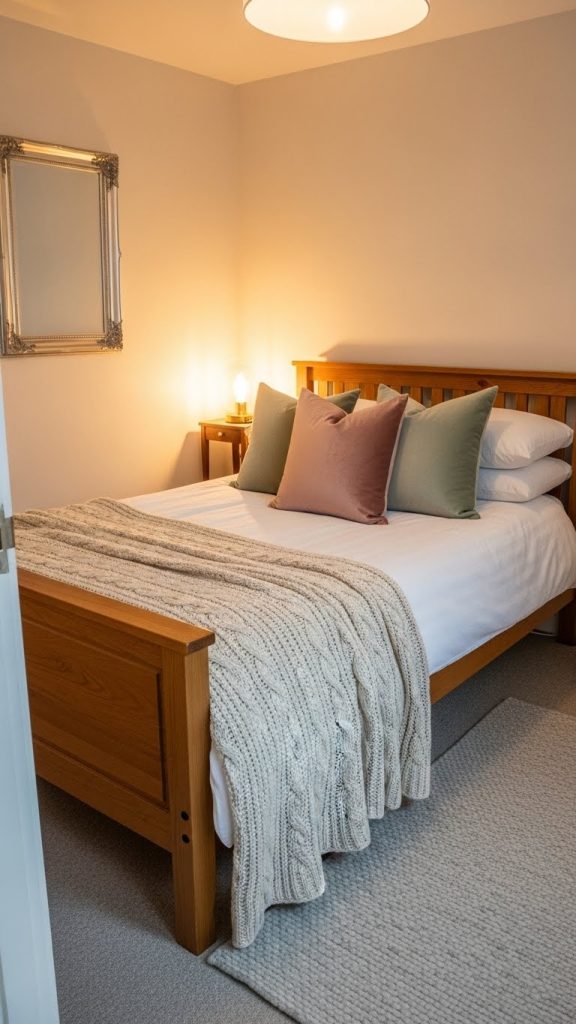
Creating a cozy nook in a small bedroom can enhance relaxation and functionality. This could be a reading corner, a window seat, or a small desk area. Nooks maximize unused space while adding comfort and personality to the room.
Preparation and Materials: Identify corners or underutilized areas in the bedroom. Use cushions, small chairs, a throw blanket, or a compact desk to create the nook. Consider adding a small lamp or wall shelf for convenience.
Tips: Keep the nook proportionate to the room size to avoid crowding. Use soft textiles and personal items like books or plants to make the space inviting. Even in tight bedrooms, a small designated area for relaxation can dramatically enhance coziness.