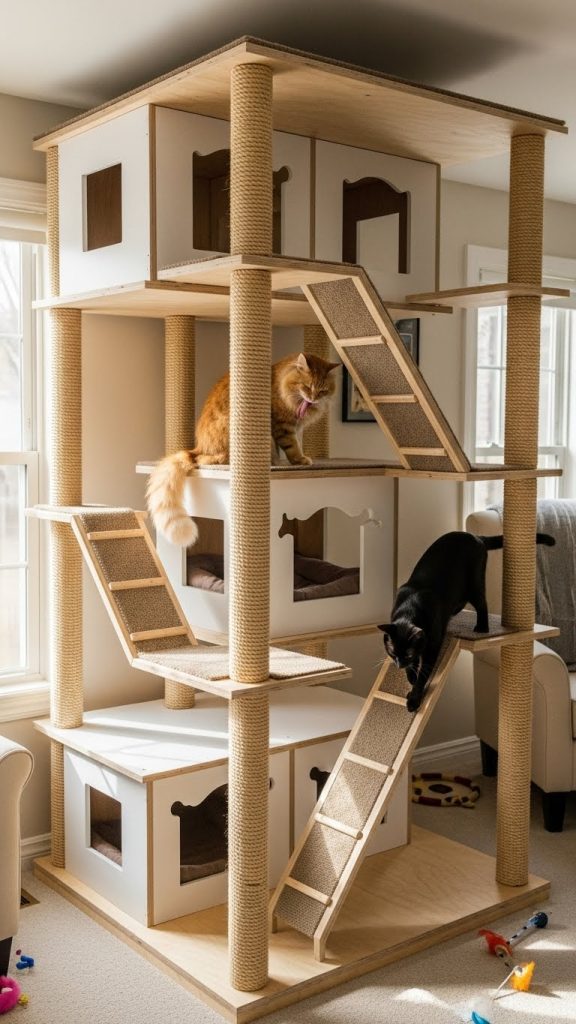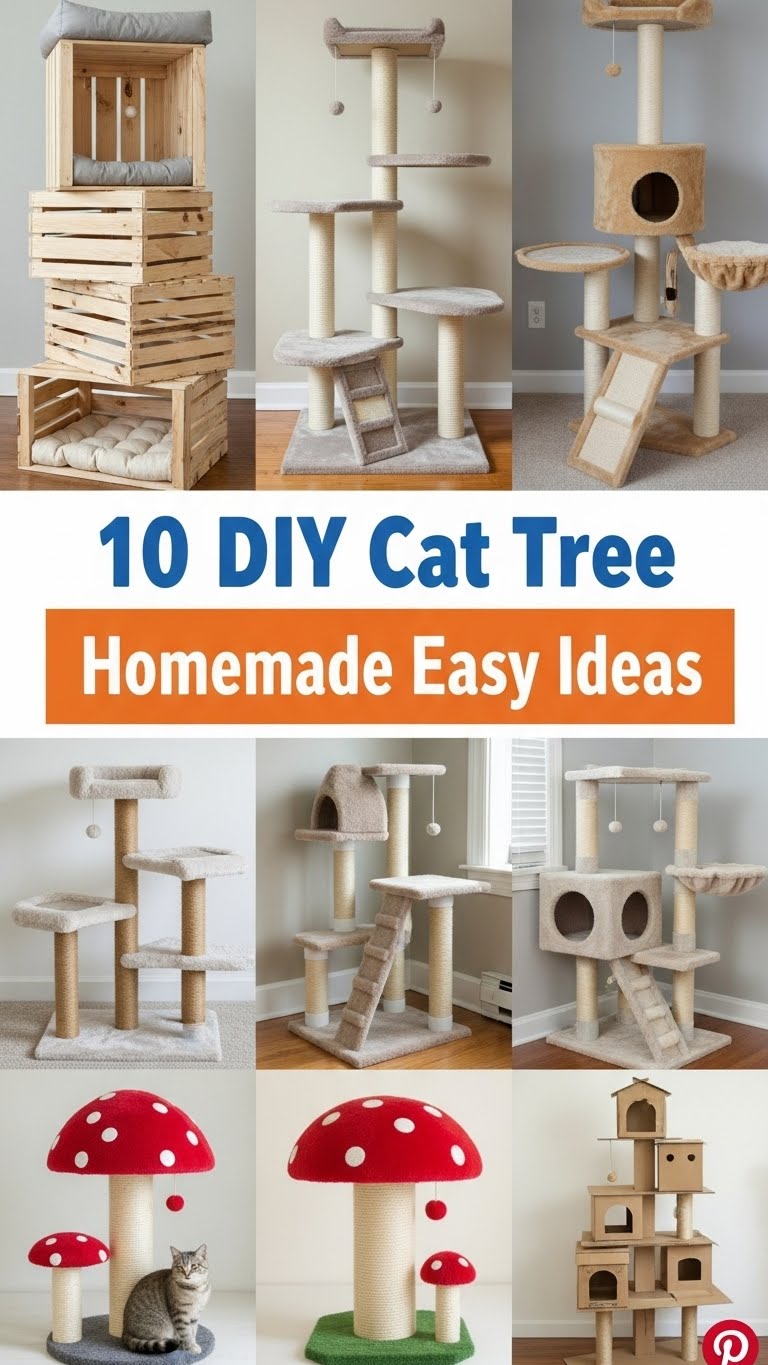
Cats love climbing, scratching, and exploring, but not every home comes with a ready-made cat tree. Building a DIY cat tree at home is a fun, creative way to provide your feline friend with a safe and stimulating environment. Not only does it save money compared to buying expensive commercial cat trees, but it also allows you to customize the design according to your cat’s preferences and your home’s décor. Whether your cat enjoys climbing tall structures, lounging on cozy platforms, or scratching posts, you can make a cat tree that fits all their needs.
In this guide, we’ll explore ten easy DIY cat tree ideas. Each idea will include a list of materials, step-by-step instructions, and helpful tips for construction and safety. You don’t need to be a professional carpenter to make these cat trees. With some creativity and basic tools, you can build structures that are fun, durable, and safe for your cats. These DIY cat trees also make great ways to repurpose old furniture or unused household items. Let’s dive into the ten unique ideas for homemade cat trees that your cats will love.
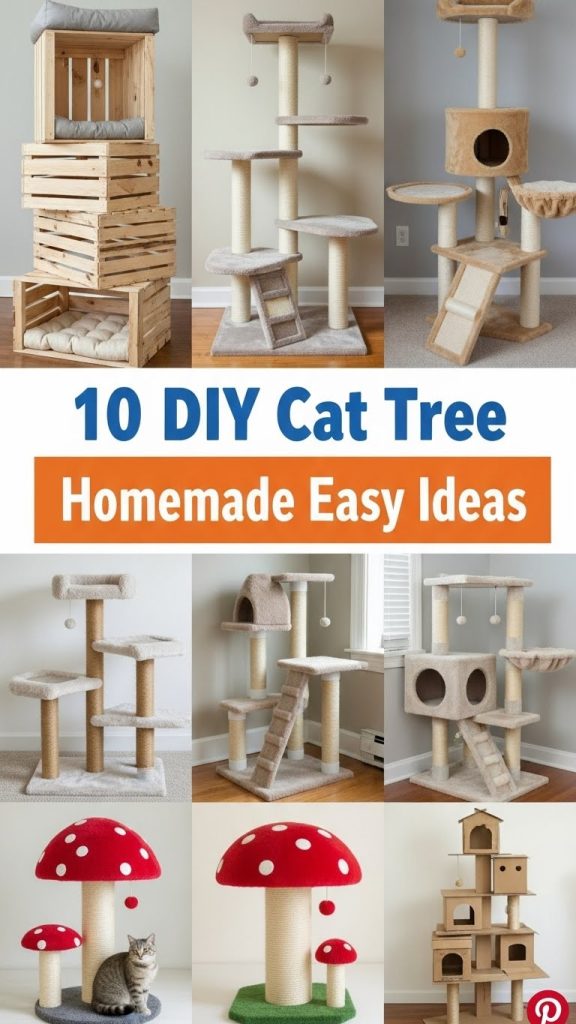
1. Cardboard Cat Tower
Materials: Sturdy cardboard boxes, utility knife, hot glue, carpet scraps or fabric, tape.
Start by collecting several cardboard boxes of different sizes. Cut openings in each box for your cat to enter and exit, creating a playful tunnel system. Stack the boxes on top of each other and secure them using hot glue and tape. Cover parts of the boxes with fabric or carpet scraps for a comfortable climbing surface. You can also add small platforms between boxes for resting spots. Cardboard is lightweight and easy to manipulate, making it perfect for a quick DIY cat tower. Ensure that the boxes are stable to prevent tipping over. This design is budget-friendly and allows your cat to scratch and explore without causing damage to furniture.
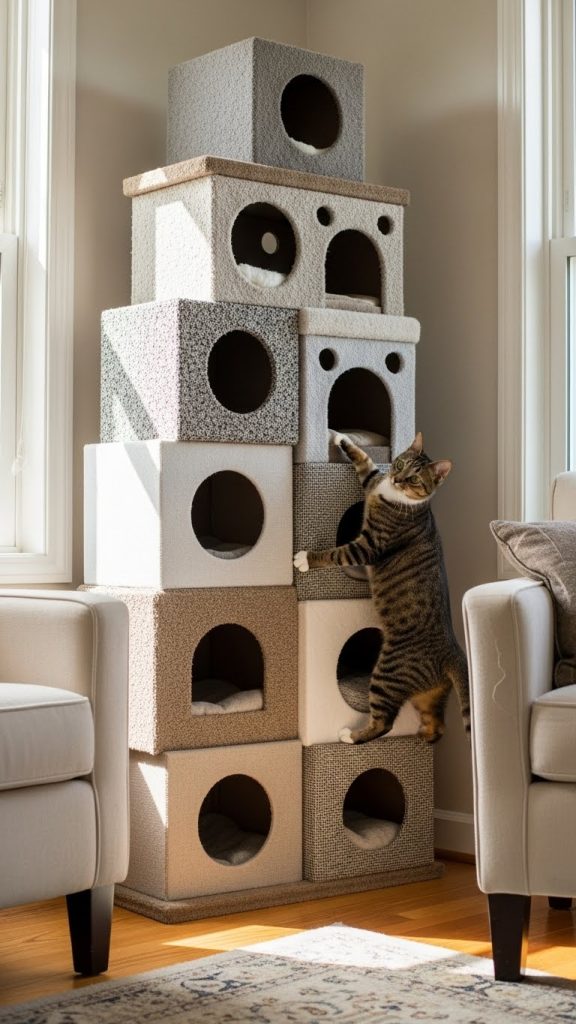
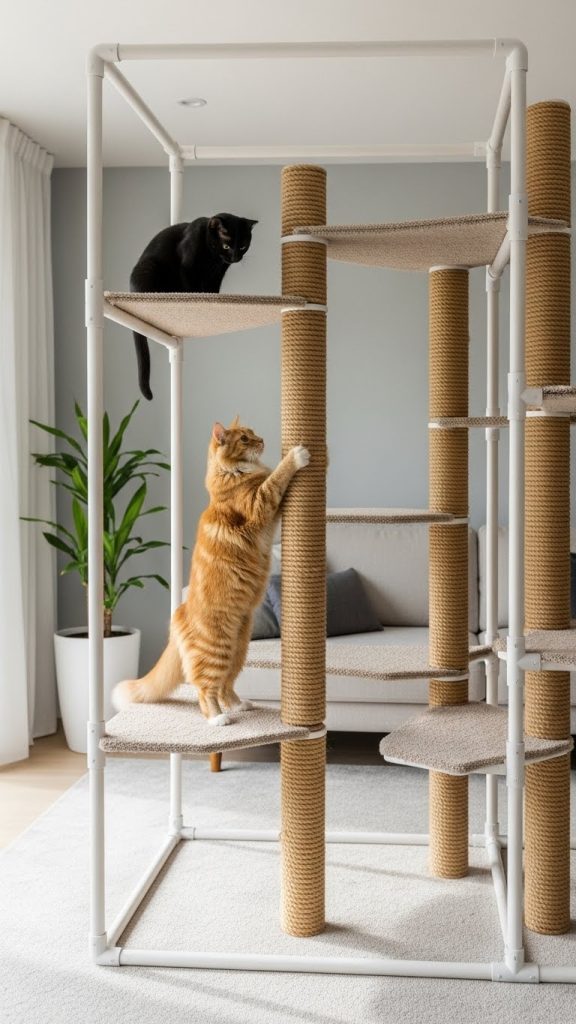
2. PVC Pipe Cat Climber
Materials: PVC pipes (2–3 inches diameter), pipe connectors, sisal rope, hot glue, carpet or fabric, spray paint (optional).
PVC pipes can be transformed into a durable and modern cat climbing structure. Assemble a framework using T-joints and elbows to create vertical and horizontal levels. Wrap sections of the pipes with sisal rope to make scratching posts. Add carpeted platforms by attaching pieces of plywood covered in fabric at various heights. You can even paint the PVC pipes to match your room décor. This cat tree is lightweight, easy to clean, and allows your cat to climb, jump, and explore different heights. Make sure the structure is securely connected and stable to avoid accidents.
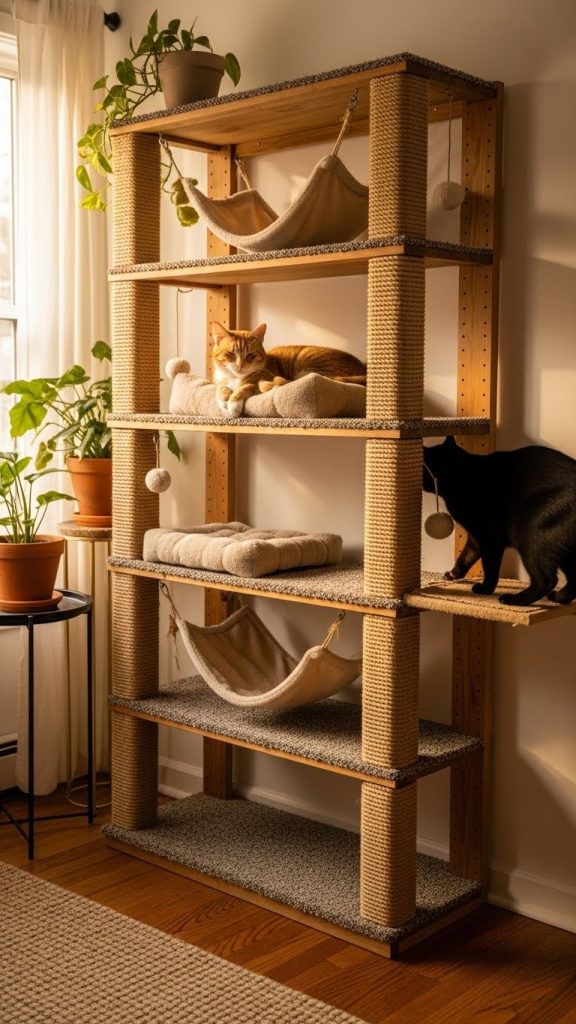
3. Wooden Bookshelf Cat Tree
Materials: Old or unused bookshelf, plywood, carpet, sisal rope, nails or screws, drill, hot glue.
Repurpose a small bookshelf into a cat tree by converting each shelf into a platform. Cover the surfaces with carpet for comfort and wrap the vertical sides with sisal rope for scratching. You can also add small fabric hammocks or cushions on some shelves for lounging. This idea is perfect for small spaces because it combines storage with a play area. Ensure the bookshelf is secured to the wall to prevent tipping. Cats enjoy exploring different heights, so arranging the shelves at varying levels will create a stimulating climbing environment.
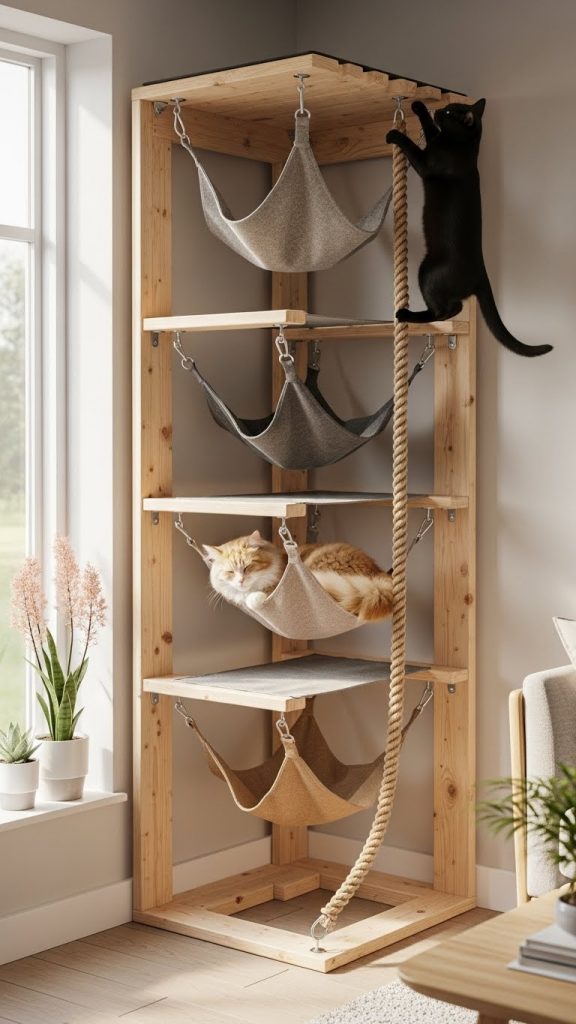
4. Hanging Cat Hammock Tower
Materials: Wooden planks, rope or chain, strong hooks, fabric or fleece, screws, drill.
Create a cat tree that incorporates hanging hammocks between wooden frames. Construct a simple tower using planks and attach hammocks at different levels using hooks and ropes. The hammocks provide cozy resting spots and allow cats to swing slightly, which many cats enjoy. Cover the edges of the wooden planks with fabric or carpet to prevent scratches. This design is particularly good for active cats that love to climb and rest in elevated spaces. Make sure the hammocks are strong enough to hold your cat’s weight.
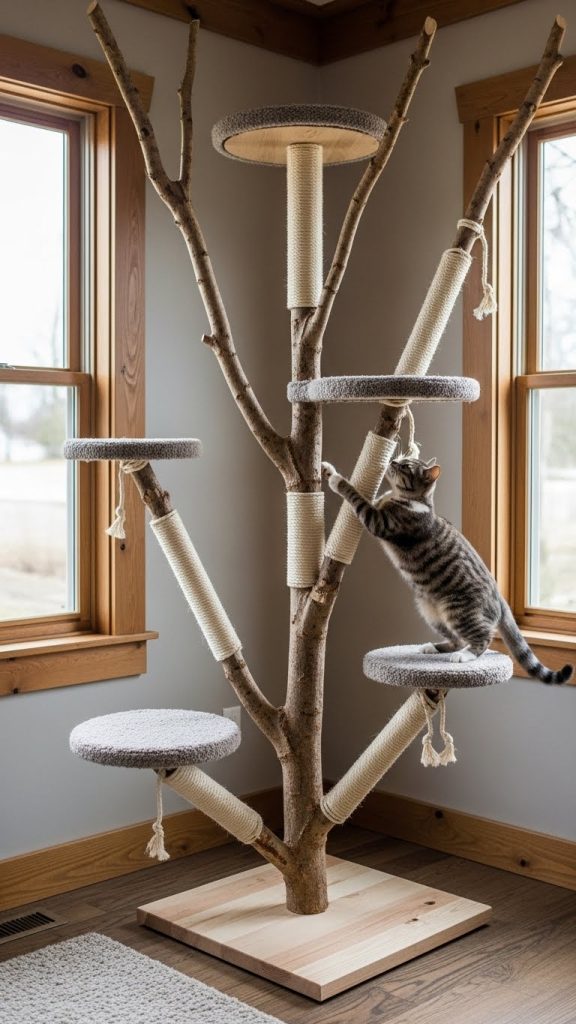
5. Tree Branch Cat Tower
Materials: Large sturdy tree branch, plywood, carpet, sisal rope, brackets, screws, drill.
Bring the outdoors inside with a natural branch cat tree. Secure a large, sturdy branch to a heavy plywood base using metal brackets. Attach additional branches for climbing levels and wrap them with sisal rope for scratching. You can add small platforms made of carpeted plywood at different heights to create resting areas. Natural branches provide varied textures and angles, which cats love. Ensure that the tree is stable and all branches are firmly attached to avoid accidents. This design blends beautifully with rustic or nature-themed interiors.
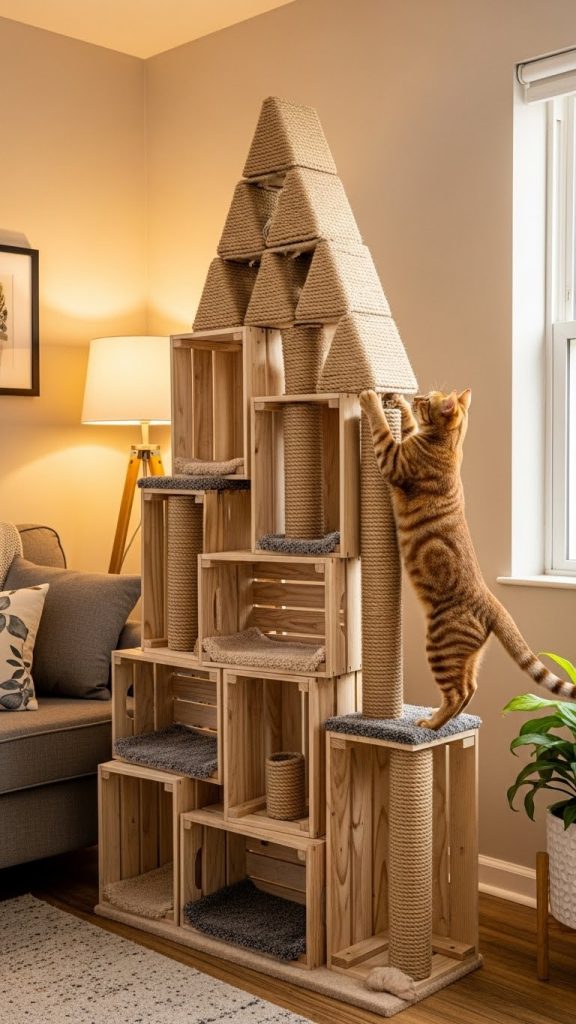
6. Stacked Crate Cat Tower
Materials: Wooden crates, screws, drill, carpet or fabric, hot glue.
Stack several wooden crates vertically to create a simple yet functional cat tree. Each crate serves as a hiding space or resting area. Secure the crates together using screws and cover the interior and top surfaces with carpet or fabric for comfort. You can also wrap the sides with sisal rope to provide scratching areas. This design is versatile because you can arrange crates in various formations—straight, staggered, or even pyramid-shaped. It’s easy to expand the structure later by adding more crates.
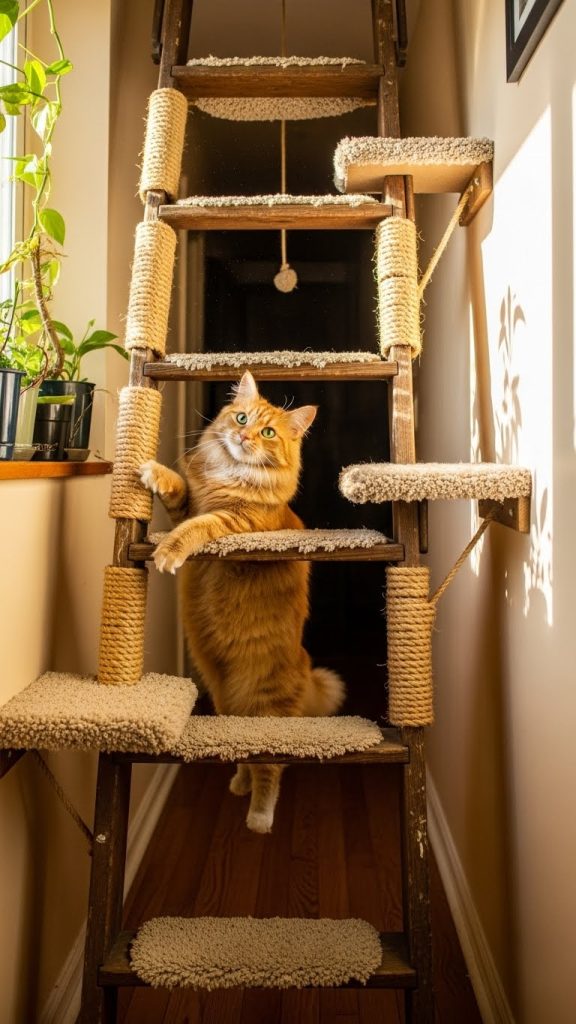
7. Ladder-Style Cat Tree
Materials: Wooden ladder, plywood, carpet, sisal rope, screws, drill.
Use an old wooden ladder as the base for a vertical climbing cat tree. Cover the steps with carpet for comfortable climbing and resting areas. You can attach small plywood platforms at different heights to provide additional lounging spots. Wrap the sides of the ladder with sisal rope to create scratching surfaces. This design is compact and fits well in narrow spaces. Ensure the ladder is securely anchored to prevent tipping. Cats enjoy climbing up and down, and this ladder-style tree is perfect for vertical exercise.
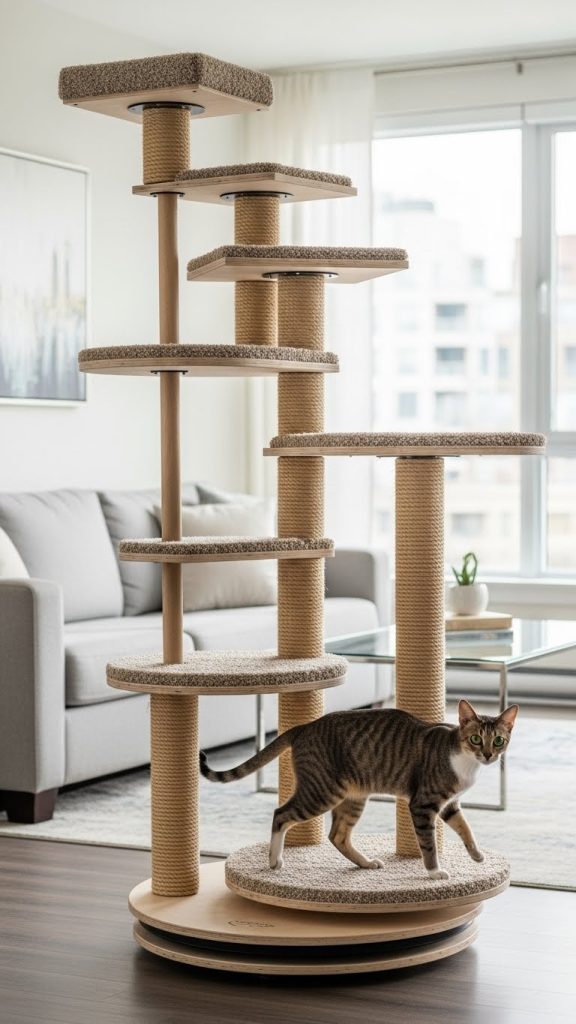
8. Rotating Platform Cat Tower
Materials: Lazy Susan turntable, wooden planks, carpet, screws, drill, sisal rope.
Create a cat tree with rotating platforms for interactive play. Attach a circular platform to a Lazy Susan turntable and build additional levels using wooden planks stacked above it. Cover each platform with carpet for comfort and wrap vertical posts with sisal rope for scratching. The rotating platform adds a unique play element that encourages your cat to explore and balance. Make sure the structure is sturdy and the turntable can handle your cat’s weight without tipping.
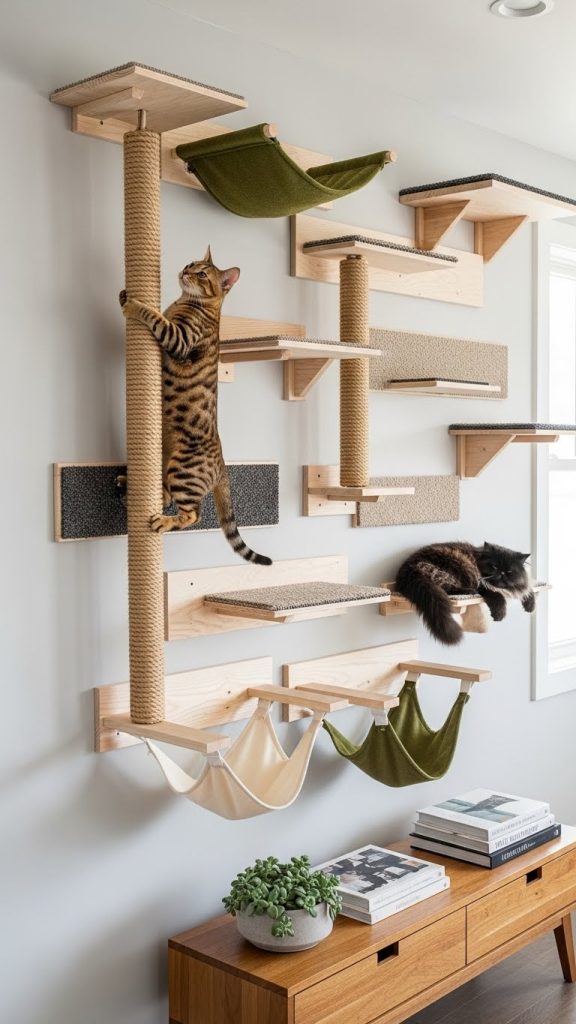
9. Wall-Mounted Cat Tree
Materials: Wooden planks, brackets, carpet, sisal rope, screws, drill.
Save floor space by building a wall-mounted cat tree. Install wooden planks at different heights on the wall using brackets. Cover the planks with carpet for comfort and wrap some vertical supports with sisal rope for scratching. You can add small fabric hammocks or boxes for resting spots. Cats love vertical exploration, and a wall-mounted tree gives them a safe way to climb without taking up floor space. Ensure all mounts are secure and can support your cat’s weight to prevent accidents.
10. DIY Cat Condo with Multiple Levels
Materials: Plywood, MDF boards, carpet, sisal rope, screws, nails, hot glue.
Build a multi-level cat condo using plywood and MDF boards as the base and platforms. Create separate compartments for hiding, sleeping, and playing. Cover the platforms with carpet for comfort and wrap vertical posts with sisal rope for scratching. You can add ramps or ladders connecting different levels for easy access. This design provides both vertical and horizontal play space, satisfying your cat’s natural climbing instincts. Ensure the structure is stable and all joints are securely fastened.