Bathrooms are one of the most essential spaces in a home, combining functionality with personal comfort. While some people focus solely on fixtures, taps, or storage, the overall interior design greatly affects the ambiance, usability, and long-term appeal of the space. Whether it is a compact powder room or a master bathroom, the choice of materials, color palette, lighting, accessories, and storage solutions determines how relaxing, functional, and aesthetically pleasing the bathroom becomes.
Modern bathroom design involves careful planning, including preparation of materials, understanding layout limitations, and selecting durable, moisture-resistant finishes. Each decision, from the type of tiles to the style of faucets, influences both visual appeal and maintenance requirements. Beyond utility, bathrooms are increasingly becoming spaces for personal retreat and self care. With the right design approach, even a small bathroom can feel spacious, luxurious, and inviting.
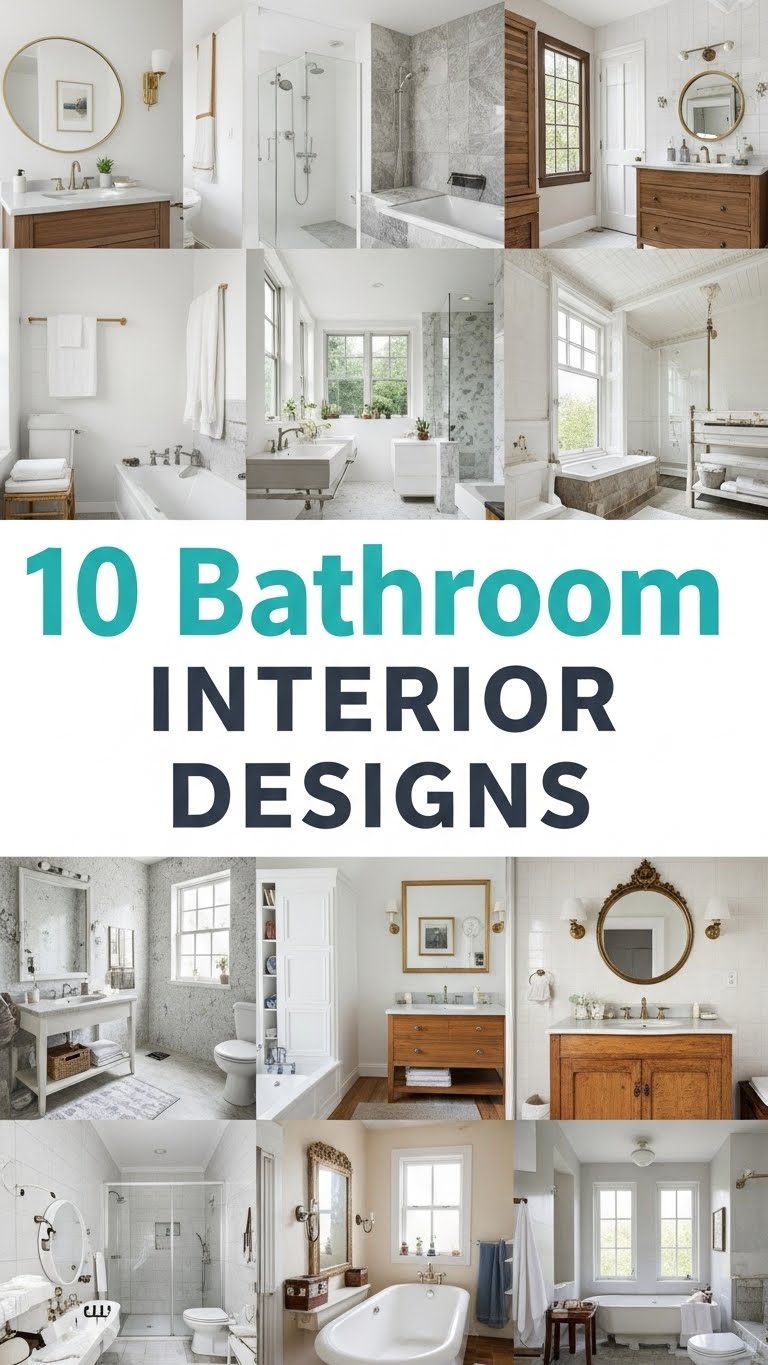
This blog explores ten distinctive bathroom interior design ideas, each explained in detail. Every section provides guidance on preparation, recommended materials, functional features, and styling elements. Whether your preference leans toward minimalism, luxury, rustic charm, or modern vibrancy, this guide equips homeowners, interior designers, and DIY enthusiasts with practical steps to transform a bathroom into a comfortable and visually captivating environment.
1. Modern Minimalist Bathroom
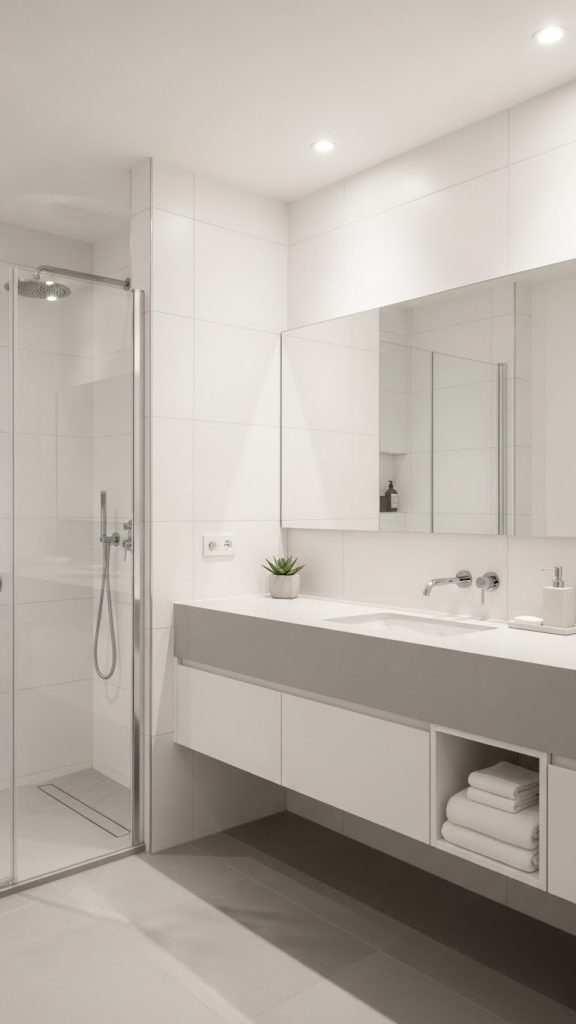
A modern minimalist bathroom focuses on simplicity, clean lines, and neutral tones. Preparation begins with evaluating the existing space and identifying elements that contribute to visual clutter. Materials suitable for minimalist design include matte or glossy finish tiles, quartz countertops, frameless glass shower enclosures, and concealed storage units.
Colors such as white, soft grey, and muted beige create a calm and open atmosphere. Minimalist bathrooms often feature wall mounted vanities to free floor space, floating shelves for essential items, and integrated lighting to enhance the sense of openness. Fixtures with simple geometric forms, such as square sinks and linear faucets, reinforce the minimalist aesthetic.
Accessories are kept to a minimum, with only essential items such as soap dispensers, small planters, or neatly rolled towels on display. Mirrors are large and frameless to reflect light and add depth. The overall effect is a serene, organized, and modern space that emphasizes efficiency while promoting relaxation. Proper material preparation and thoughtful layout are key to achieving a clutter-free and visually appealing minimalist bathroom.
2. Classic Traditional Bathroom
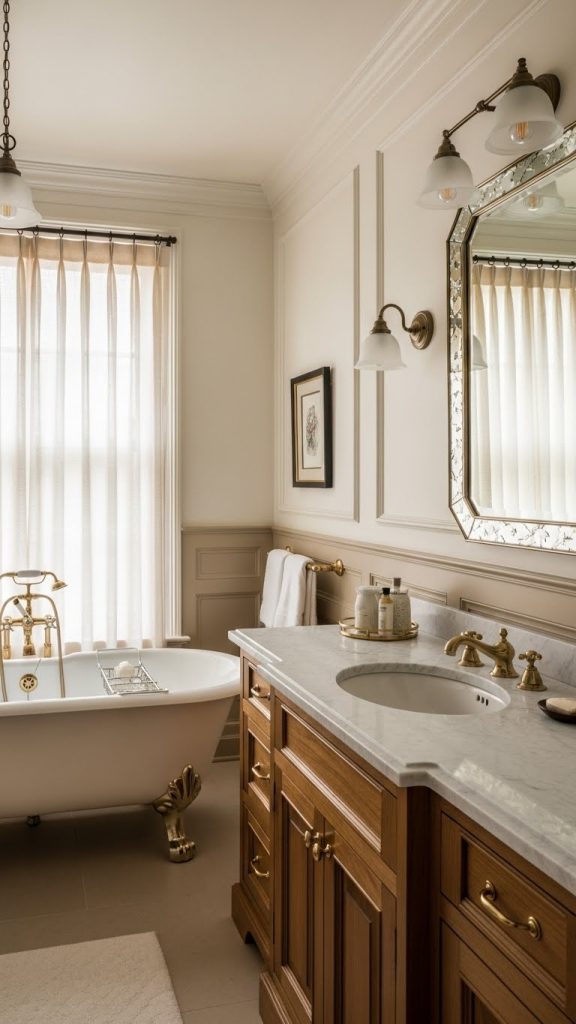
Traditional bathroom design emphasizes elegance, detail, and timeless beauty. Preparation involves selecting high quality, durable materials such as marble or granite countertops, ceramic or porcelain tiles, and solid wood cabinetry. Fixtures often feature intricate detailing and metallic finishes in gold, brass, or bronze.
Color palettes typically include soft creams, warm whites, and muted pastels. Crown molding, raised panel cabinetry, and decorative trim enhance the sophisticated aesthetic. Classic bathrooms often incorporate freestanding bathtubs, pedestal sinks, and vintage style faucets. Lighting fixtures such as chandeliers or wall sconces contribute to the luxurious and refined atmosphere.
Accessories are carefully chosen to complement the traditional style. These may include framed artwork, decorative mirrors, and ceramic or glass containers for storage. Window treatments such as roman shades or classic curtains provide privacy while adding elegance. Traditional bathrooms prioritize a sense of permanence and grace. With proper preparation, selection of premium materials, and attention to detailed finishes, this design creates a bathroom that is both functional and timelessly stylish.
3. Scandinavian Inspired Bathroom
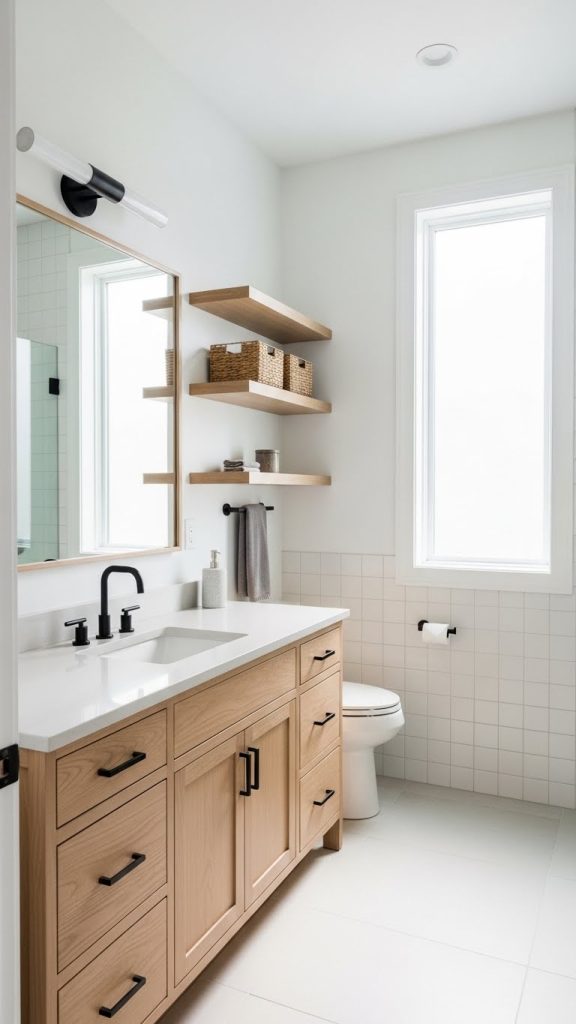
Scandinavian bathroom design emphasizes simplicity, natural light, and functionality. Preparation involves analyzing the space to maximize brightness and streamline storage solutions. Materials commonly used include light wood, stone, ceramic tiles, and matte finishes for cabinets and surfaces.
Colors are predominantly neutral, with white, pale grey, and soft wood tones forming the primary palette. Minimal hardware and clean lines contribute to a calming environment. Scandinavian bathrooms often feature wall mounted vanities, open shelving, and simple but practical storage baskets. Large mirrors enhance natural light and make the space feel larger.
Accessories are understated yet functional. Items such as small potted plants, neatly folded towels, and minimal soap dispensers maintain a clean aesthetic. Lighting is essential, with soft LED fixtures providing warmth without harshness. Scandinavian bathrooms balance elegance and practicality. Their focus on natural materials, bright interiors, and minimalism creates a serene space ideal for everyday use and relaxation.
4. Industrial Bathroom Design
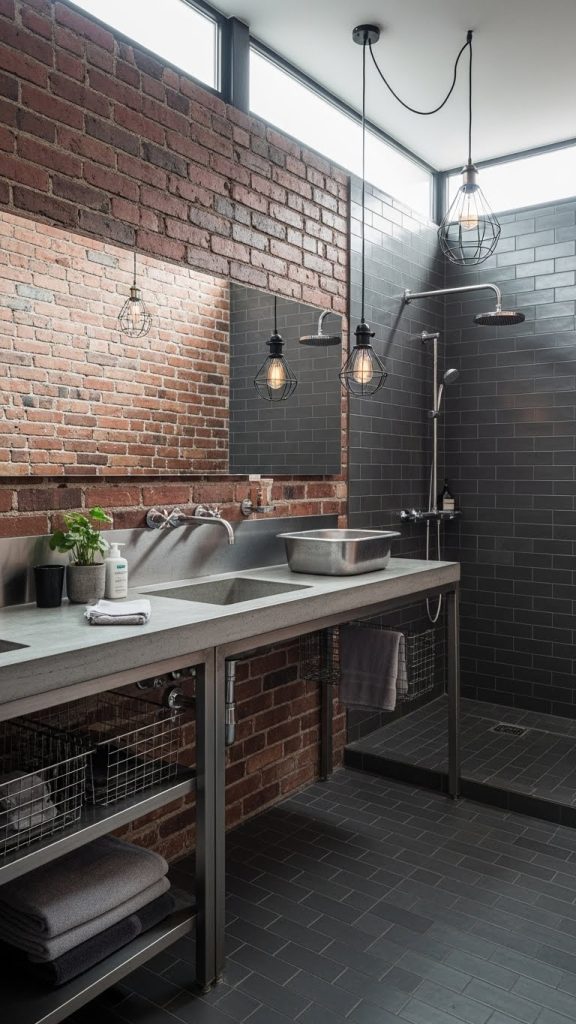
Industrial bathroom decor is inspired by warehouse architecture, combining raw materials and bold structural elements. Preparation begins by identifying opportunities to expose textures such as brick, concrete, or metal. Materials commonly used include stainless steel fixtures, concrete countertops, metal shelving, and dark tiles.
Colors typically include greys, blacks, and natural wood tones to reinforce a raw, urban feel. Industrial bathrooms often feature exposed piping, open shelving, and statement lighting with metallic finishes. A concrete or stone vanity, combined with metal mirrors and wire baskets, emphasizes the rugged aesthetic.
Decor should remain practical and functional. Metal towel racks, industrial pendant lights, and simple accessories maintain the warehouse inspired look. Flooring may include polished concrete or dark textured tiles for durability and style. Industrial bathroom design appeals to homeowners who prefer bold, contemporary spaces that are visually striking and functional. Proper preparation ensures materials withstand humidity and daily use while maintaining the industrial aesthetic.
5. Luxury High End Bathroom
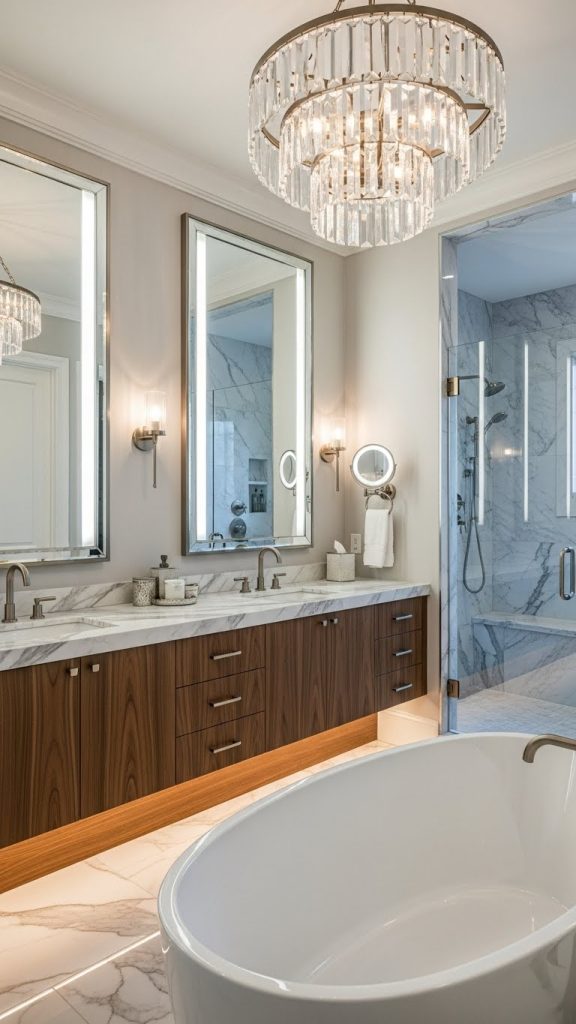
Luxury bathroom design emphasizes premium materials, sophisticated finishes, and a high level of comfort. Preparation involves selecting top quality materials such as marble, granite, or quartz countertops, custom cabinetry, and designer fixtures. Integrated storage systems and high end faucets enhance functionality.
Colors are generally neutral, with whites, creams, blacks, and metallic accents forming the primary palette. Statement lighting, such as chandeliers, layered LEDs, and wall sconces, creates visual drama while maintaining practicality. Large mirrors, glass shower enclosures, and freestanding bathtubs contribute to a luxurious atmosphere.
Accessories are carefully curated for elegance, including designer soap dispensers, fresh flowers, and decorative trays. High end bathrooms often incorporate smart features such as heated floors, digital faucets, and rain showers. Proper material selection and preparation are critical for longevity. Luxury bathrooms combine beauty and performance, offering homeowners an indulgent retreat with high functionality and visually stunning design.
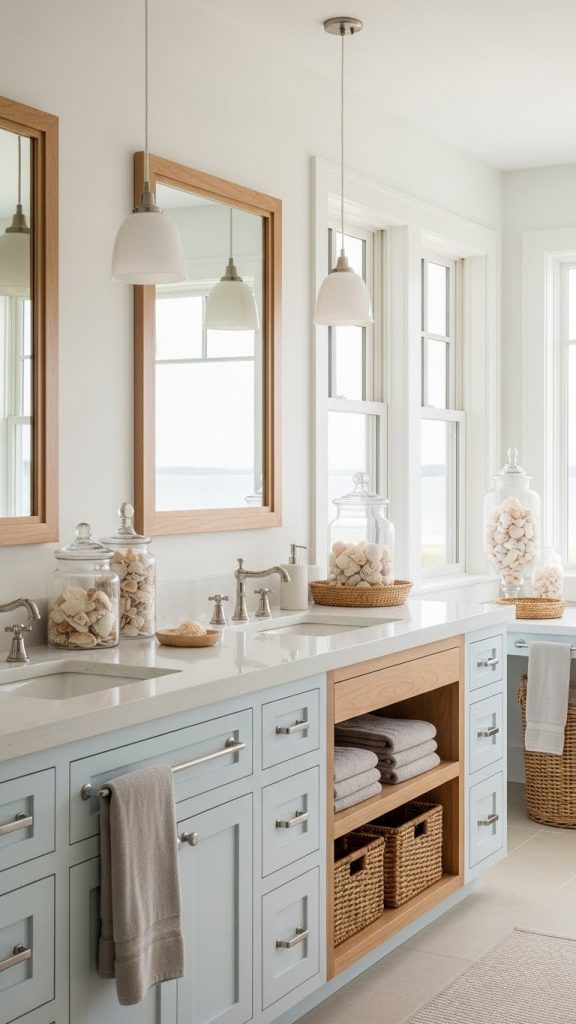
6. Coastal Inspired Bathroom
Coastal bathroom design evokes a light and airy seaside atmosphere. Preparation involves selecting materials that reflect the natural environment, such as light wood, stone, ceramic tiles, and soft textiles. Cabinets are usually white or light colored, paired with quartz or marble countertops.
Colors mimic the ocean and beach, including soft blues, sandy beiges, whites, and muted greens. Large windows, open shelving, and glass partitions maximize natural light. Coastal bathrooms often feature subtle textures like wicker baskets, linen towels, or stone accessories to create a relaxing environment.
Decor should enhance the coastal theme without clutter. Seashell accents, glass jars, driftwood, and plants add character. Lighting includes lantern style pendants or soft recessed fixtures. Coastal bathrooms provide a refreshing, tranquil environment suitable for relaxation. Proper preparation ensures materials are moisture resistant and easy to maintain, allowing the natural light and serene aesthetic to shine through.
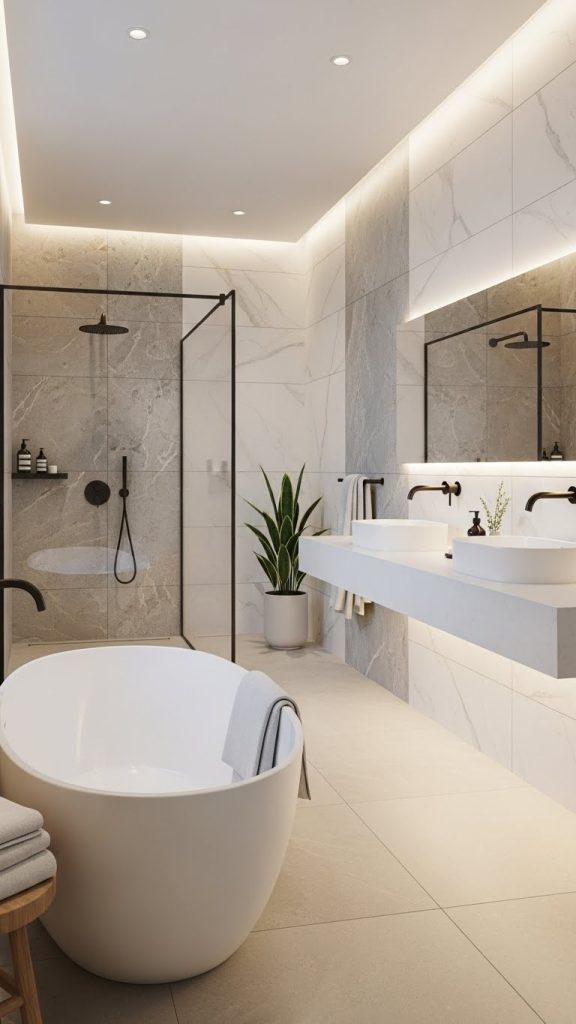
7. Modern Minimalist Spa Bathroom
A modern spa-inspired bathroom combines minimalism with luxurious wellness features. Preparation involves analyzing space for optimal layout and sourcing materials like natural stone, wood accents, large porcelain tiles, and frameless glass enclosures.
Colors are neutral, typically white, grey, or beige, with natural wood accents adding warmth. Spa bathrooms prioritize open space, clean lines, and functional storage. Features may include rain showers, freestanding tubs, integrated LED lighting, and underfloor heating.
Decor is minimal and calming, such as a single plant, essential oils, or neatly stacked towels. Mirrors are large and frameless to amplify light and create a sense of space. Accessories should reinforce the spa experience without overcrowding. Proper preparation ensures surfaces are waterproof and durable. Spa bathrooms provide relaxation and wellness, creating a retreat within the home through thoughtful design, natural materials, and serene colors.
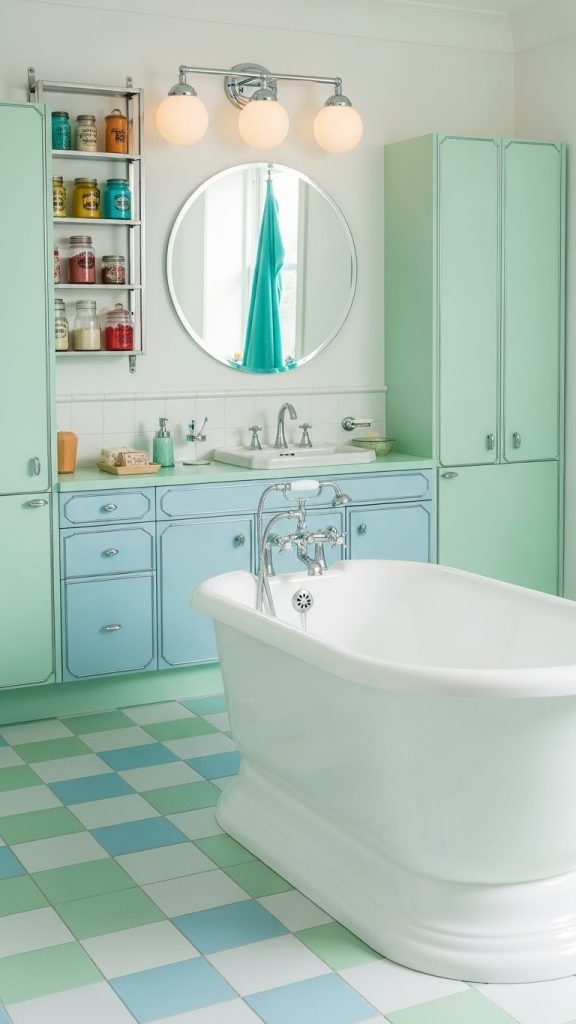
8. Vintage Retro Bathroom
Vintage retro bathrooms draw inspiration from past decades, creating nostalgic charm. Preparation involves selecting an era and coordinating fixtures, materials, and colors to reflect it accurately. Common materials include ceramic tiles, colorful flooring, chrome faucets, and freestanding tubs.
Color palettes vary depending on the decade, often featuring mint green, soft yellow, baby blue, or bold accents. Retro bathrooms frequently include checkerboard or patterned floors, rounded mirrors, and open shelving for decorative storage.
Accessories like vintage soap dishes, framed retro artwork, and metal or ceramic containers reinforce the nostalgic aesthetic. Lighting can include wall sconces or pendant lights with retro finishes. Vintage retro bathrooms provide a playful, lively, and visually engaging atmosphere. Proper preparation ensures that even older inspired materials meet modern standards for durability and moisture resistance, while maintaining charm and personality.
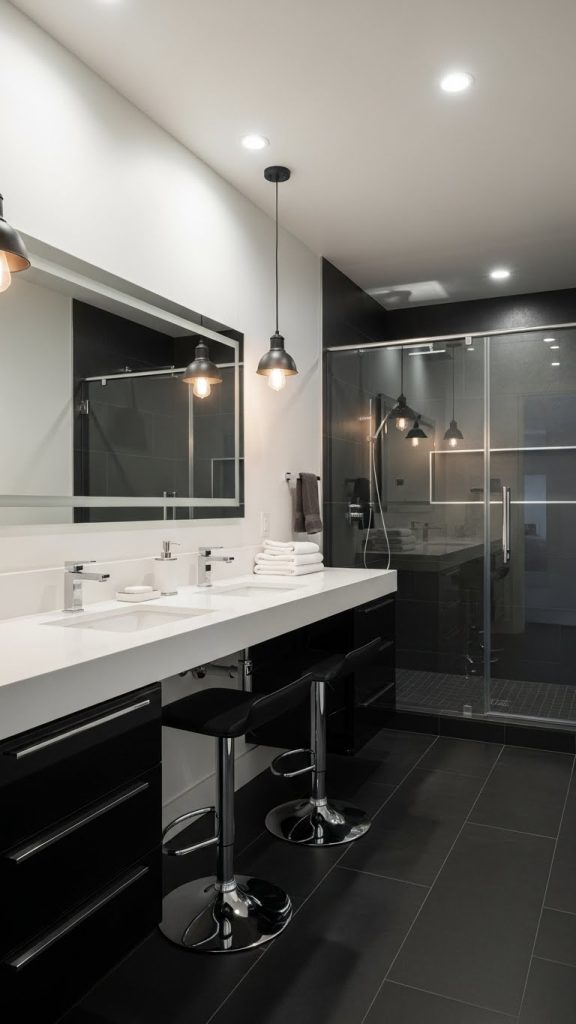
9. Contemporary Chic Bathroom
Contemporary chic bathrooms emphasize modern design, clean lines, and stylish finishes. Preparation includes selecting sleek materials such as glossy or matte cabinetry, quartz countertops, glass shower partitions, and designer fixtures.
Colors typically include whites, blacks, greys, and occasional metallic accents. Contemporary bathrooms often feature floating vanities, statement mirrors, and layered lighting such as recessed LEDs and pendant lights. Accessories should remain minimal but striking, including sculptural decor pieces, designer soap dispensers, or modern plant holders.
Storage is integrated to maintain uncluttered surfaces. Contemporary chic bathrooms balance style and functionality. Proper material preparation and thoughtful selection of high quality finishes ensure durability, moisture resistance, and long lasting appeal. This design suits homeowners who value modern sophistication combined with a practical, elegant bathing space.
10. Eclectic Creative Bathroom
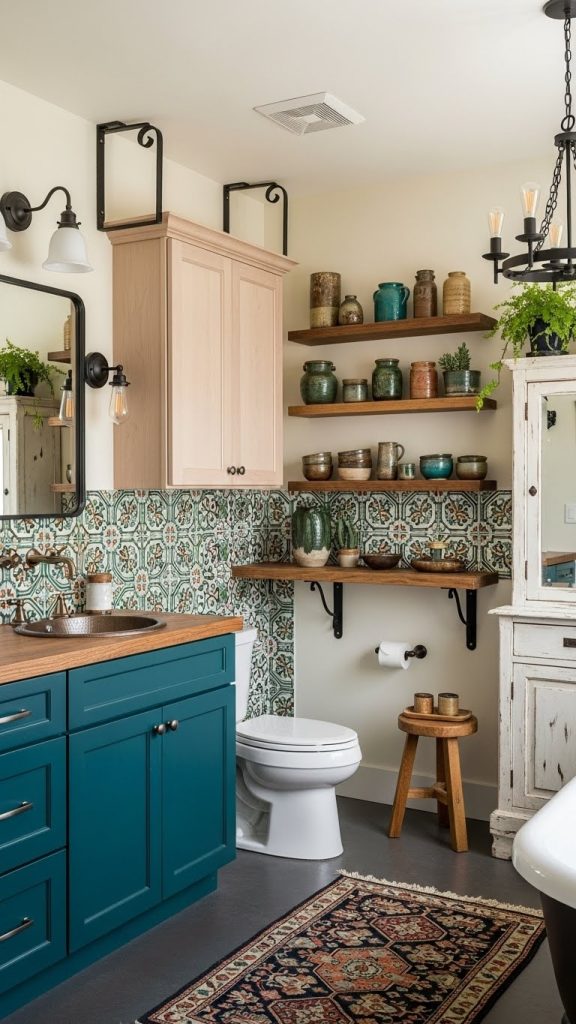
Eclectic bathrooms combine diverse textures, colors, and styles to create a personalized space. Preparation involves careful planning to maintain harmony between contrasting elements. Materials can include wood, stone, ceramic, metal, and glass, all blended creatively.
Color palettes may range from vibrant to muted tones, allowing patterns, mosaics, or tiles to create focal points. Fixtures, vanities, and storage solutions may vary in style, with open shelving or unique furniture pieces incorporated. Lighting is chosen to balance functionality and artistic expression.
Accessories such as handmade ceramics, plants, or decorative mirrors reinforce individuality. An eclectic bathroom allows homeowners to reflect personal style and creativity while maintaining practicality. Proper planning ensures the mix of materials withstands humidity and daily use. Eclectic design encourages experimentation and provides a visually stimulating, highly original bathroom environment.