

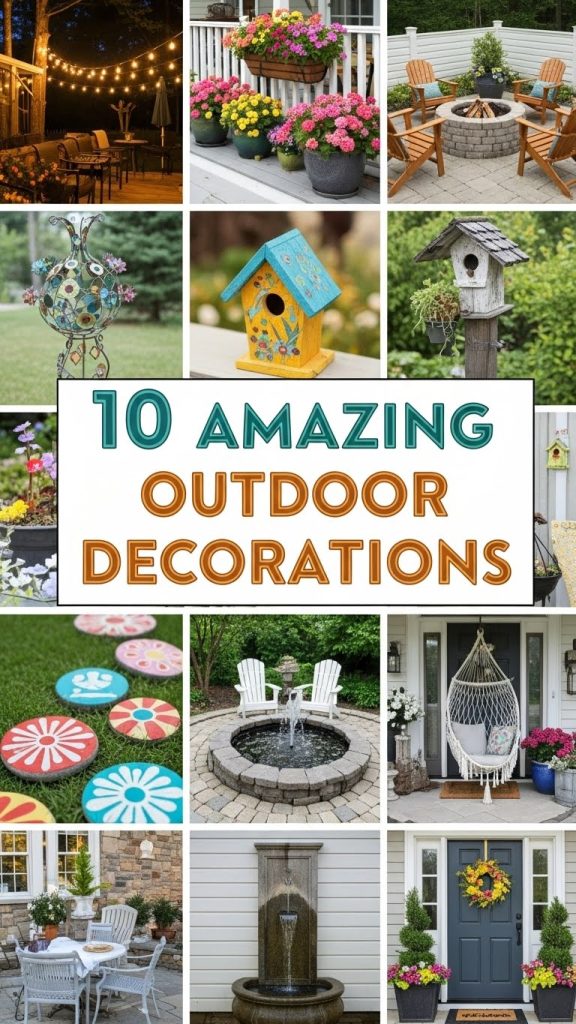
Outdoor spaces are extensions of our homes, providing areas for relaxation, entertainment, and connection with nature. Decorating these spaces thoughtfully not only enhances aesthetic appeal but also boosts the functionality of your outdoor living areas. Here are ten amazing outdoor decoration ideas, complete with preparation tips, materials, and practical advice to transform any garden, patio, or balcony into a visually stunning and welcoming environment.
1. String Lights and Lanterns
String lights and lanterns create a magical ambiance in outdoor spaces. They are ideal for patios, gardens, and backyard gatherings, offering soft lighting that transforms any area into a warm and inviting setting. Preparing for installation involves measuring the desired area to ensure adequate coverage without overcrowding. Select energy-efficient LED string lights for durability and low power consumption. Materials required include the lights, hooks or anchors for hanging, and extension cords if needed. Lanterns can complement the string lights and come in various designs, from rustic metal to modern glass. Hanging them strategically around seating areas, trees, or along pathways can highlight key features of your outdoor space. Consider incorporating solar-powered lanterns to reduce electrical use. Regular maintenance, such as cleaning glass surfaces and checking for damaged wiring, ensures long-term usability. With careful placement, string lights and lanterns not only illuminate the space but also create a cozy atmosphere ideal for evening gatherings and quiet nights outdoors.
2. Outdoor Rugs and Mats
Outdoor rugs and mats enhance the comfort and visual appeal of patios, decks, and entryways. They define spaces, add color, and provide a soft surface underfoot. Preparing for installation involves measuring the area to select an appropriately sized rug. Opt for weather-resistant materials such as polypropylene, acrylic, or recycled plastics that resist moisture, fading, and mildew. Cleaning and maintenance are straightforward: shake out debris, vacuum, or hose down as needed. Placement is critical; rugs work well under seating arrangements, dining tables, or in high-traffic zones. Layering rugs can add depth and texture to the outdoor space. Mats, especially near doors, prevent dirt from entering the home while offering a decorative touch. Choose patterns and colors that complement outdoor furniture and surrounding greenery. Beyond aesthetics, outdoor rugs improve safety by reducing the risk of slips on wet surfaces. When combined with cushions and throws, they create an inviting and functional outdoor living area perfect for gatherings or relaxation.

3. Garden Sculptures and Statues
Garden sculptures and statues add artistic flair and character to outdoor spaces. They can serve as focal points, guide pathways, or complement plant arrangements. Begin by selecting a theme or style that aligns with your garden design, whether classical, modern, whimsical, or abstract. Materials vary from stone, concrete, and metal to resin or ceramic, each offering durability and weather resistance. Placement requires careful consideration of visibility, surrounding plants, and sunlight. Secure statues to prevent tipping during storms or high winds. Preparation may involve leveling the ground, adding a stable base, or incorporating protective sealants for long-term preservation. Sculptures can be standalone features or combined with water elements, flower beds, or lighting to enhance visual impact. Consider mixing heights and textures to create a dynamic outdoor scene. Regular cleaning and minor repairs, such as touch-ups on painted surfaces, keep sculptures looking fresh. By integrating garden statues thoughtfully, outdoor areas gain a sense of sophistication and personality.

4. Vertical Gardens and Green Walls
Vertical gardens, also known as green walls, maximize greenery in limited outdoor spaces. They offer aesthetic appeal, improve air quality, and provide a natural backdrop for relaxation or social areas. Preparation involves choosing a sturdy wall or structure capable of supporting plant weight. Select plants suited to your climate and sunlight exposure; popular choices include ferns, succulents, ivy, and herbs. Materials required include planters, mounting panels, brackets, soil, and irrigation systems if necessary. Modular vertical garden kits simplify installation and maintenance. Regular watering, pruning, and fertilization keep plants healthy and vibrant. Vertical gardens can serve as privacy screens, focal points, or living art pieces. They also reduce noise and provide natural cooling effects in urban settings. Proper planning ensures even growth and minimizes overcrowding. With thoughtful design, vertical gardens transform blank walls into lush, green canvases, creating an immersive outdoor experience.

5. Water Features and Fountains
Water features, such as fountains, ponds, or waterfalls, introduce tranquility and soothing sounds to outdoor areas. Before installation, assess space, water source availability, and electrical requirements for pumps or lighting. Materials can range from natural stone and ceramic to concrete and metal, depending on desired style. Smaller fountains are easy to install on patios or balconies, while ponds require excavation and waterproof liners. Pumps, filters, and regular maintenance are essential to prevent algae buildup and maintain water clarity. Integrating water features with surrounding plants, rocks, or lighting enhances visual appeal and creates a relaxing environment. Consider solar-powered pumps for energy efficiency. Safety is also important, especially in homes with children or pets; shallow water features or protective barriers may be necessary. By incorporating water elements, outdoor spaces gain a sense of serenity, offering a perfect retreat for relaxation and contemplation.

6. Outdoor Seating and Lounge Areas
Comfortable seating areas encourage outdoor enjoyment and social gatherings. Preparing involves measuring available space to select appropriately sized furniture, ensuring balance between functionality and aesthetics. Materials include weather-resistant wood, metal, wicker, or synthetic rattan. Cushions should be made of water-resistant fabrics for durability. Arranging seating in conversational layouts fosters interaction and comfort. Adding coffee tables, side tables, or ottomans enhances practicality. Consider modular or foldable furniture to accommodate different occasions or seasonal storage. Shade solutions such as umbrellas, pergolas, or retractable awnings protect from sun and rain, extending usability. Outdoor rugs, throw pillows, and lighting complete the area, creating a cohesive design. Maintenance includes cleaning surfaces, storing cushions during adverse weather, and periodic furniture treatment to prevent fading or rust. Well-designed seating areas increase usability and elevate the overall aesthetic of outdoor living spaces.

7. Pathways and Stone Walkways
Pathways guide movement, define areas, and enhance outdoor beauty. Preparation involves planning routes that connect entrances, seating areas, or gardens efficiently while considering natural flow and accessibility. Materials include natural stone, pavers, gravel, brick, or concrete, each offering durability and aesthetic appeal. Installing requires ground leveling, edging, and proper drainage to prevent water accumulation. Stone walkways can be interspersed with groundcover plants for a natural look, while gravel paths offer quick installation and flexibility. Consider lighting along pathways for safety and nighttime ambiance. Maintenance involves removing weeds, replenishing gravel, and cleaning stone surfaces to prevent moss buildup. Decorative borders or patterned arrangements add visual interest. A well-designed pathway improves navigation, complements landscaping, and provides a structured yet inviting outdoor experience.

8. Outdoor Fire Pits and Fireplaces
Fire pits and fireplaces extend outdoor usability into cooler months and provide a focal point for gatherings. Preparation includes selecting a safe location away from flammable structures and measuring space for seating. Materials range from stone, brick, concrete, or metal, and should withstand high temperatures. Installation may require excavation, assembly, or professional assistance for built-in designs. Safety precautions include using spark guards, keeping fire extinguishers nearby, and adhering to local regulations. Complementing the area with seating, cushions, and ambient lighting enhances comfort. Fire pits can be wood-burning or gas-powered; each has different maintenance requirements, such as ash removal or gas line inspection. Regular cleaning and protective covers prolong lifespan. Fire pits create warmth, encourage conversation, and enhance nighttime outdoor experiences.

9. Hanging Plants and Flower Baskets
Hanging plants add vertical interest and color to outdoor spaces without occupying floor area. Preparation involves choosing strong hooks or brackets capable of supporting plant weight. Select plant varieties suited to light exposure and climate conditions, such as trailing vines, ferns, or flowering annuals. Materials include pots, baskets, soil, and water-retaining liners. Arranging multiple baskets at varying heights creates depth and visual intrigue. Maintenance includes regular watering, fertilization, and trimming dead foliage. Hanging plants are versatile, ideal for porches, patios, balconies, or pergolas. Combining different plant types, colors, and textures enhances vibrancy. Proper selection and placement ensure healthy growth and add dynamic greenery to your outdoor environment, enriching both aesthetics and ambiance.

10. Outdoor Art and Wall Decor
Outdoor art, including murals, metal sculptures, or decorative wall panels, personalizes outdoor spaces. Preparation involves selecting weather-resistant materials such as treated wood, metal, or UV-protected paint. Walls should be clean and structurally sound before installation. Tools and materials depend on the type of art, from screws and anchors for sculptures to brushes and sealants for painted designs. Placement should consider visibility, sunlight, and surrounding landscape. Outdoor art can serve as a focal point or complement existing garden features. Regular maintenance includes cleaning surfaces, repainting faded areas, and inspecting for structural stability. By incorporating art, outdoor spaces gain character and individuality, transforming ordinary areas into visually engaging environments that reflect personal taste.
