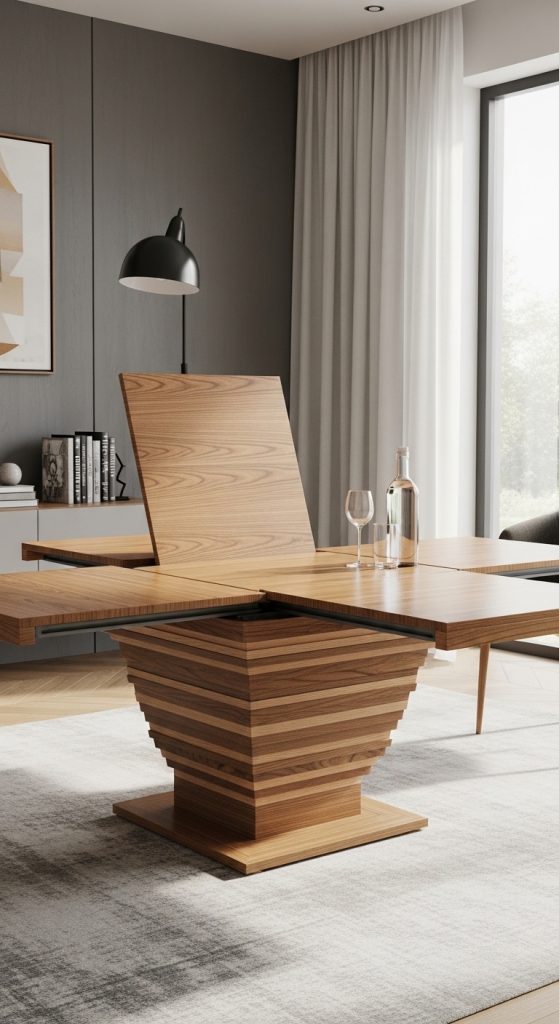
Small homes and apartments often require furniture that can serve more than one purpose. One popular solution is a coffee table that converts into a dining table. This type of furniture saves space, reduces clutter, and provides flexibility for daily living. Instead of having separate tables for relaxing and dining, a convertible design allows one piece of furniture to perform both roles.

Coffee table to dining table conversions are especially useful for studio apartments, small living rooms, and modern homes where efficient use of space is important. Some tables use lifting mechanisms, others fold open, and some rely on adjustable legs to increase height. Whether you build one yourself or modify an existing coffee table, there are many creative ideas that can transform a simple living room table into a comfortable dining surface.
This guide explores ten practical ideas for converting a coffee table into a dining table. Each idea explains the design concept, preparation steps, materials required, and helpful tips for building or selecting the right table. The explanations are written in simple language so beginners can understand the process easily. By the end of this guide, you will have several design ideas that can help you create a functional, stylish, and space saving convertible table for your home.
1. Lift Top Coffee Table Conversion
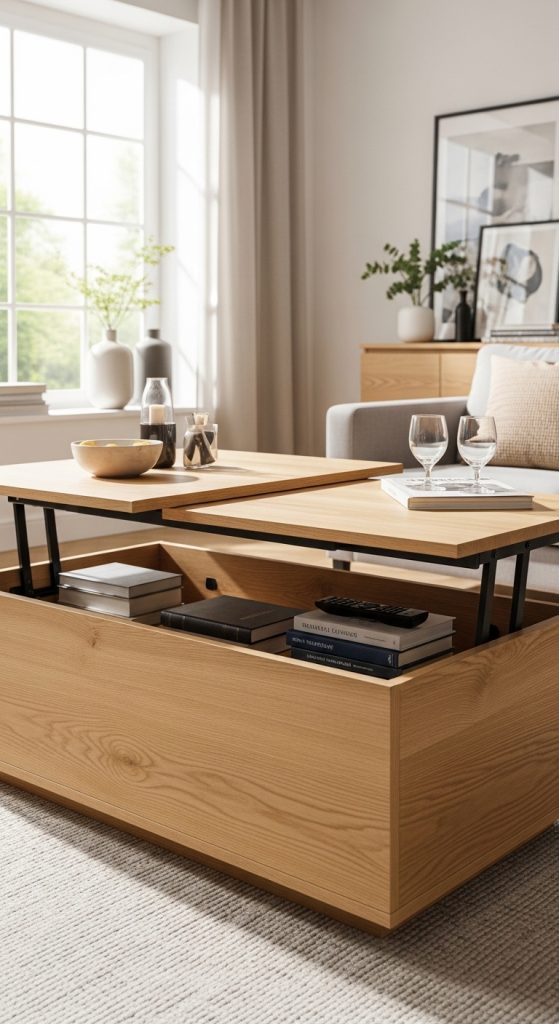
A lift top coffee table is one of the most popular designs for converting a coffee table into a dining table. The tabletop lifts upward and moves closer to the user, creating a higher surface suitable for eating or working.
Preparation begins with choosing a sturdy coffee table base. The table should be strong enough to support lifting hardware and the weight of food or dishes. A lift top hinge mechanism is the key component for this design.
Materials required include lift top hinge hardware, wood screws, a wooden tabletop, a screwdriver or drill, measuring tape, and sandpaper. Many hardware stores sell lift top hinge kits specifically designed for this purpose.
To build this design, attach the lifting hinge mechanism inside the table frame. The hinge allows the tabletop to rise smoothly when pulled upward. Once lifted, the table surface becomes higher and more comfortable for dining while sitting on a sofa.
A storage compartment can also be added under the lift top surface. This space can store placemats, napkins, or small dining items.
This design is ideal for small apartments because it combines three functions in one piece of furniture: coffee table, dining table, and storage unit.
2. Folding Extension Coffee Table
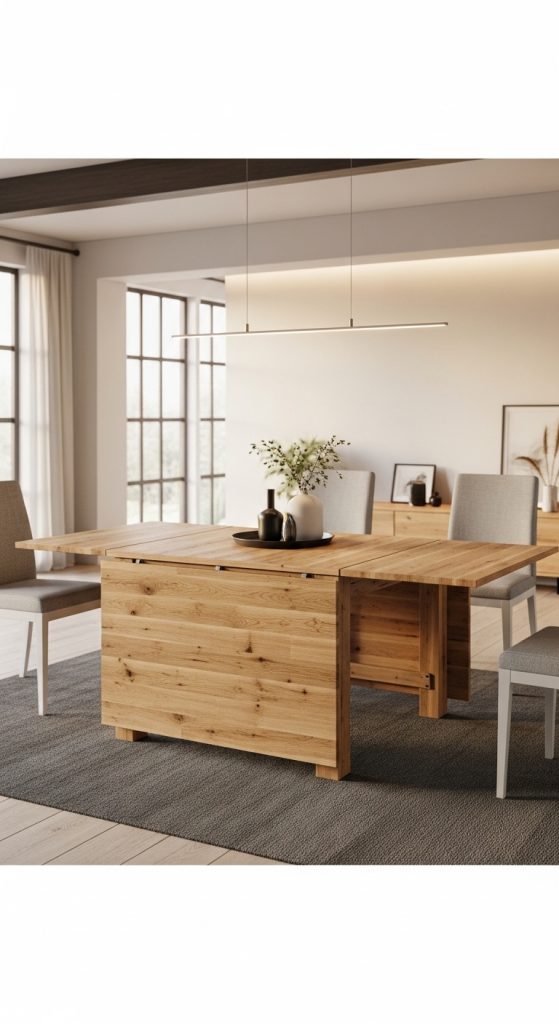
A folding extension coffee table expands horizontally to create a larger dining surface. This design works well for families or when guests visit.
Preparation involves measuring the original table size and deciding how much extra surface area you want. Extension leaves can be added to both sides or stored under the main tabletop.
Materials include wooden panels for the extension leaves, folding brackets, hinges, wood glue, screws, and finishing paint or varnish.
The construction process begins by attaching folding hinges to the sides of the main tabletop. These hinges allow the extension panels to fold down when not in use. When you need a dining table, simply lift the panels and secure them with folding brackets or support arms.
This type of conversion increases the width of the table so multiple people can comfortably eat around it. Some designs include hidden leaves that slide out from underneath the tabletop.
One advantage of this design is simplicity. It does not require complex mechanical lifts or expensive hardware. With basic woodworking tools, many people can build this conversion at home.
It is a practical solution for people who want a compact coffee table during the day and a larger dining surface when needed.
3. Adjustable Height Coffee Table
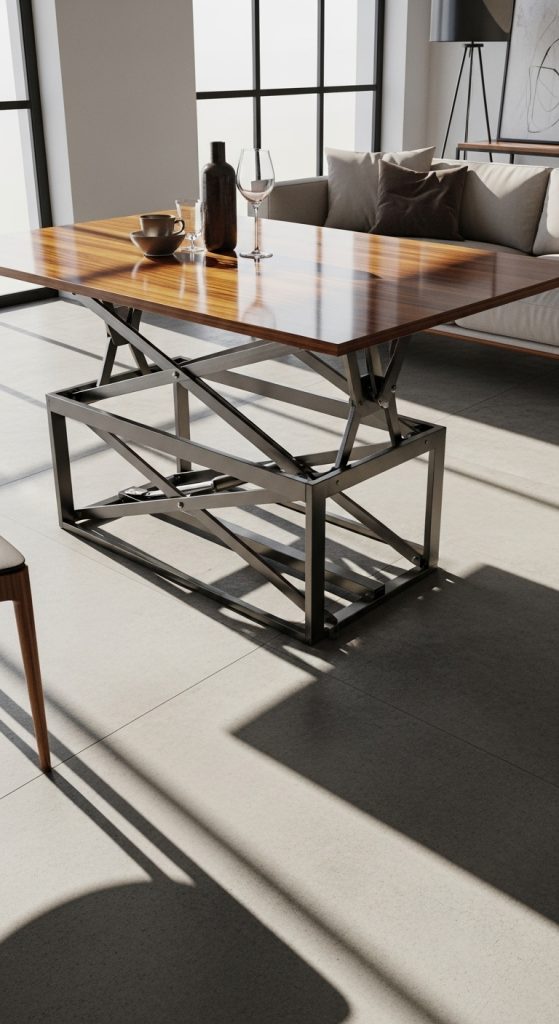
An adjustable height coffee table uses a mechanical or hydraulic system to raise the entire table from coffee table height to dining table height.
Preparation starts with selecting a stable base that can support vertical movement. Adjustable metal legs or scissor lift mechanisms are commonly used for this design.
Materials required include an adjustable lift frame, wooden tabletop, bolts, metal brackets, drill machine, measuring tape, and protective finishing materials.
The lift frame is installed underneath the tabletop. When activated, the frame raises the table to a comfortable dining height. Some systems use gas springs or hydraulic pistons for smooth movement.
This design is commonly seen in modern multifunctional furniture. Many commercial lift frames are available online and can be attached to a custom tabletop.
One important factor is stability. The base must be wide enough to prevent wobbling when the table is raised. Adding cross support bars can improve strength.
Adjustable height tables are ideal for people who want flexibility. The table can be used as a coffee table, work desk, or dining table depending on the situation.
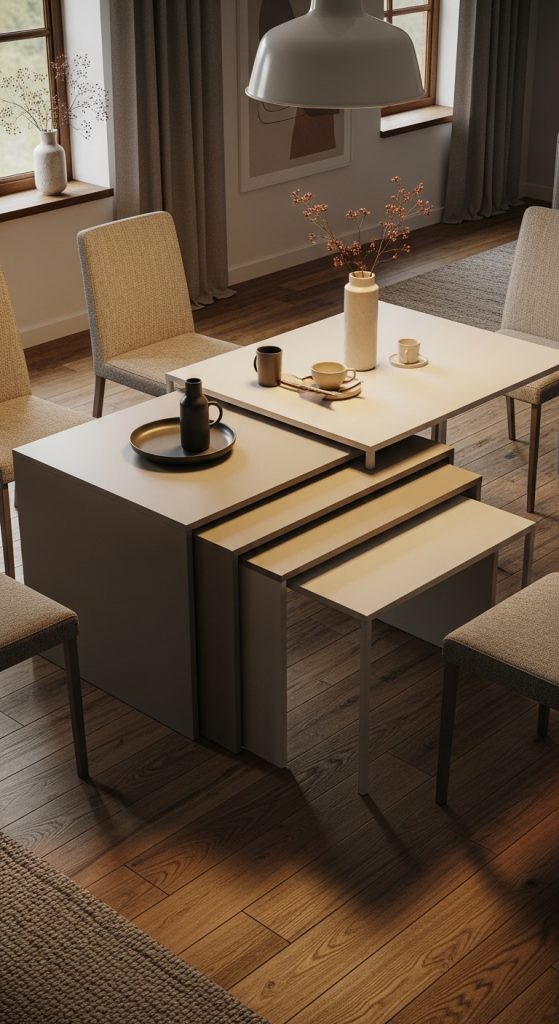
4. Nesting Coffee Table Dining Set
A nesting coffee table system uses two or more tables stacked together. When separated and rearranged, they can form a larger dining surface.
Preparation involves designing tables of different heights and sizes that fit neatly under one another. When combined, they create a full table surface.
Materials include wooden boards, table legs, screws, wood glue, drill tools, and finishing materials such as paint or polish.
To construct this design, build a main coffee table and one or two smaller tables that slide underneath it. Each table should have similar width proportions so they align when placed together.
When you need a dining table, simply pull out the smaller tables and arrange them beside the main table to create a wider dining area.
This design is easy to build and does not require complex hardware. It is also flexible because the smaller tables can be used as side tables or serving tables.
Nesting table systems are popular in modern minimalist homes because they provide flexibility while maintaining a clean look.
5. Flip Top Coffee Table Design
A flip top coffee table doubles its surface area by rotating the tabletop. When opened, the table becomes large enough for dining.
Preparation begins with selecting a rectangular coffee table base. The top panel must be designed to rotate and fold open.
Materials required include rotating hinges, wooden boards, screws, drill tools, measuring tape, and finishing paint.
To build this design, divide the tabletop into two sections. One half remains fixed while the other rotates and flips open. Special rotating hinges allow the top to pivot smoothly.
When the table is closed, it functions as a normal coffee table. When flipped open, the doubled surface creates a dining table suitable for multiple people.
Some designs also include hidden storage under the rotating panel.
This design is very popular in space saving furniture because it increases the table size without increasing the footprint when closed.
It works especially well in small living rooms where space is limited but occasional dining space is required.
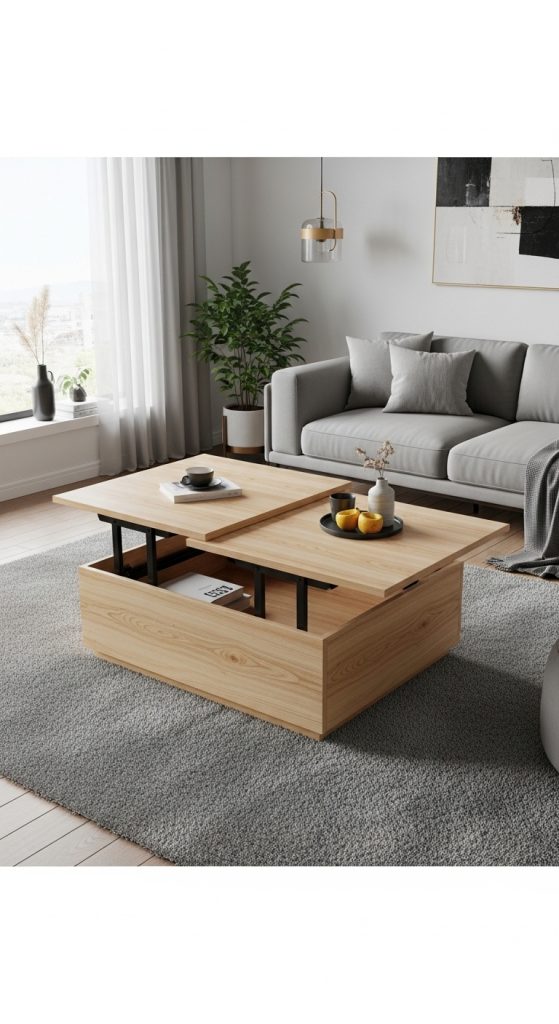
6. Sliding Top Coffee Table
A sliding top coffee table expands by moving panels sideways to reveal a larger surface area.
Preparation requires careful measurement of sliding tracks and panels so they move smoothly without gaps.
Materials include wooden panels, drawer slides or sliding rails, screws, drill tools, wood glue, and finishing materials.
The construction process involves installing sliding rails inside the table frame. Two tabletop panels are mounted on these rails so they can slide outward.
When extended, the table becomes wider and suitable for dining. Some designs include a hidden center panel that lifts up once the outer panels slide apart.
This design provides a smooth transformation from a compact coffee table to a larger table surface.
Sliding systems must be installed carefully to prevent jamming or uneven movement. High quality drawer slides improve durability.
Sliding top tables are often used in modern furniture design because they combine functionality with a sleek appearance.
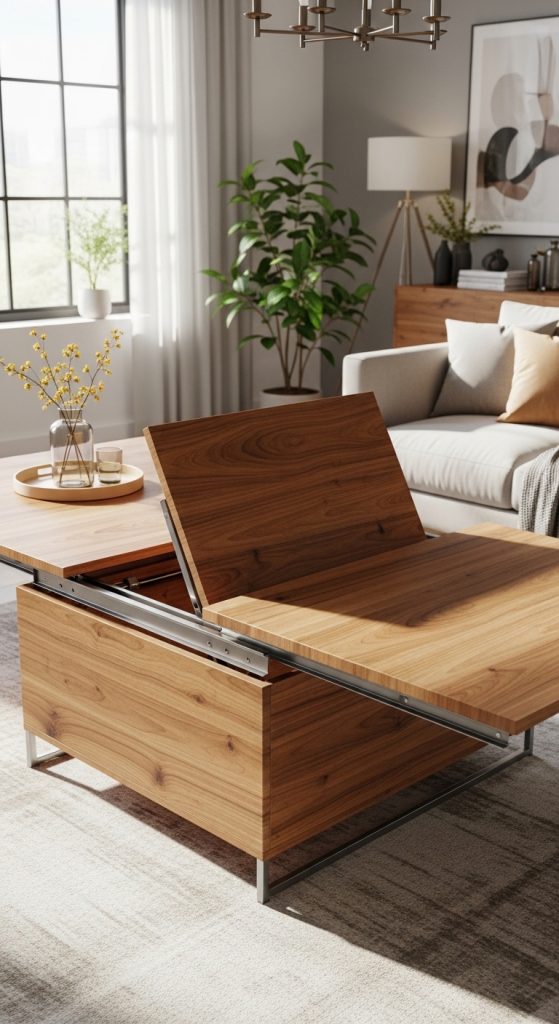
7. Folding Leg Coffee Table
A folding leg coffee table transforms into a dining table by extending its legs to increase height.
Preparation includes selecting strong folding leg hardware that can support the table weight when extended.
Materials required include folding leg brackets, wooden legs, screws, drill tools, measuring tape, and wood finishing products.
The main idea is to attach extendable or folding legs underneath the table. When folded, the table remains low like a traditional coffee table.
When unfolded, the legs lock into position and raise the table to dining height.
This design is simple and effective. It requires fewer mechanical parts compared to lift systems.
However, the locking mechanism must be strong enough to prevent the table from collapsing during use.
Folding leg conversions are often used in portable furniture and multipurpose living spaces where flexibility is important.
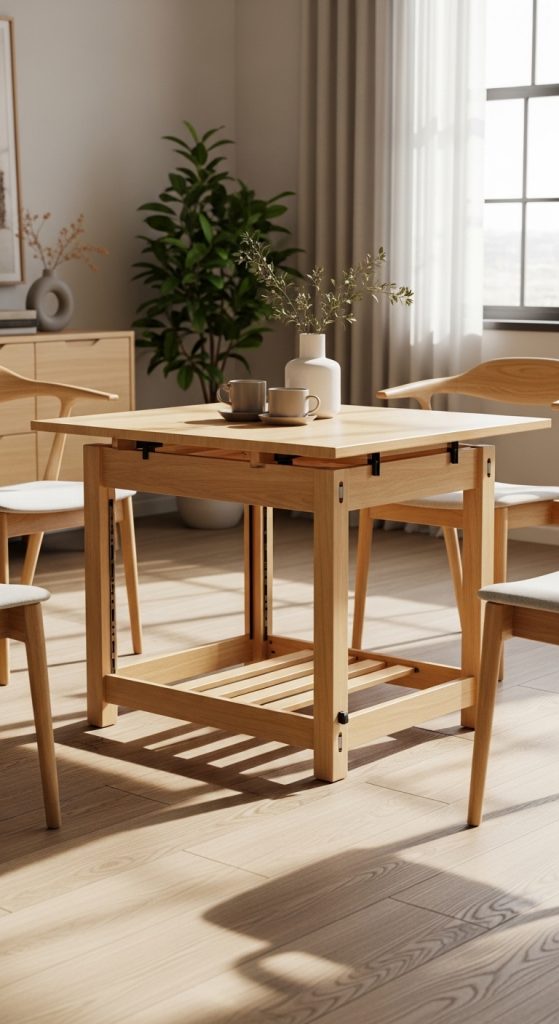
8. Modular Coffee Table System
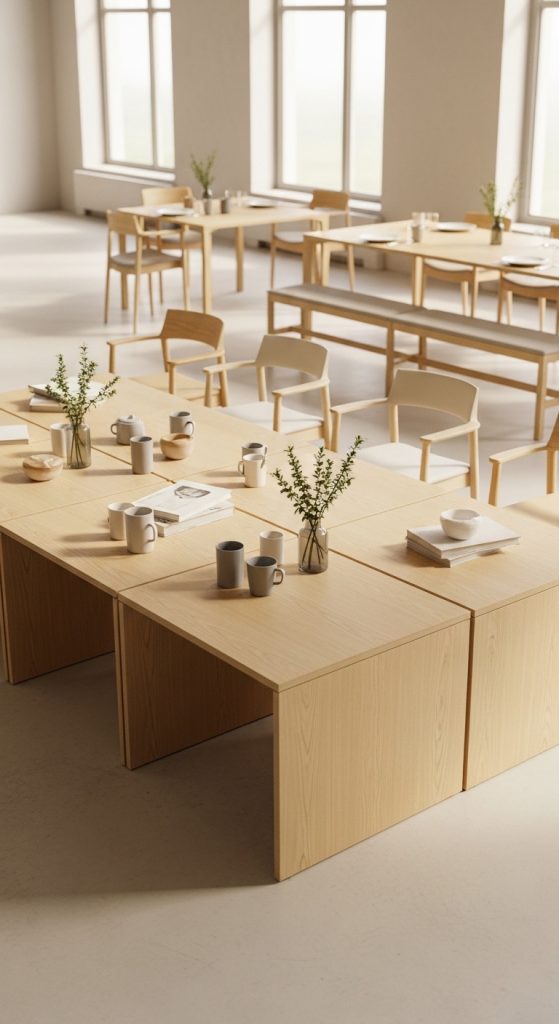
A modular coffee table system consists of multiple pieces that can be rearranged to form a dining table.
Preparation involves designing separate modules that fit together like puzzle pieces.
Materials include wooden panels, connectors, alignment pins, screws, drill tools, and finishing materials.
Each module can function as a small coffee table or ottoman. When combined, the modules create a larger flat surface suitable for dining.
Some modular systems also include cushions that can be removed to reveal a solid tabletop.
This design is extremely flexible. Users can rearrange modules depending on the number of people or available space.
It is also useful for social gatherings where extra table space is needed temporarily.
Modular furniture has become popular because it adapts to different living situations and allows creative arrangement.
9. Storage Trunk Coffee Table Conversion
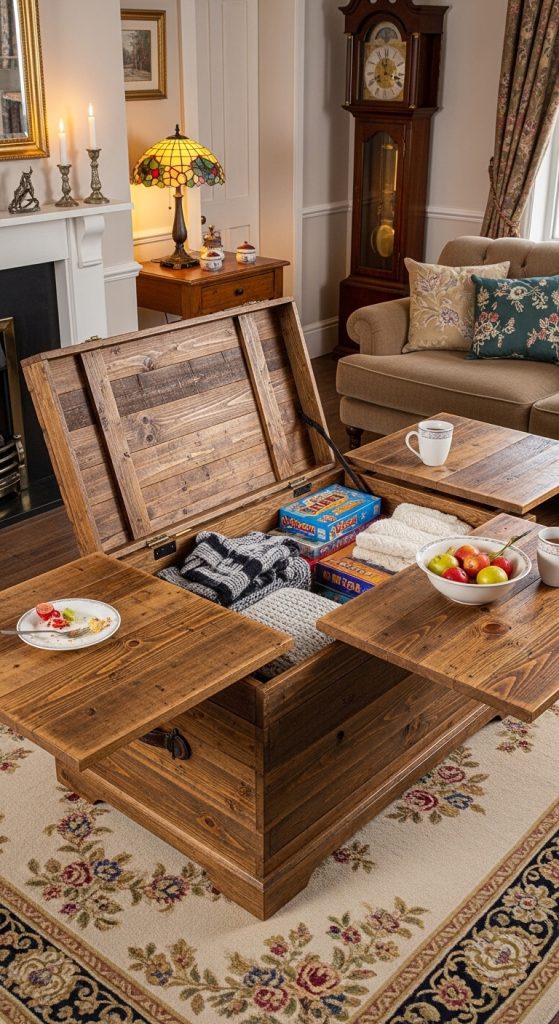
A storage trunk coffee table can be modified to become a dining table by adding a removable tabletop extension.
Preparation begins with selecting a sturdy trunk style coffee table with a flat lid.
Materials required include wooden extension panels, support brackets, hinges, screws, measuring tools, and finishing materials.
The extension panels are stored inside the trunk when not in use. When needed, they are attached to the sides or top of the trunk using brackets or hinges.
This design adds both storage and functionality. The trunk can store tableware, napkins, or dining accessories.
When the extensions are installed, the trunk becomes large enough to function as a dining surface.
This idea works well for rustic or vintage style interiors because trunk furniture often has a classic appearance.
It is also practical for homes where storage space is limited.
10. Telescoping Coffee Table Design
A telescoping coffee table uses extendable sections that slide out to increase both height and surface area.
Preparation includes designing layered panels that move smoothly within the table structure.
Materials required include telescoping metal frames, wooden panels, sliding tracks, screws, drill tools, and finishing materials.
The telescoping frame is installed inside the table base. When extended, the frame lifts and expands the tabletop into a full dining table.
When collapsed, the sections slide back inside the base, returning the table to its compact coffee table form.
This design is more advanced than other conversions but provides a smooth and elegant transformation.
Precision measurement is important to ensure the sections align properly.
Telescoping tables are often used in modern space saving furniture because they offer both height adjustment and surface expansion in a single mechanism.