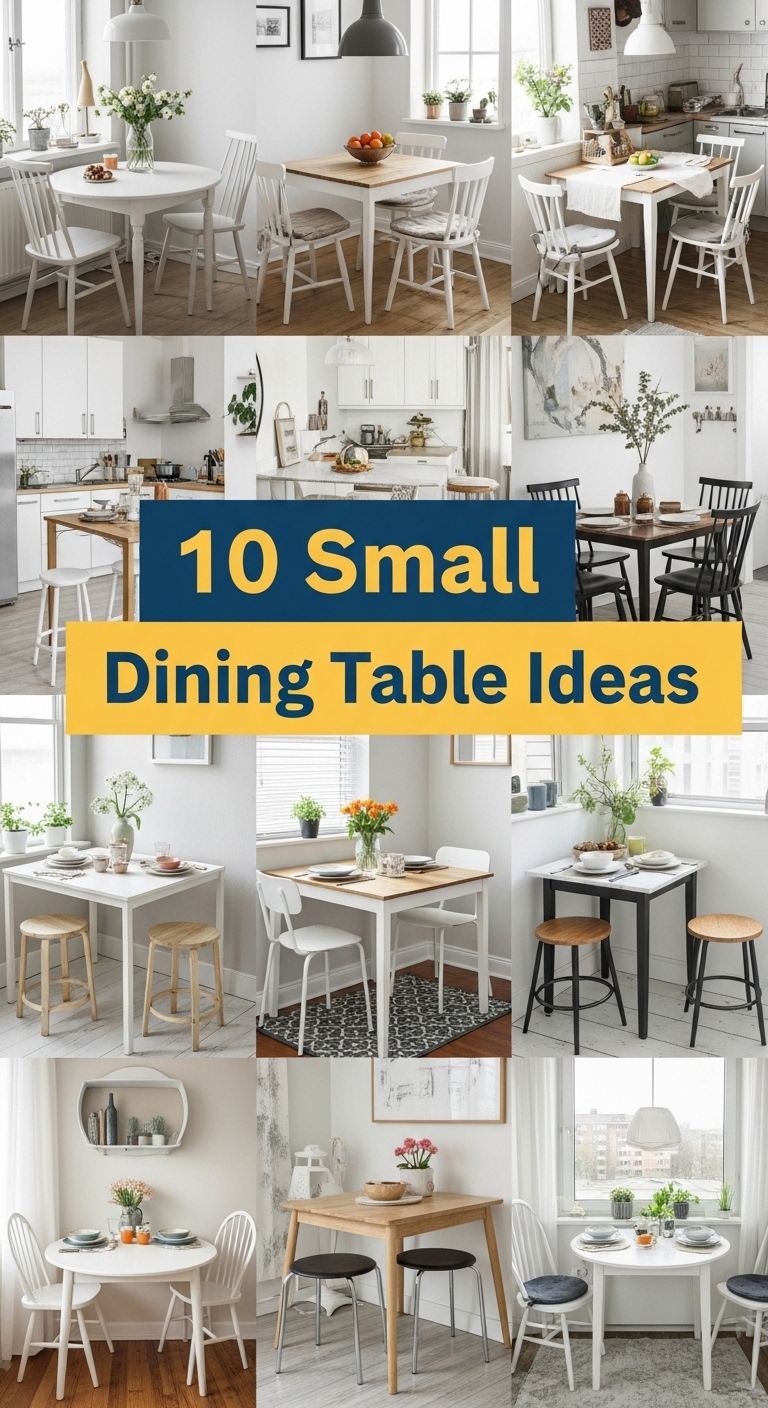
Living in a small apartment or house often presents a challenge when it comes to dining areas. A large dining table may overwhelm the space, making it feel cramped and uninviting. Small dining tables, however, are perfect for compact spaces and can be both functional and stylish. The following are ten small dining table ideas, with detailed guidance on preparation, materials, and setup to help you create an ideal dining experience without sacrificing design.
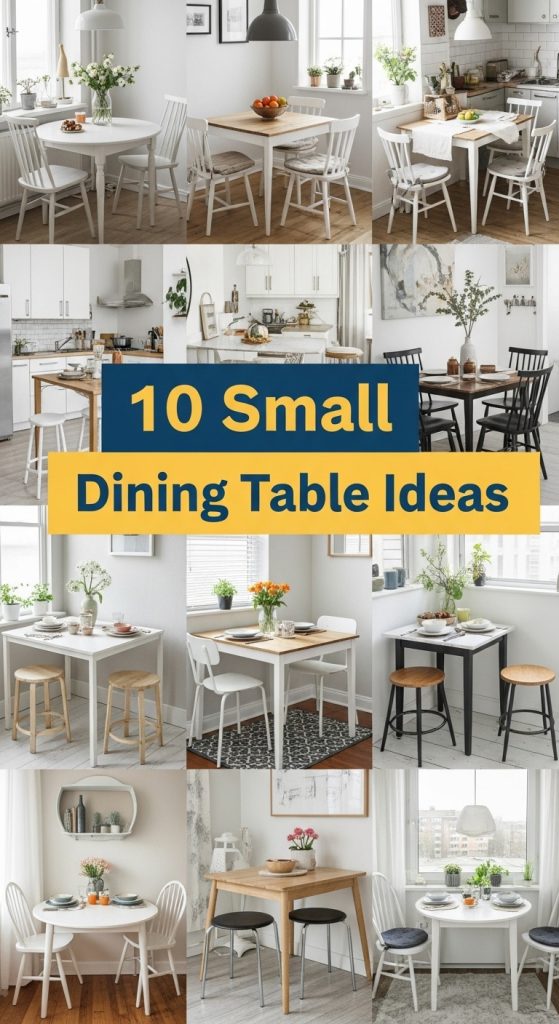
1. Round Pedestal Dining Table
A round pedestal dining table is an excellent choice for small spaces. Its circular design encourages a more intimate dining experience while eliminating sharp corners that can make a room feel cramped. The pedestal base frees up legroom, allowing chairs to be positioned freely around the table.
Materials and Preparation: These tables are often constructed from solid wood such as oak, walnut, or pine, although metal and glass variations are also available. To prepare your space, measure the area to ensure the table fits comfortably with at least two feet of clearance around it for easy movement. Consider the table’s finish in relation to your room’s decor. A lighter wood or painted surface can visually expand the space, while a darker finish can add a touch of elegance.
Setup Tips: Place the table in the center of the dining area or against a wall if space is extremely limited. Pair it with four slim chairs or a mix of chairs and a bench to maximize seating. Add a small centerpiece like a vase or candle to enhance the aesthetic without crowding the surface.
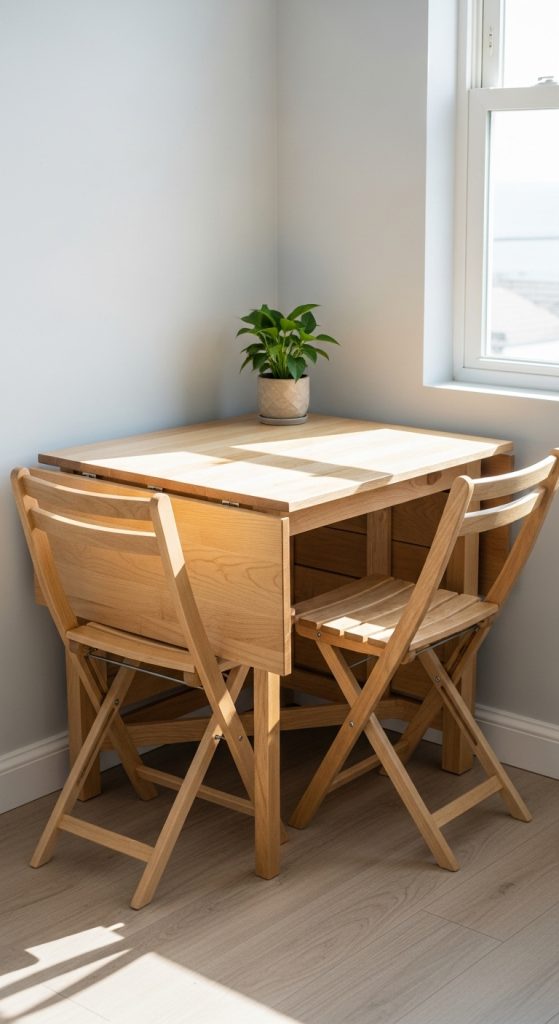
2. Foldable Drop-Leaf Table
Foldable drop-leaf tables are ideal for multifunctional spaces, allowing you to expand or contract the table as needed. When fully extended, the table accommodates several diners, but when not in use, it folds down to a narrow size, freeing up floor space.
Materials and Preparation: These tables are typically crafted from wood or engineered wood with metal or wooden hinges for the folding mechanism. Preparation involves measuring the dining area both in its extended and folded states to ensure smooth operation. Ensure the walls or nearby furniture allow the leaves to fold without obstruction.
Setup Tips: Use one side as a working surface or console table when the leaves are down. Lightweight chairs or stools that can be easily stored under the table improve usability. Regularly check the folding mechanism for wear to maintain durability. Choosing a table with a neutral finish or subtle grain pattern helps it blend seamlessly with different interior styles.
3. Square Compact Table
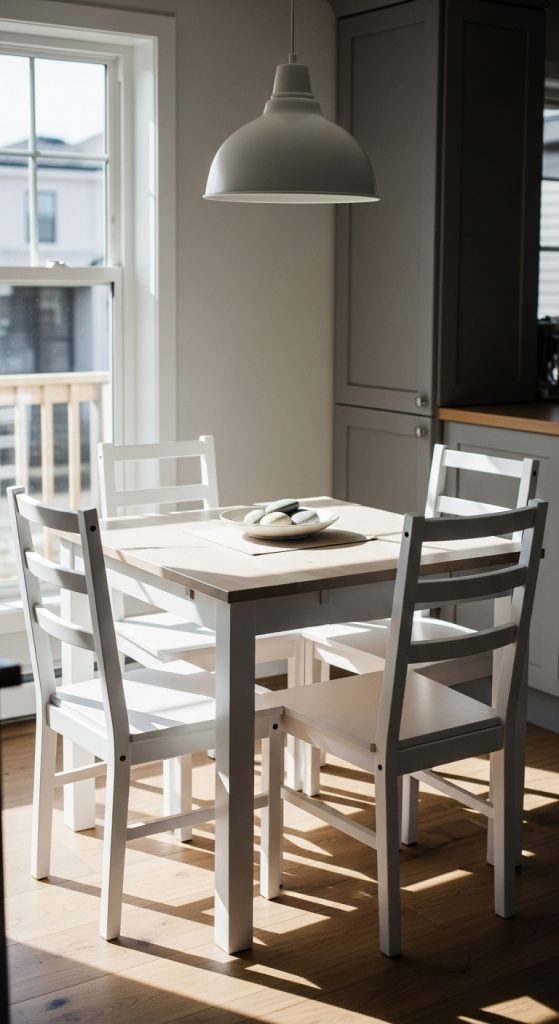
Square tables are a practical solution for small kitchens or dining nooks. They provide a defined space for four people without overwhelming the room. The uniform shape also allows flexibility in positioning against walls or in the center of a room.
Materials and Preparation: Solid wood, laminate, or metal are common materials for square tables. Ensure you measure the available floor space, leaving clearance for chairs and walking paths. Lighter tones create a sense of openness, while darker tones anchor the space.
Setup Tips: Place square tables in a corner to create an intimate nook or in the center of a small room for a more formal layout. Pair the table with slim chairs to maintain balance. A small rug beneath the table can help define the dining zone while adding warmth and texture. Consider adding built-in storage options beneath the table to maximize functionality.
4. Wall-Mounted Foldable Table
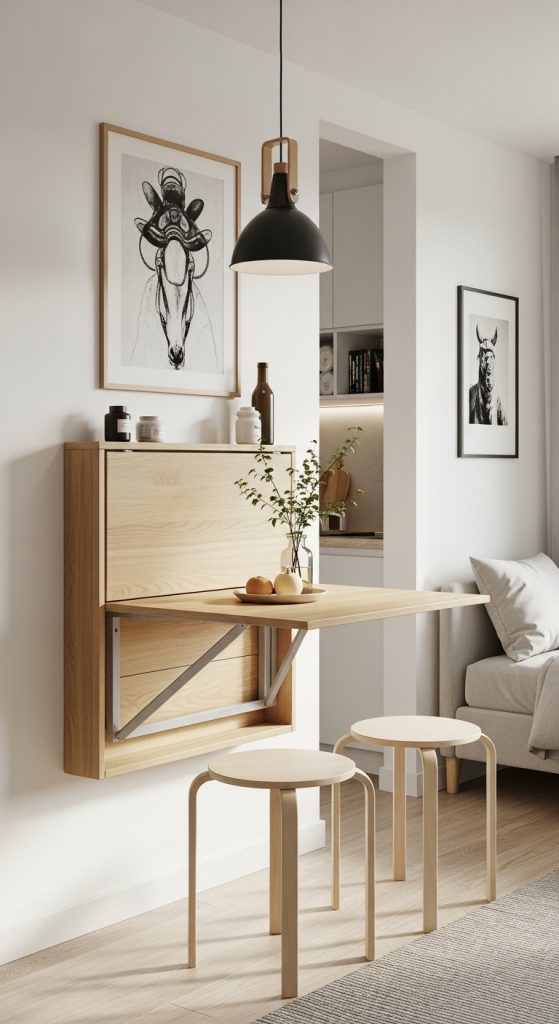
For extremely limited spaces, a wall-mounted foldable table is a space-saving miracle. This design mounts directly to the wall and can be folded down when not in use, leaving the floor area free for other activities.
Materials and Preparation: Typically made from wood or engineered wood with metal folding brackets, wall-mounted tables require sturdy wall anchoring. Use a stud finder to ensure secure mounting, and choose a tabletop finish that complements the room’s color palette.
Setup Tips: Ideal for small kitchens or studio apartments, these tables work well with stools or folding chairs that can be tucked away. Use a lightweight table surface for easier folding. Position the table near electrical outlets if you plan to use it for work or dining with appliances. This table style works particularly well in multifunctional spaces where floor space is precious.
5. Glass Top Table
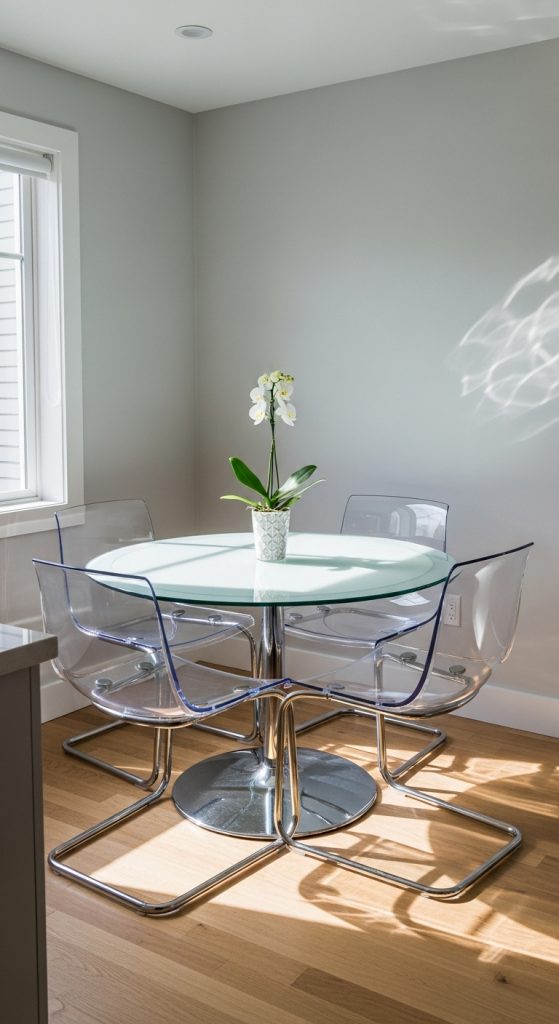
A glass top dining table gives the illusion of more space because it allows light to pass through and does not visually block the room. It can create a modern, airy feel, which is particularly useful in small apartments.
Materials and Preparation: Glass tables are typically combined with metal, wood, or acrylic legs. Safety glass is preferred for durability and resistance to cracking. Measure the dining area carefully to ensure the table does not overcrowd the room. Cleanliness is essential to maintain the table’s sleek look.
Setup Tips: Pair the glass top with transparent or minimalistic chairs to maintain the open aesthetic. Add a small decorative centerpiece for elegance, but avoid heavy or bulky items that disrupt the table’s airy effect. Regular maintenance, including wiping smudges and fingerprints, keeps the table looking pristine.
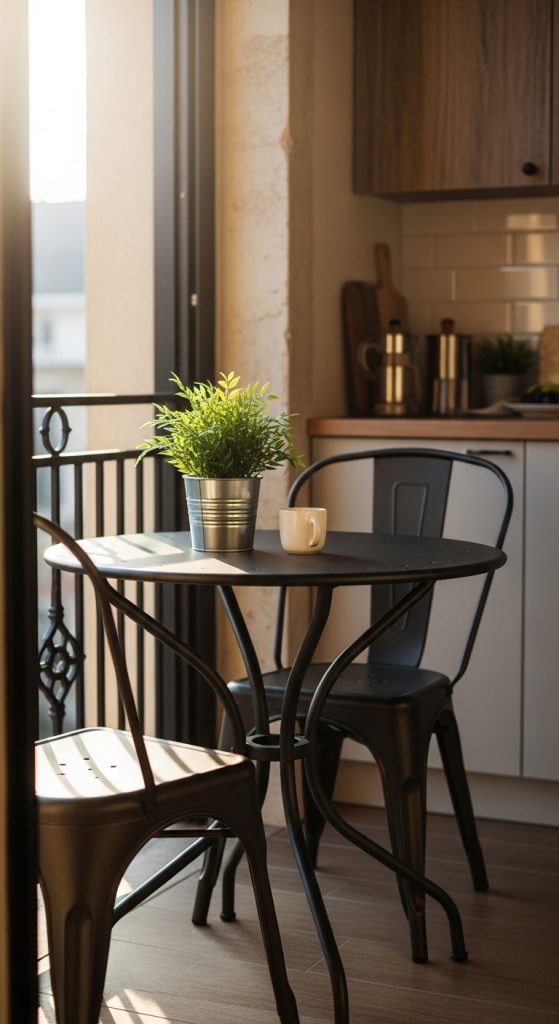
6. Bistro-Style Table
Bistro tables are a European-inspired design ideal for small apartments. These tables are often round or square and paired with two to four chairs, perfect for casual meals or morning coffee.
Materials and Preparation: Bistro tables are typically crafted from metal, wood, or a combination of both. Prepare the space by measuring to ensure a comfortable fit and clearance for chairs. Consider pairing the table with matching bistro chairs or a mix of stools for a relaxed vibe.
Setup Tips: Position the table near a window to enhance the dining experience with natural light. Small decorative elements, such as a potted plant or a table runner, can add charm. Bistro tables are highly versatile and can double as a workspace or coffee station. Their compact design allows placement in narrow spaces, corridors, or balcony areas.
7. Nesting Tables
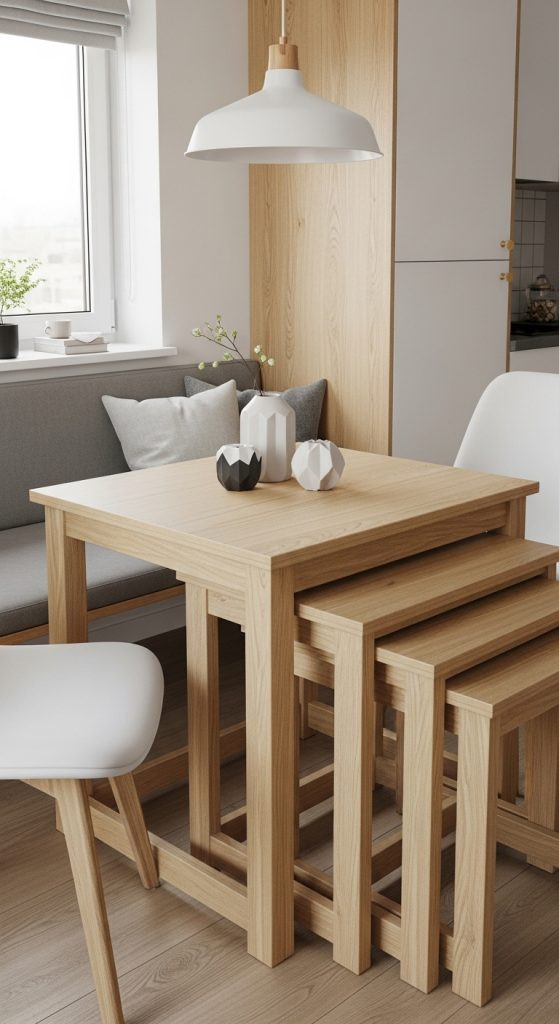
Nesting tables offer unmatched versatility. While typically used as side tables, they can function as a dining table for small spaces. The smaller tables tuck underneath the larger one, allowing you to adjust seating and surface area as needed.
Materials and Preparation: Wood, metal, or acrylic are common materials. Ensure the largest table provides adequate surface area for dining. The smaller tables should slide in and out smoothly, so check for alignment and floor clearance.
Setup Tips: Use the largest table as the main dining surface and pull out the smaller ones for additional guests. Their lightweight design makes them easy to move or rearrange. Nesting tables are excellent for multifunctional spaces because they can transition from dining to work or leisure surfaces. Choose complementary finishes for cohesion and aesthetic appeal.
8. Pedestal Counter-Height Table
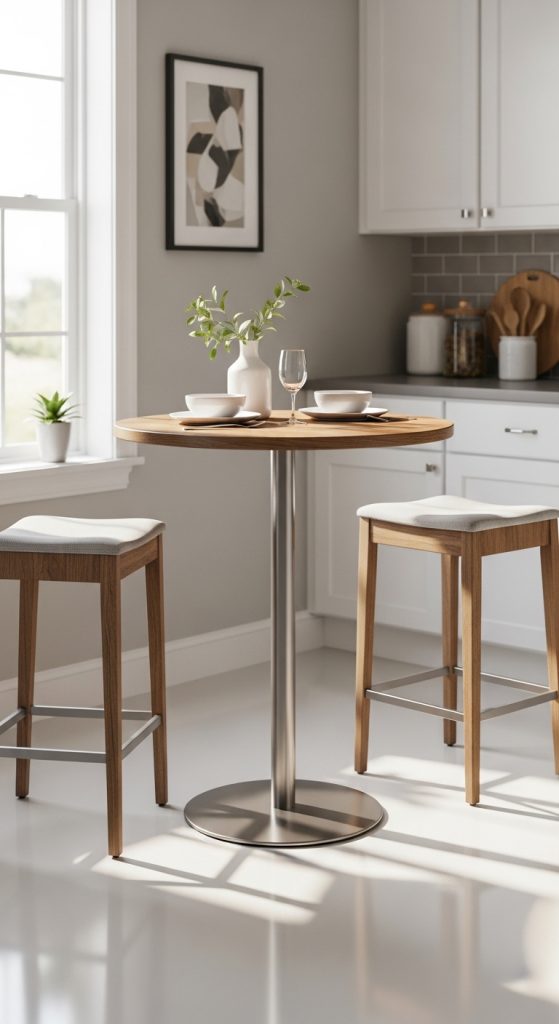
A pedestal counter-height table is slightly taller than a standard dining table, creating a casual dining vibe reminiscent of cafes or kitchen islands. Its raised design is perfect for small apartments where space for chairs is limited.
Materials and Preparation: Typically made from wood, metal, or a combination, these tables require stable construction to prevent tipping. Measure the available floor space, accounting for tall stools rather than standard chairs. Consider finishes that match cabinetry or kitchen accents for a cohesive look.
Setup Tips: Pair with counter-height stools for a casual dining experience. Use the table for multiple purposes, including meals, working, or entertaining. Its elevated design creates the illusion of a larger space and allows storage solutions underneath. A compact pendant light overhead can create a focal point while keeping the area functional.
9. Rectangular Narrow Table
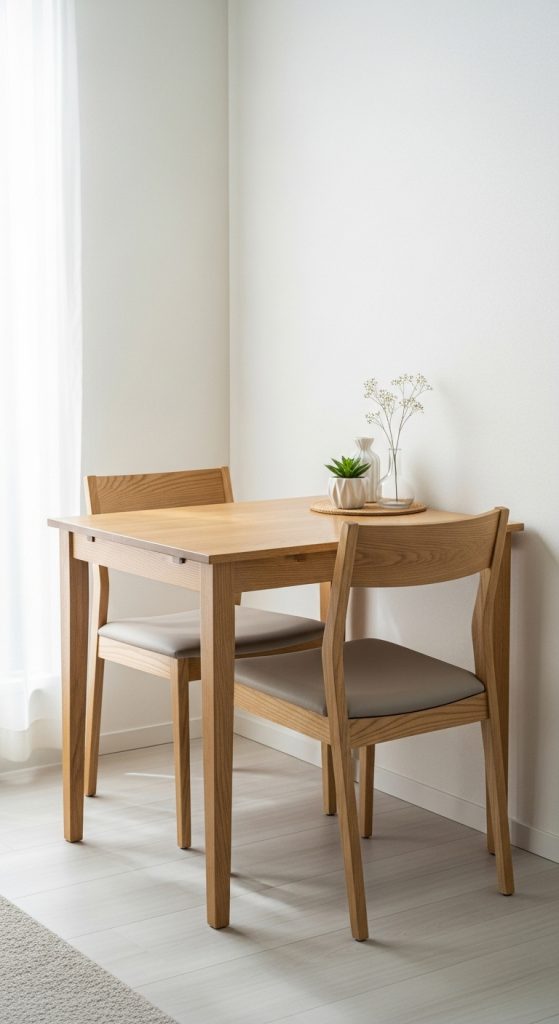
A narrow rectangular table is ideal for tight spaces where length is available but width is restricted. It accommodates two to four people while keeping traffic flow unhindered.
Materials and Preparation: Commonly constructed from wood, metal, or laminate, these tables often include sleek designs with minimal bulk. Measure the room carefully, leaving clearance on all sides. Choose lighter tones or reflective finishes to enhance the sense of space.
Setup Tips: Place against a wall to free up walking space or in the center if the room allows. Pair with slim-profile chairs to maximize comfort without crowding. Narrow tables can include storage drawers underneath for cutlery or placemats, adding both function and aesthetic appeal.
10. Bench Seating Table
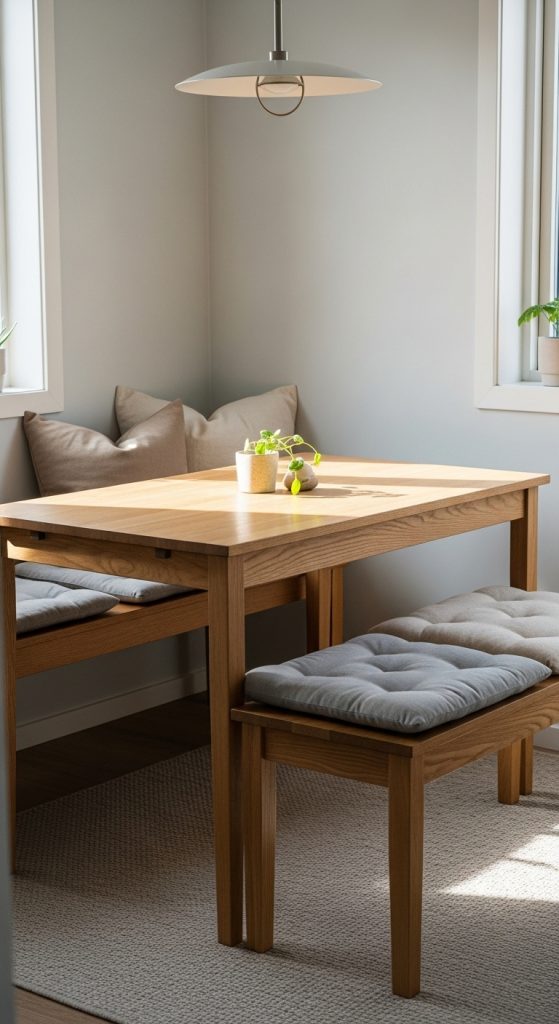
A small table with bench seating maximizes seating in compact areas while maintaining a clean look. Benches can slide under the table when not in use, reducing visual clutter.
Materials and Preparation: Tables and benches can be made from wood, metal, or a combination. Prepare by measuring the seating area and ensuring the benches fit comfortably under the table when not in use. Upholstered benches add comfort but require careful material choice to prevent wear.
Setup Tips: Ideal for dining nooks or breakfast areas, bench seating accommodates multiple people while saving floor space. Pair with a slim table to maintain balance. Add cushions to benches for comfort and style. This arrangement works particularly well for families or shared living spaces where space efficiency is critical.