

Recycled home decor offers a meaningful approach to creativity, sustainability, and personal expression. By transforming discarded items into functional and attractive decor pieces, you reduce waste and bring unique character into your home. These recycled decor ideas focus on accessible materials and straightforward crafting methods that anyone can follow. Each section explains the preparation, materials, and process in detail, helping you recreate these projects confidently. Whether you enjoy crafting as a hobby or are looking for environmentally conscious ways to upgrade your living space, these ideas combine design, practicality, and eco friendly living. This blog post shares ten recycled decor ideas, each explained thoroughly so you can understand both the purpose and the method behind the creation. From old glass jars to unused textiles and cardboard, these ideas give new life to items that might otherwise be thrown away. The goal is to make home aesthetics both sustainable and meaningful. Below you will discover ten concepts, each developed in about two hundred words, followed by additional insights to help you master recycled decor as a whole.

1. Glass Jar Lanterns
Creating lanterns from old glass jars is one of the most accessible and visually appealing recycled decor ideas. Many homes accumulate empty jars from sauces, jams, and pantry goods, and rather than discarding them, you can repurpose them creatively. Begin by gathering jars of similar or assorted sizes depending on the look you want. Wash them thoroughly to remove labels and residue, letting them dry completely. You can leave the jar clear for a clean and simple aesthetic or frost the glass by applying diluted white paint or a homemade mixture of glue and water. For decorative elements, consider wrapping the jar with twine or thin rope near the top, giving it a rustic and warm look. Once your jars are ready, insert tea lights or battery powered candles for safety. These lanterns work well as indoor table accents, balcony decor, or garden walkway lighting. They create gentle illumination and add a handcrafted touch to your environment. Another option is to suspend them using wired handles, allowing you to create lantern clusters. This project not only beautifies your home but also encourages responsible reuse of glass, which is a durable and recyclable material.

2. Tin Can Planters
Tin can planters are an excellent way to blend sustainability and gardening. These planters work well for herbs, small flowers, and succulents. Start by collecting empty tin cans from canned foods. Ensure the edges are safe by checking for sharp metal and sanding if needed. Wash the cans thoroughly and allow them to dry. Once clean, you can paint the cans with soft pastel colors, neutral tones, or bold shades depending on your interior style. Acrylic paint works best because it adheres well to metal. For added character, try applying brushstrokes in layers or adding simple geometric lines. Punch small holes in the bottom for drainage, especially if you plan to grow live plants. Place small stones inside to support proper water flow before adding soil. You can create sets of matching planters or mix different sizes for a more dynamic look. These planters fit well on kitchen shelves, window sills, or balconies. They make otherwise discarded cans useful again and support simple home gardening. If you prefer a rustic look, wrap the cans with jute or burlap instead of painting. Tin can planters demonstrate how everyday items can become charming decor pieces with minimal effort.

3. Cardboard Wall Art Panels
Cardboard wall art is a creative way to turn packaging materials into stylish decor. This project works particularly well if you want lightweight art pieces that do not require heavy hardware. Begin by flattening large cardboard boxes and cutting them into shapes of your choice. Rectangles, arches, circles, and layered abstract forms all work well. The key is to think of cardboard as a canvas. Prime the surface with a light coat of white paint or diluted glue to strengthen it. Once prepared, paint the pieces using acrylics in earthy tones or soft color palettes. You can create modern abstract designs, landscape style blocks, or textured minimalist pieces. For texture, apply modeling paste or thick paint strokes to give the artwork dimension. After the paint dries, mount the panels on the wall using lightweight adhesive strips or small nails. This decor idea is budget friendly, customizable, and suitable for both large and small spaces. It allows you to create art that matches your room’s theme without spending on traditional canvases. Cardboard art panels show how recycled materials can become stylish design elements with thoughtful creativity.

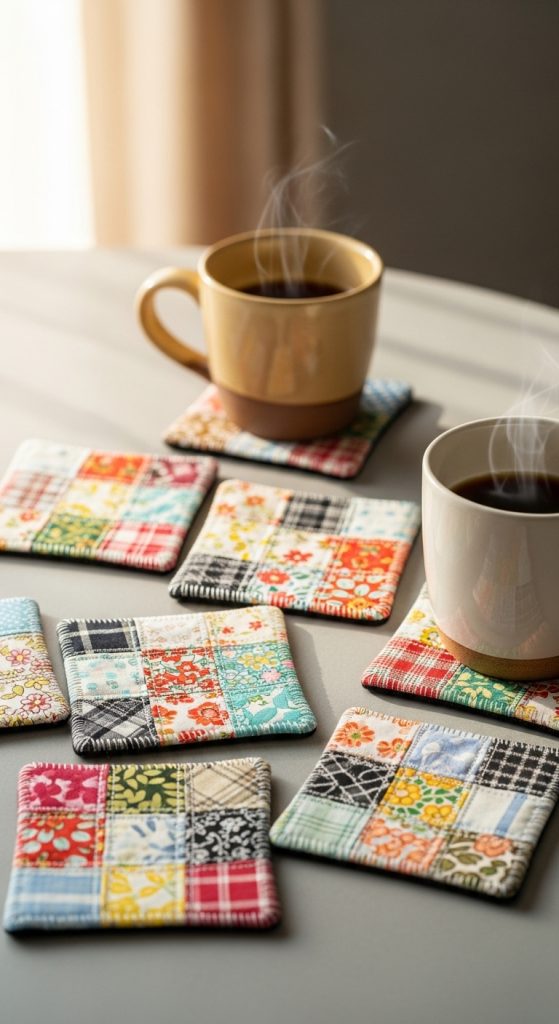
4. Fabric Scrap Coasters
If you have leftover fabric scraps from old clothing, curtains, or sewing projects, fabric scrap coasters are a practical and beautiful way to repurpose them. Begin by cutting the fabric into equal sized squares or circles. You can choose coordinated colors for a uniform set or mix fabrics for a patchwork effect. To add stability, use layers by placing two or three pieces together. Sew around the edges using a simple straight or zigzag stitch. For those who prefer a no sew method, use fabric glue to secure the layers. If the fabric frays easily, fold over the edges to create a clean border. These coasters are lightweight, washable, and durable. They protect surfaces from heat and water while adding a handcrafted touch to your living room or dining area. You can also create themed coaster sets like muted neutrals, floral prints, or geometric patterns. Fabric scrap coasters make excellent handmade gifts as well. This project demonstrates the value of repurposing textiles rather than discarding them, contributing to reduced fabric waste.
5. Wine Bottle Vases
Repurposing wine bottles into decorative vases adds elegance and sustainability to your space. Start by removing the labels using warm water and soap. If adhesive remains, use a gentle scrubbing tool to clean the surface fully. Once the bottle is clean, consider painting it with matte or chalk paint for a soft and sophisticated look. You can apply one solid color or create ombre effects by blending shades. Another popular technique is wrapping the bottle with twine or yarn, creating a textured finish. Add decorative accents such as simple painted lines or stenciled shapes. These bottles work well as standalone pieces or grouped together for a more dramatic display. They can hold fresh flowers, dried stems, or artificial bloom arrangements. If you prefer minimal effort, leave the bottle clear and simply add botanical stems for a natural aesthetic. Wine bottle vases offer versatility and encourage creative design while making use of glass that might otherwise end up in the waste stream.

6. Old Book Page Wall Collage
Using pages from damaged or unreadable books is a thoughtful way to create artistic wall decor. This idea works well for studies, bedrooms, and creative corners. Begin by selecting books that are old, torn, or missing pages. Carefully remove the pages you want to use, choosing ones with interesting typography or aged color. Arrange the pages on the floor first to plan your design. You can create a full wall collage, a framed arrangement, or a shaped layout such as a rectangle or heart. To attach them, use removable adhesive or double sided tape if you want a temporary installation, or glue for a permanent piece. Smooth the pages to avoid wrinkles. Consider adding a light coat of matte sealant to preserve the color and prevent yellowing over time. You can also overlay the collage with simple line art or silhouettes cut from darker paper for contrast. This decor style gives a vintage and intellectual feel, making use of damaged books that cannot be donated or read.

7. Plastic Bottle Storage Bins
Plastic bottles can be transformed into practical storage solutions for households. Choose large plastic bottles such as those used for water or cooking oil. Cut the top portion off using scissors or a craft blade. Sand the cut edges carefully to ensure they are safe. You can leave the containers clear or paint the exterior with acrylic paint. Another option is wrapping them with fabric or paper to enhance durability and style. Add labels to categorize storage types such as stationery, craft items, makeup tools, or kids supplies. To create handles, punch small holes near the top and secure rope or ribbon. These bins help organize cluttered spaces efficiently while repurposing plastic that would otherwise contribute to environmental waste. They are lightweight and easy to maintain. This idea is especially helpful for work desks, children’s rooms, and craft areas where small items need sorting.

8. Recycled Wooden Crate Shelves
Wooden crates from fruit markets or old storage units make excellent rustic shelves. Ensure the crate is sturdy and clean before starting. Sand the surface to remove rough edges and prepare it for painting or staining. Choose a finish that matches your interior style, whether natural wood, whitewash, or bold color. Once dry, mount the crate on the wall horizontally or vertically using wall anchors for stability. These crates can hold books, decor items, or small plants. You can also stack multiple crates on the floor to create shelving units that are adaptable to your space. The charm of this project lies in its simplicity and durability. Recycled crate shelves enhance your home with functional character while reducing the need for newly manufactured furniture.

9. Button Art Frames
If you have a collection of old buttons from clothing or sewing projects, button art is a creative way to reuse them. Start with a piece of cardboard or an unused picture frame. Draw a simple shape such as a heart, star, letter, or tree. Fill the shape with buttons of different sizes and colors by gluing them closely together. Layering buttons adds depth and dimension. Once your design is complete, secure the artwork inside a frame. This decor looks charming in bedrooms, entryways, and craft rooms. It is a fun and relaxing project suitable for all ages. Button art reduces waste and celebrates small items that often get discarded due to lack of use.

10. Recycled Paper Woven Baskets
Old newspapers, magazines, or paper bags can be turned into woven baskets that serve as storage or decorative pieces. Begin by cutting the paper into long strips of equal width. Roll or fold the strips to make them sturdy, then weave them together in an over under pattern. Form the base first, then gradually build up the sides. Secure corners with glue and maintain even spacing. Once complete, coat the basket with a layer of diluted glue to strengthen it. You can leave the natural newspaper look or paint the basket with acrylics for a cleaner finish. These baskets are lightweight, practical, and environmentally friendly. They work well for holding keys, toiletries, craft supplies, or decorative arrangements.
